
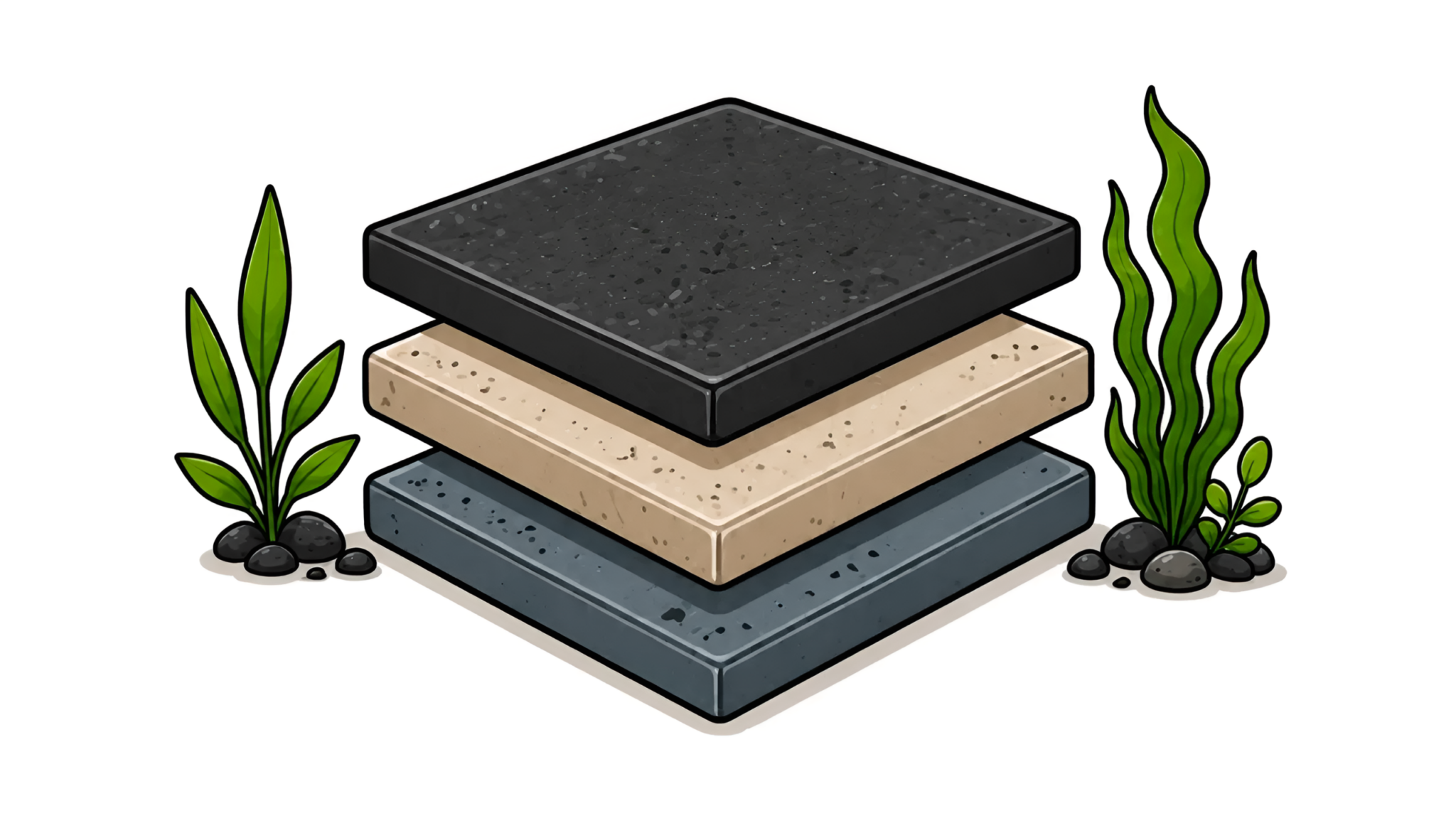
Choosing the best axolotl tank tiles is one of the smartest substrate decisions you can make for your axolotl’s safety and your own convenience. Tiles are one of only three substrate options that are genuinely safe for axolotls — the others being fine sand and a bare-bottom setup — and they offer unique advantages that sand and bare glass cannot. There is zero risk of impaction, waste sits visibly on the surface for easy cleaning, and the right tiles give your axolotl a firm, non-slip walking surface without any of the complexity of loose substrate management. This guide covers everything you need to know about axolotl tank tiles: why they work so well, what materials are safe, what to avoid, how to set them up, and our top Amazon picks. For the broader substrate context, read our guides on whether axolotls need substrate, the best substrate for axolotls, and the best axolotl tank sand if you are comparing options. Our full axolotl care guide covers everything beyond substrate.
Why Tiles Are Such a Good Option for Axolotl Tanks
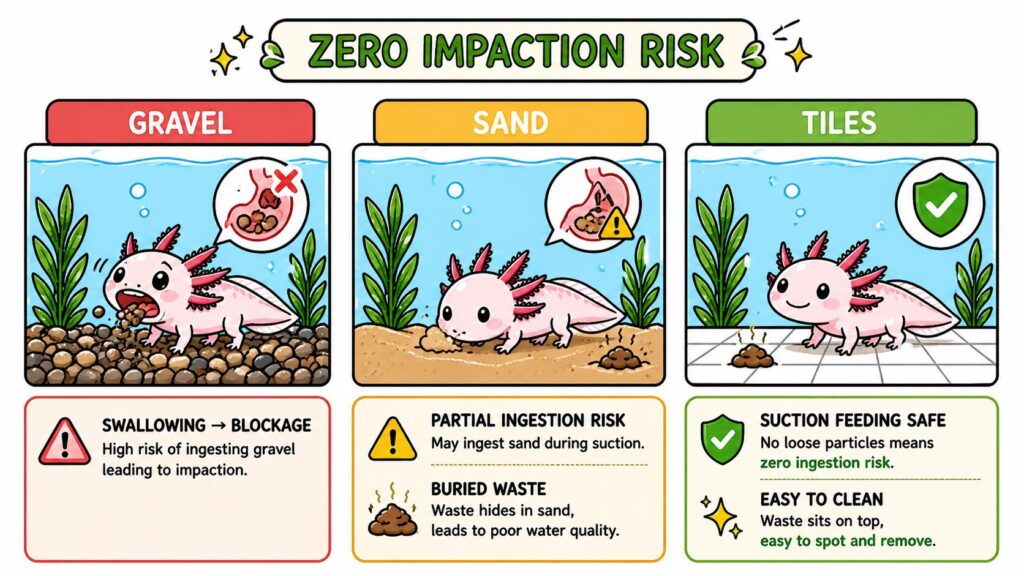
The primary reason tiles work exceptionally well for axolotl tanks comes down to safety. Axolotls are suction feeders — when they strike at prey, they inhale surrounding water and material along with the food. In a tank with gravel or coarser substrate, this creates a constant risk of ingesting particles that can cause fatal gastrointestinal blockage. According to research published in Aquaculture, impaction from foreign body ingestion is one of the most common and preventable causes of captive aquatic salamander mortality. With tiles, this risk is completely eliminated — the tiles are far too large to be ingested, and there are no loose particles to accidentally swallow.
Tiles also make tank maintenance significantly easier than sand, which is the other safe loose substrate option. With fine sand, waste and uneaten food filter down into the substrate layer and must be siphoned carefully during water changes to avoid removing sand along with the debris. With tiles, waste sits clearly on the tile surface and is easily siphoned or targeted with a turkey baster without disturbing anything. For busy keepers or those who prioritise ease of maintenance, this is a meaningful practical advantage. Our guides on how to clean an axolotl tank and how often to clean an axolotl tank cover the full maintenance routine, and tiles make both easier.
Tiles also provide the stable, non-slip traction that axolotls need to walk comfortably. Bare glass is notoriously slippery for axolotls — they can be seen losing grip and struggling for footing, which causes stress and unnatural gait over time. Flat tiles solve this without introducing any loose substrate risk. The textured surface of natural slate in particular gives axolotl feet excellent grip, closely resembling the rocky surfaces they navigate in parts of their natural habitat around the Xochimilco lake system — though the actual lakebed of their native habitat is fine silt, the broader rocky terrain of their range makes slate a natural fit.
Finally, tiles are extremely durable. A set of good aquarium tiles can last for the entire life of your axolotl — potentially 10 to 15 years — without degrading or needing replacement.
What Materials Are Safe for Axolotl Tank Tiles?
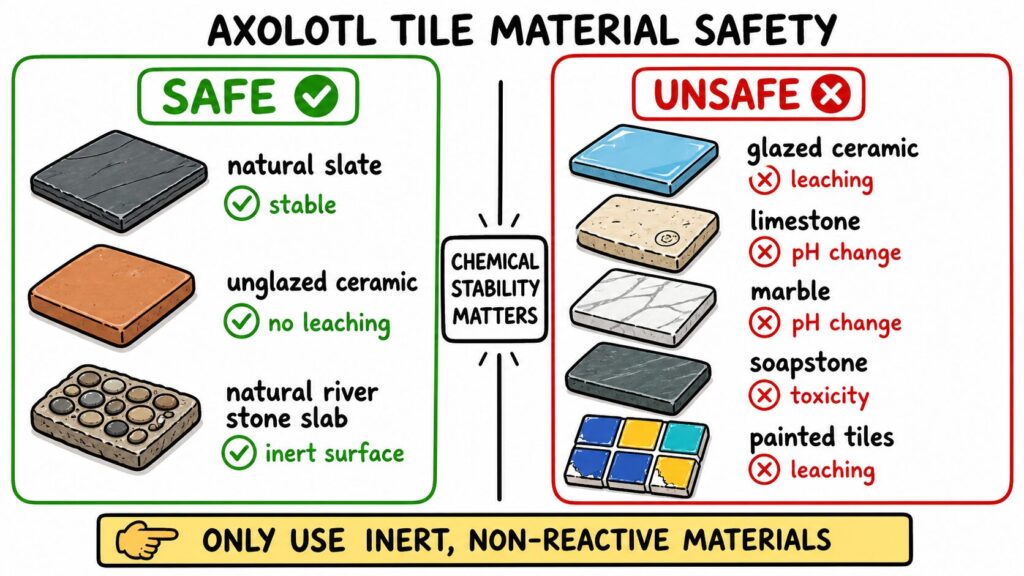
Not every tile material is appropriate for an aquarium. Here is what works, what to be cautious about, and what to avoid.
Natural slate is the most popular and widely recommended tile material for axolotl tanks, and for good reason. Slate is an inert metamorphic rock that does not leach any substances into the water, does not affect pH or hardness, and is completely safe for freshwater aquariums. Its naturally layered structure means it breaks into flat pieces that lie flush against the tank floor without gaps, and its slightly textured surface gives axolotls excellent traction. Slate is pH neutral according to geological materials safety data, making it appropriate for the neutral to slightly alkaline water conditions axolotls require. It is also naturally dark, which creates a beautiful, natural-looking tank floor that shows off lighter-coloured axolotl morphs beautifully.
Unglazed ceramic tiles are another excellent option. Unglazed ceramic — including unglazed porcelain tiles — is made from fired clay without any surface coating, making it inert and aquarium-safe. The unglazed surface provides better traction than smooth glazed tiles and does not leach any chemical residues. Unglazed ceramic tiles are widely available at hardware stores, can be cut to size, and are often less expensive than purpose-made aquarium slate products. The key word is unglazed — glazed ceramic tiles use a glass-like surface coating that can contain heavy metals and other compounds not appropriate for aquariums.
Natural river stone slabs — large, flat, smooth pieces of natural river stone too large to be swallowed — can also work effectively as axolotl tile flooring. Like slate, natural river stone is geologically inert and aquarium-safe as long as it is not calcareous (calcium-heavy) rock like limestone, which raises pH.
What to avoid. Glazed ceramic or porcelain tiles are not appropriate for axolotl tanks — the glaze coating can contain lead, cadmium, or other compounds that leach into water over time. Calcareous rocks including limestone and marble raise water hardness and pH significantly, which is not appropriate for axolotl freshwater setups. Soapstone has a history of leaching magnesium into aquarium water and should always be avoided — as noted by experienced amphibian keepers in communities like Caudata.org. Painted or treated decorative tiles of any kind should be avoided entirely.
What Size Tiles Work Best for an Axolotl Tank?
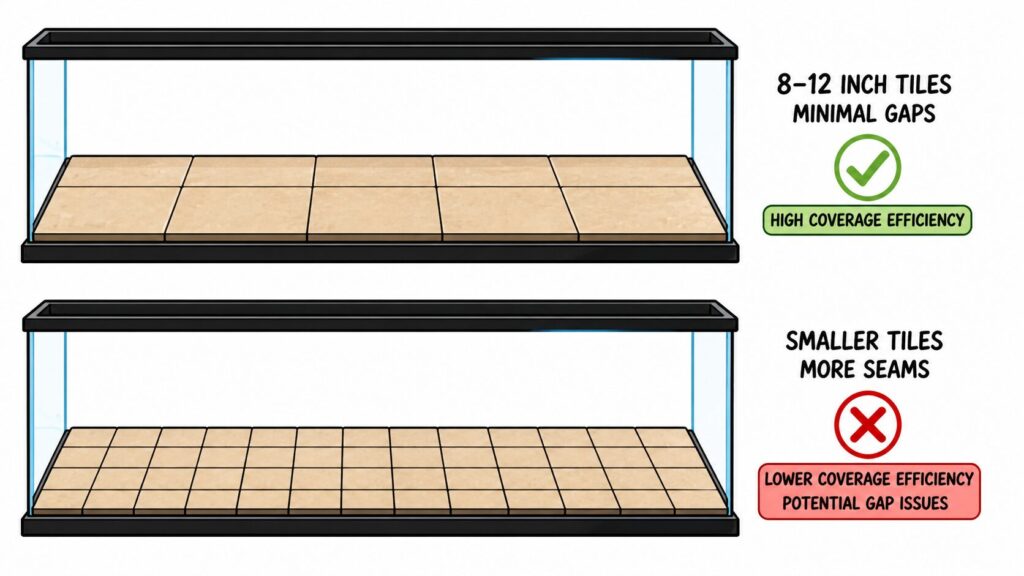
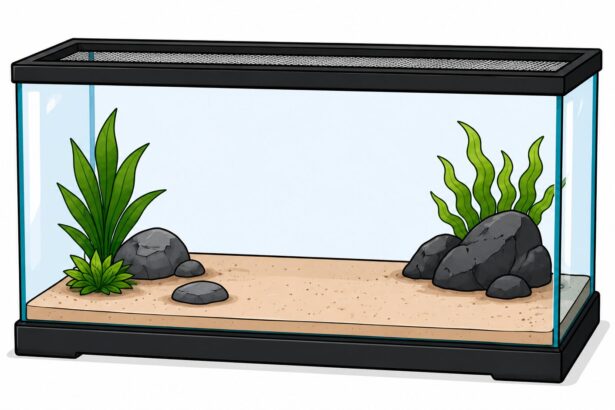
For full floor coverage, large flat tiles are ideal — pieces in the 8–12 inch range cover significant floor area with minimal gaps between tiles, meaning less space for waste to collect in tile joints. For the Aqueon 40-gallon breeder — the tank we recommended in our best axolotl tank article — three to four large slate pieces or six to eight medium pieces can cover the full 36″ × 18″ floor effectively.
If you are using tiles as a traction supplement in specific resting areas of a bare-bottom tank rather than as a full floor covering, smaller individual pieces work perfectly well. Place them in the corners and areas where your axolotl tends to spend the most time.
Natural slate from aquarium suppliers comes in irregular flat pieces rather than perfectly square tiles, which actually looks more natural and allows for creative layouts. Pieces with flat tops and relatively smooth undersides lie most stably against the glass floor.
Our Top Axolotl Tank Tile Picks
Best Overall: Natural Slate Stone Aquarium Decorations 8–10 Inch Pieces (USA Sourced, 10lb)
The Natural Slate Stone Aquarium Decorations 8–10 Inch Pieces are our top overall recommendation for axolotl tank tiles. These are large, flat, USA-sourced natural slate pieces specifically sold for aquarium use, verified to be safe for freshwater tanks, and sized at 8–10 inches per piece — large enough to cover significant floor area and completely impossible for an axolotl to ingest. Their naturally flat profile means they lie flush against the tank floor with minimal rocking, and the slightly textured slate surface gives axolotl feet excellent grip. At 10 pounds per order, you get enough pieces to cover a significant portion of a 40-gallon breeder floor, and you can order multiple packages to achieve full coverage. The natural dark grey colouration of slate looks genuinely beautiful in a freshwater aquascape and creates high contrast for lighter-coloured axolotls. These are the same slate pieces we referenced in our best axolotl tank substrate article.
Best Mid-Size Option: Natural Slate Stone Aquarium Decorations 3–5 Inch Pieces (5lb)
For keepers who want smaller individual slate pieces — useful for filling in gaps between larger tiles, creating traction spots in specific areas of a bare-bottom tank, or building up a textured layout alongside other decorations — the Natural Slate Stone Aquarium Decorations 3–5 Inch Pieces are a well-reviewed option. These pieces are verified aquarium-safe and sourced naturally. At 3–5 inches they are still far too large for any axolotl to ingest, and they can be arranged into layouts that create both traction surfaces and visual interest. They work especially well as accent pieces around hides and caves, helping create a cohesive natural rockscape aesthetic in the tank.
Best Polished Slate Option: YISZM Slate Rock for Aquarium 3–5 Inch Polished Natural Stone (10lb)
The YISZM Slate Rock for Aquarium in 3–5 Inch Polished Natural Stone is a premium option for keepers who want a more refined, smooth aesthetic. The light polishing on these pieces removes sharp edges and irregular surface textures while retaining the flat profile and safe inert properties of natural slate. They are explicitly sold for aquarium and terrarium use, confirmed safe for both freshwater and saltwater environments, and arrive with minimal sharp edges that could potentially irritate axolotl skin. At 10 pounds they provide enough material to create a meaningful traction surface across a significant tank floor area. The polished finish looks particularly striking in a display tank and pairs well with aquatic plants and thoughtful tank decor.
Best for Budget Full-Floor Coverage: Hardware Store Unglazed Ceramic Floor Tiles — Search Amazon for Unglazed Porcelain Tiles
For keepers who want the most cost-effective solution for complete tile coverage of a 40-gallon breeder floor, purchasing unglazed ceramic or porcelain floor tiles from a hardware store (or from Amazon’s unglazed tile category) in a 6″ × 6″ or 12″ × 12″ format is the most economical route. Unglazed porcelain tiles in earth tones — beige, grey, brown — are inert, aquarium-safe, easy to cut to custom sizes with a tile cutter, and significantly less expensive per square inch of coverage than purpose-made aquarium slate products. A few 12″ × 12″ unglazed tiles can cover most of a 40-gallon breeder floor for a very modest total cost. The key is to verify unglazed status — check the product listing explicitly for “unglazed” rather than “matte glazed,” as these are different surface treatments with different safety profiles.
Best Feeding Area Tile: BESPORTBLE Ceramic Aquarium Reef Base Tiles (10-Pack)
For keepers who want to use tiles specifically as a designated feeding area — placing food on a flat tile surface to prevent it from disappearing into sand and to make cleanup easier — the BESPORTBLE 10-Pack Ceramic Aquarium Reef Base Tiles are an interesting specific-purpose option. These small ceramic tiles are made explicitly for aquarium use with safe, non-toxic ceramic material, and their small format makes them ideal as spot-use surfaces rather than full floor coverage. Using a dedicated feeding tile is a good practice for axolotl keepers who want to minimise the amount of food that contacts sand substrate and reduce the chance of sand being accidentally ingested during feeding alongside food. After each feeding session, any uneaten food on the tile can be easily removed with feeding tongs or a turkey baster.
How to Set Up Axolotl Tank Tiles
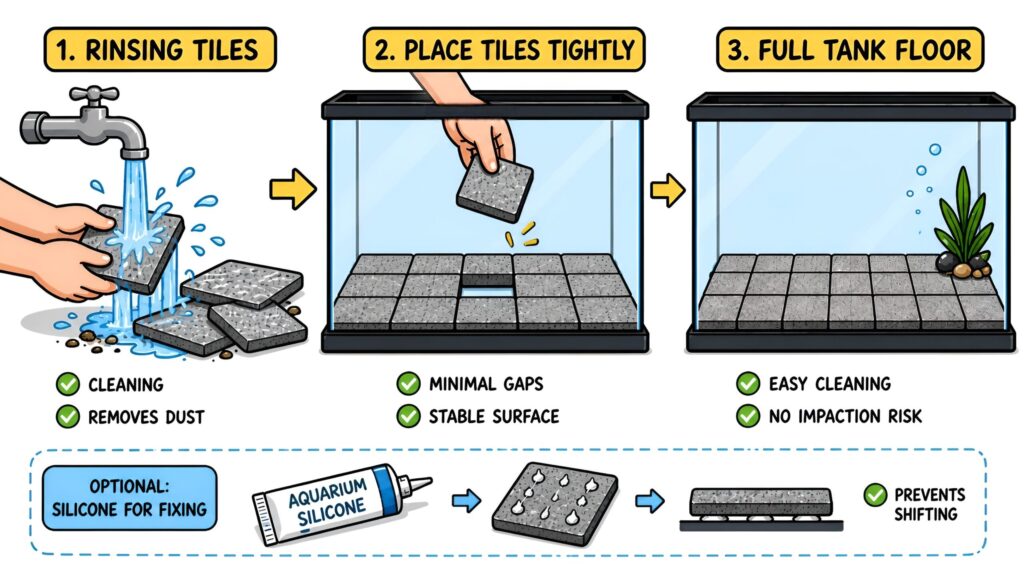
Rinse all tiles before installation. Even natural stone and unglazed ceramic tiles can carry dust, debris, and surface residue from packaging and manufacturing. Rinse each piece thoroughly under running water and scrub the surface with a clean brush — no soap, no cleaning products, just plain water. Allow them to air dry or pat dry before placing in the tank.
Arrange tiles to cover the tank floor as completely as possible. Gaps between tiles collect waste and give axolotls awkward footing. Arrange tiles so they cover the glass floor as completely as practical. Natural slate pieces with irregular edges can be fitted together like a puzzle — the natural layered structure of slate means pieces often interlock reasonably well. For a cleaner look with unglazed ceramic tiles, cut tiles to size with a tile cutter for clean edges.
Decide whether to use adhesive. Tiles can be placed loose on the tank floor or siliconed down using aquarium-safe silicone. Loose tiles are easier to remove for deep cleaning but can shift during tank maintenance. Siliconed tiles stay permanently in place, which simplifies everyday maintenance but makes removal for deep cleaning more involved. Many keepers prefer loose placement — the weight of the tiles combined with the water pressure above them keeps them well-placed in practice.
Consider a hybrid approach with sand. One popular approach is to tile most of the tank floor — particularly the feeding area and main resting areas — while adding a section of fine CaribSea aquarium sand in one area for natural foraging enrichment. This combines the cleaning convenience and traction benefits of tiles with the behavioural enrichment that loose sand provides, giving your axolotl the best of both worlds.
Maintain tiles during water changes. During weekly water changes, use a tank siphon to vacuum waste from the tile surfaces and a turkey baster for daily spot-cleaning. The advantage of tiles over sand is that all waste is visible on the flat surface and easy to target precisely. Keep a reliable water test kit and water conditioner as part of your routine maintenance — water quality is as important as substrate choice for long-term axolotl health. Temperature management also remains essential — see our guide on what temperature axolotls need and our picks for the best axolotl water chiller and best axolotl cooling fan.
Frequently Asked Questions
Are tiles better than sand for axolotl tanks? Neither is strictly better — they offer different advantages. Tiles are easier to clean, eliminate impaction risk entirely, and require no depth management. Sand provides more natural enrichment through foraging behaviour and has a more natural aesthetic. Many keepers use a combination of both. See our full comparison in the best axolotl tank substrate guide.
Do axolotls need tiles in a bare-bottom tank? Not strictly — bare-bottom tanks are used successfully by many keepers and breeders. However, axolotls on smooth glass can struggle for traction, which causes minor but ongoing stress. Adding a few flat tiles in the areas where your axolotl rests and walks most frequently significantly improves their comfort without introducing any substrate risk.
Can I use any stone as axolotl tank tiles? No. Calcareous rocks like limestone and marble raise water pH and hardness, making them unsuitable. Soapstone should never be used in aquariums. Any painted or treated rock is also inappropriate. Stick to verified inert options like natural slate, unglazed ceramic, and natural silicate river stone.
How do I clean tiles in an axolotl tank? During routine weekly water changes, siphon the tile surfaces directly to remove settled waste. For more thorough cleaning, individual tiles can be removed, scrubbed under running water with a clean brush, and returned to the tank. Never use soap, detergent, or chemical cleaners — plain water only.
How many tiles do I need for a 40-gallon breeder? The Aqueon 40-gallon breeder has a 36″ × 18″ floor area. With 8–10 inch slate pieces, you will need roughly 8–12 pieces depending on their exact dimensions and your layout. With 12″ × 12″ unglazed ceramic tiles, four tiles cover the full floor with room to spare. Order slightly more than your estimate to account for irregular shapes and gaps.
Are tiles safe with live plants in the tank? Yes, though live plants are harder to root in tiled tanks than in sand since there is no substrate for roots to anchor into. The solution is to use plants that attach to hardscape — Java fern, Anubias, and Bucephalandra all grow attached to rocks and wood rather than in substrate, making them perfect for tiled axolotl tanks. Our guide to the best axolotl tank plants covers the best species for cold axolotl water.
Solid Foundations for a Lifetime of Great Care
Tiles give your axolotl a safe, clean, comfortable floor to live on — and the right foundation makes everything else in axolotl care easier. If you want keeper-tested recommendations across every product your axolotl depends on, from filtration and food to hides, health supplies, and beyond, Best Axolotl Products is your complete guide to the best gear in every category.