
Origin And History
The Denmark Feist is an American hunting breed whose name has caused considerable confusion among people encountering it for the first time. Despite the spelling, the Denmark Feist has nothing to do with Denmark the country. The name is a portmanteau of the surnames of the two men who formally introduced the breed to the public in 1984: Dennis Willis and Mark Slade. Den from Dennis, Mark from Slade, combined into DenMark, which also happens to match the name of the Scandinavian nation closely enough to mislead everyone who encounters it in passing.
The breed’s story is a genuinely American one, rooted in the hunting culture of Virginia and the broader tradition of the feist dog that has been part of southern and Appalachian rural life for centuries. The feist as a type, not a single specific breed but a family of small working hunting dogs, descends from terriers brought to the United States by European immigrants, likely including the Smooth Fox Terrier, the Manchester Terrier, and the now-extinct English White Terrier. These small, energetic dogs were used as ratters and small game hunters, and their descendants spread throughout the rural South and Appalachians, where selective breeding over generations produced various regional lines, each with distinct characteristics suited to local conditions and hunter preferences.
The Denmark Feist’s specific origin traces to 1917 and a single foundational dog acquired by the Slade family of Chatham, Virginia. According to the account preserved in breed history, the dog was bartered from a traveling salesman in exchange for three opossum hides, a large raccoon, and a wagon wheel, which is one of the more colorful acquisition transactions in American dog history. The Slade family was sufficiently impressed by this dog’s hunting ability that they used him as the foundation sire of a deliberate breeding program, maintaining the line on their Virginia farm for the following six decades.
In 1984, Mark Slade and his friend Dennis Willis formally introduced these dogs as a distinct breed, presenting them publicly and beginning the process of establishing what had been a closely held family line as a recognizable, reproducible type. In 1986, the DenMark Treeing Feist Association was formed to support and promote the breed.
The Denmark Feist is not recognized by any major kennel organization. The AKC, UKC, FCI, and other international registries do not include the breed in their rosters. Within the feist dog community, the Treeing Feist and Mountain Feist are the only two varieties to have achieved UKC recognition, with the Denmark Feist remaining in the category of established but unregistered hunting dog lines that are maintained by working dog enthusiasts rather than formal breed clubs.
Breed Overview
| Trait | Details |
|---|---|
| Breed Group | Hunting / Treeing (unregistered) |
| Height | 38–46 cm (15–18 inches) |
| Weight | 11–16 kg (25–35 pounds) |
| Lifespan | 12–14 years |
| Coat | Short, dense |
| Colors | Red, yellow, red and white spotted |
| Temperament | Courageous, energetic, intelligent, loyal, determined |
| Major Kennel Club Recognition | None |
Appearance And Size
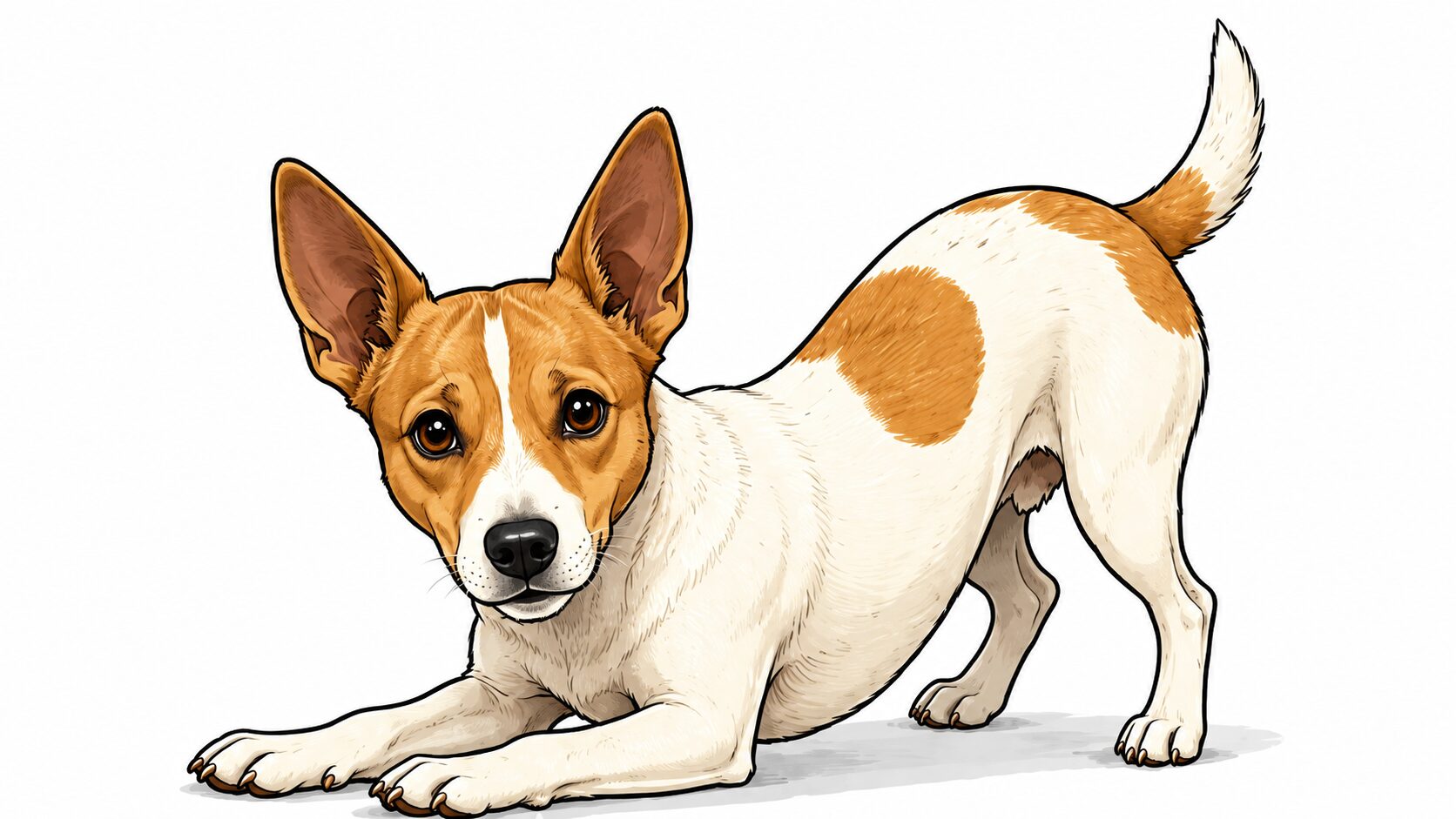
The Denmark Feist is a small to medium-sized, compact, and athletically built hunting dog that presents with the practical, functional appearance of a breed designed for field performance rather than aesthetic presentation. It stands 38 to 46 centimeters at the shoulder and weighs between 11 and 16 kilograms. The overall impression is of a sturdy, well-muscled, agile dog with the lean build and alert bearing of a breed built to pursue game through varied terrain and to remain on the move across a full hunting day.
The head is proportionate and moderate, with a defined stop and a muzzle of good length. The eyes are alert and dark, carrying the sharp, focused expression of a working hunting dog perpetually assessing its environment. The ears are typically semi-erect or button ears.
The body is compact and muscular throughout, with a level back, a moderately deep chest, and well-muscled hindquarters. Many individuals are born with naturally short or bobbed tails, though full-length tails that are carried in an upward curve when the dog is active also occur naturally in the breed.
The coat is short and dense, providing practical field protection without the maintenance demands of longer coats. Colors are red, yellow, or red and white spotted, reflecting the consistent color characteristics maintained through the breed’s carefully controlled lineage.
Housing And Living Requirements
The Denmark Feist is a working hunting dog at heart, and its housing requirements are shaped honestly by that heritage. A rural or semi-rural property with meaningful outdoor space is the most naturally appropriate setting. The breed thrives when it has a job to do, terrain to cover, and game to pursue, and a domestic setting that provides these opportunities suits it far better than an urban apartment regardless of how committed the owner is to daily structured exercise.
That said, the breed is not incapable of adapting to suburban settings when owners are genuinely committed to meeting its exercise and stimulation needs. Owning a Denmark Feist means giving them more than enough space to run and explore, and this requirement should be taken seriously. A securely fenced outdoor area is essential, as the hunting instinct that makes this dog so effective in the field is equally effective at motivating unsupervised exploration of anything interesting beyond a perimeter that is not genuinely secure.
Inside the home, a well-exercised Denmark Feist is a devoted, affectionate, and genuinely pleasant companion. A comfortable dog bed in a social area of the home suits the breed’s family-oriented nature during rest periods between active sessions.
Exercise Requirements
The Denmark Feist is a high-energy working breed with daily exercise needs that reflect its heritage as a dog built for sustained pursuit of game through varied terrain. At least one hour of vigorous outdoor exercise daily is appropriate, and this should include opportunities for the breed to run freely in a secure setting and engage its considerable scenting and hunting instincts in purposeful ways.
Hunting is the most natural and most complete exercise outlet for a breed of this heritage. For non-hunting owners, long runs across varied terrain, hiking, and activities that engage the hunting instinct in structured contexts are the most appropriate alternatives. Scent work and tracking activities directly engage the Denmark Feist’s exceptional nose and working intelligence in ways that pure physical exercise alone cannot replicate.
Puzzle toys and enrichment activities provide meaningful cognitive engagement between outdoor sessions. A GPS tracker is a practical safety investment for owners who exercise this breed in any open or partially fenced area.
Grooming Requirements
The Denmark Feist’s short, dense coat is one of the most practically low-maintenance grooming commitments available in any hunting dog breed. Weekly brushing with a rubber grooming mitt or firm bristle brush removes loose hair and keeps the coat in healthy condition. The breed sheds moderately without dramatic seasonal fluctuations.
Bathing every six to eight weeks is appropriate under normal conditions, with more frequent bathing for dogs that are actively hunting and returning from field work through heavy cover. The short coat dries very quickly after bathing, making the process efficient.
Ears should be checked and cleaned weekly. For working dogs that spend significant time in the field, regular post-hunt ear inspections for debris, foxtails, and moisture are important preventive maintenance. Dental care should be established as a consistent routine from puppyhood. Nails should be trimmed monthly, though working dogs may partially maintain nail length through terrain contact.
Diet And Nutrition
The Denmark Feist is a small to medium-sized, highly active hunting breed with significant daily caloric needs that should be matched to its actual size and activity level. A high-quality medium breed formula with a named protein source as the first ingredient provides the nutritional foundation this athletic breed requires. Active and working breed formulas are appropriate for hunting or field-active dogs with high daily physical output.
Most adults do well on two measured meals per day. Hunting dogs in active seasons have meaningfully higher caloric needs than dogs in less active periods, and portion sizes should be adjusted accordingly. Maintaining appropriate weight throughout the dog’s life protects against the joint problems that even modest excess weight creates in an active hunting breed.
Training treats are effective motivators given the breed’s food motivation and should be counted into the daily calorie total. Fresh water should always be available, particularly for working dogs in field conditions where adequate hydration is a meaningful welfare consideration.
Compatibility
The Denmark Feist is a loyal, family-devoted breed that extends genuine warmth and affection to the people it lives with while maintaining the courageous, independent working character of a dog bred for solo or small-group hunting performance.
With its own family, the Denmark Feist is affectionate and devoted. The breed bonds closely with its people and expresses that loyalty through the cheerful, engaged presence of a dog that regards its family as its pack. The courage that makes it fearless in pursuit of bobcat and wild hog is matched by a genuine warmth with the people it loves.
With children, the breed is generally good-natured and playful when socialized from puppyhood. Its energy level and moderate size make it a natural play companion for older children who can participate in active outdoor activities. Very young children benefit from supervision with any active, energetic hunting breed.
With strangers, the breed maintains the alert watchdog character of a dog that has always been expected to notice and respond to unfamiliar presences. Early socialization from puppyhood ensures this natural alertness is expressed as appropriate discernment rather than persistent wariness.
With other dogs, the breed is generally sociable when socialized from early in life, particularly with other hunting dogs it has worked alongside. With small animals including squirrels, rabbits, and cats, the prey drive that defines this breed’s working identity is genuine and should not be assumed absent without direct experience with the individual dog.
A dog crate is a useful management tool during puppyhood and the settling-in period.
Behavior And Temperament
The Denmark Feist’s temperament is the authentic expression of a hunting breed developed through careful selection for specific performance characteristics across three generations of Slade family stewardship before being formalized as a breed type in 1984. It is courageous, energetic, intelligent, and possessed of the determined, focused working character that makes it effective at treeing squirrels, tracking raccoons, and confronting game as formidable as wild hog and bobcat despite its modest physical dimensions.
The courage is not posturing. These are dogs that have been used as hog hunting dogs, although their small height might make this a hazardous choice, and the willingness to engage quarry larger than themselves reflects the breed’s genuine fearlessness. This quality makes the Denmark Feist an impressively capable hunter and a companion that should be taken seriously as a dog with genuine working capability.
The intelligence is genuine and expressed in both the breed’s field capability and its occasional tendency to apply its considerable intelligence toward its own agenda rather than the handler’s. Denmark Feists are very intelligent, but often use their IQ to be a little stubborn, and training requires both consistency and patience. This is an accurate characterization of a breed that was selected for working independence and that brings that independence to every human interaction.
The hunting instinct is always present. A Denmark Feist in any setting is a hunting dog assessing its environment for potential quarry, and the enthusiasm and determination it brings to this assessment are consistent and genuine.
Training And Handling
The Denmark Feist is an intelligent, capable, and fundamentally trainable breed whose training relationship requires the consistency and patience that its independent, stubborn streak demands. It learns new behaviors readily when training is purposeful and consistent, and its food motivation makes treat-based training highly productive.
Positive reinforcement methods are the approach that works most reliably. The Denmark Feist responds to reward, to genuine engagement, and to training that feels purposeful rather than repetitive or arbitrary. Training treats are particularly effective motivators and are valuable for recall training, where the competition with prey drive and hunting instincts requires maximum motivational input.
Recall training deserves the most sustained, consistent attention of any skill trained with this breed. A Denmark Feist that has identified quarry is a dog that is functionally committed to that pursuit, and leash management in any unfenced area is the most reliable practical approach for a breed whose hunting instinct is this genuine and this consuming.
Early socialization from puppyhood is important for a breed with this level of prey drive and independent working character. Exposing a young Denmark Feist to varied people, other dogs, and domestic animals in managed, positive contexts shapes the adult dog’s ability to navigate domestic environments appropriately alongside its hunting capabilities.
Health And Lifespan
The Denmark Feist is a generally robust and hardy breed with a lifespan of 12 to 14 years, reflecting the constitutional soundness that practical working selection across multiple generations of Slade family breeding produced. Its development entirely outside the influence of show ring aesthetics or commercial breeding programs has maintained the functional integrity that defines healthy working breeds.
Formal health data for the Denmark Feist is essentially nonexistent given its status as an unregistered working dog line maintained within a small community of enthusiasts rather than through any organized health monitoring infrastructure. The conditions most relevant to the breed are consistent with those affecting small to medium-sized working hunting dogs generally.
Joint Health Hip and elbow dysplasia are documented at low rates in active hunting breeds of this size and build. Maintaining appropriate weight throughout the dog’s life and ensuring that puppies are not subjected to high-impact activities during the bone development phase are the most practically meaningful preventive measures. Discussing joint supplements with your vet as the dog reaches middle age is worthwhile.
Field Injuries Working hunting dogs that pursue game through heavy cover and confront quarry including wild hog and bobcat face injury risks that companion dogs do not. Regular physical inspection after field work, prompt veterinary attention to any lacerations or injuries sustained in the field, and up-to-date vaccination against diseases encountered in field environments are important ongoing health management commitments for working Denmark Feists.
Dental Disease As with most small to medium breeds, dental disease is a documented concern. Establishing consistent dental care from puppyhood provides the most effective prevention.
Ear Infections Working dogs exposed to field conditions are at elevated risk for ear infections from moisture, debris, and organic material encountered during hunting. Weekly inspection and cleaning, with particular attention after any field work, is the most effective preventive measure.
Routine preventive care, including regular vet check-ups, up-to-date vaccinations including those relevant to diseases encountered in field and woodland settings, consistent dental hygiene, and parasite prevention appropriate for an active outdoor breed in tick and heartworm country, provides the foundation for a healthy Denmark Feist across its lifespan.
Price And Availability
The Denmark Feist is most readily available in the southeastern United States, particularly in Virginia and surrounding states where the Slade family’s original breeding program was established and where working feist dog culture is most deeply embedded in hunting tradition. The breed has no national breed club with a formal breeder directory, and finding a Denmark Feist requires direct engagement with the working dog community, hunting dog networks, and the small community of breeders who maintain the line.
Prices reflect the working dog rather than companion dog market context and are generally modest compared to registered show breeds, typically in the range of several hundred to a thousand dollars. The absence of formal health testing programs means that buyers must rely on the breeder’s transparency about the health history of the dogs in their program and the performance record of their lines.
Adoption through hunting dog rescue organizations is possible on an occasional basis, though the breed’s regional concentration and its status within the working dog community rather than the shelter system means this is an infrequent option outside the Southeast.
Conclusion
The Denmark Feist is not from Denmark, was never bred for anything remotely Scandinavian, and owes its confusing name entirely to the first names of the two Virginians who introduced it to the world in 1984. What it does owe, and clearly, is a working heritage of genuine depth and capability: three generations of Slade family selection from a single foundational dog bartered for opossum hides and a wagon wheel in 1917, producing a treeing and hunting dog of proven ability that will fearlessly pursue squirrels into trees, track raccoons through the dark, and take on prey larger than itself with the matter-of-fact courage of a small dog that has never been told it has physical limitations. For the hunter who needs a capable, loyal, independent working partner in the field and a devoted companion at home, the Denmark Feist is exactly what the Slade family and Dennis Willis built it to be. Get properly set up before bringing one home. Our Best Dog Products page has everything you need for courageous, energetic, whole-heartedly devoted American hunting dogs that carry the full working heritage of Virginia’s feist tradition into every field they cross.