
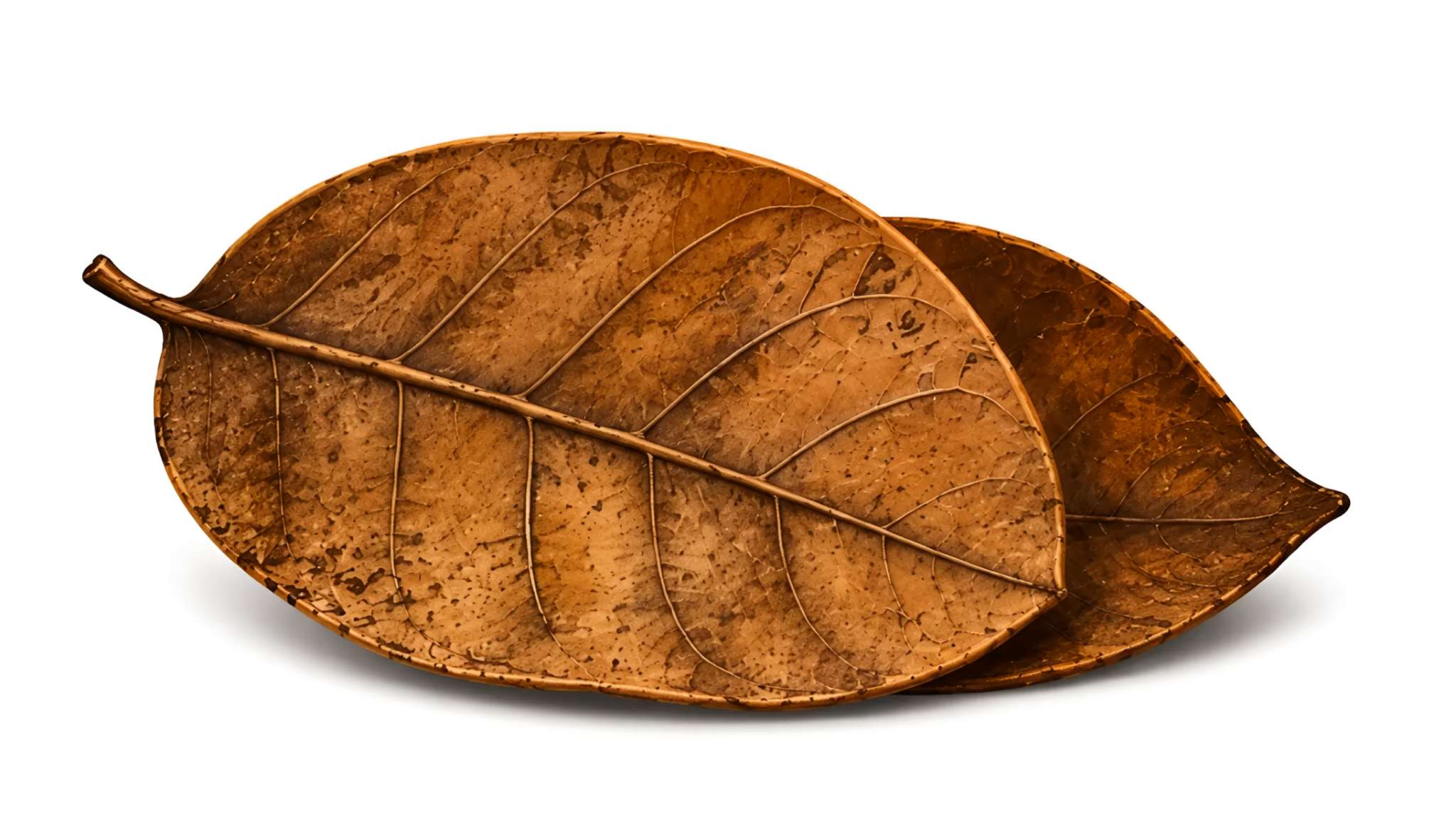
Finding the best axolotl Indian almond leaves is a discovery that many keepers make only after they have been in the hobby for a while — and once they try them, most never go back to a tank without them. Indian almond leaves, also known as catappa leaves, are dried leaves from the Terminalia catappa tree that release tannins, humic acids, and other bioactive compounds into aquarium water when submerged. For axolotls specifically, these compounds provide a range of benefits — from supporting gill and skin health to reducing stress, aiding recovery from illness, and creating a more natural, comfortable environment. This guide covers everything you need to know about axolotl Indian almond leaves: what they are, how they work, their specific benefits for axolotls, how to use them correctly, and our top verified Amazon picks. Pair this guide with our full axolotl care guide and our guides on the best axolotl quarantine tub and best axolotl aquarium salt for a comprehensive approach to axolotl health care.
What Are Indian Almond Leaves and Why Do Axolotl Keepers Use Them?
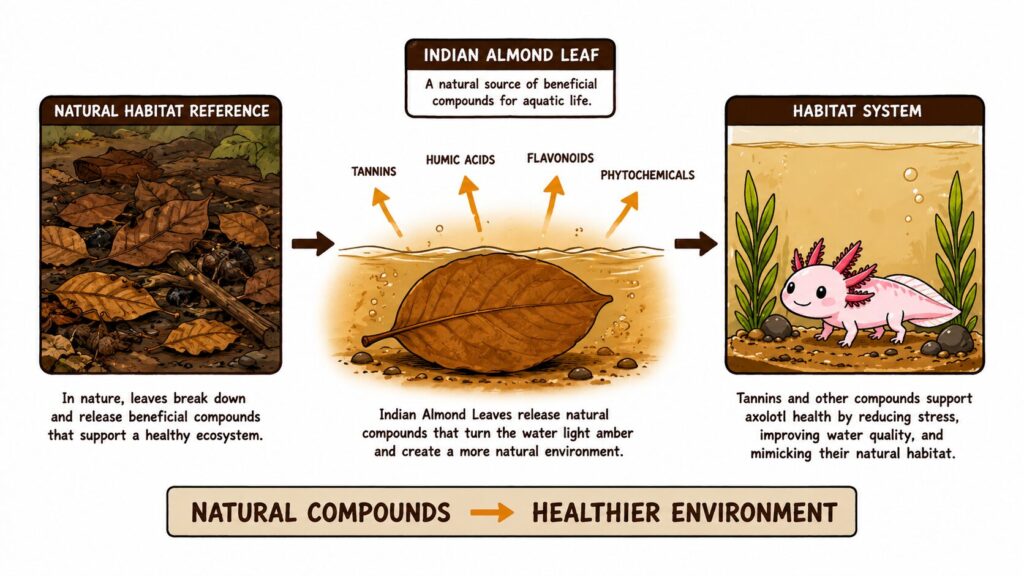
Indian almond leaves (Terminalia catappa, also called catappa leaves or sea almond leaves) are large, dried leaves from a tropical tree native to South and Southeast Asia, northern Australia, and parts of Africa. They have been used in traditional Asian aquarium keeping — particularly for betta fish and shrimp — for decades, and their use with axolotls has grown significantly as keepers have documented their benefits firsthand.
When placed in aquarium water, Indian almond leaves slowly release tannins, humic acids, flavonoids, and various phytochemical compounds. These substances are naturally present in the blackwater environments of many tropical freshwater habitats, where leaf litter decomposes along riverbanks and lakebeds and creates the characteristic amber-tinted “tea water” that many sensitive aquatic species have evolved to thrive in.
Axolotls are native to the Xochimilco lake system in Mexico City — a high-altitude freshwater environment with a specific water chemistry profile that includes natural organic matter from decomposing vegetation. While Xochimilco is not a blackwater environment in the way Southeast Asian rivers are, the organic compounds from Indian almond leaves produce water chemistry conditions that broadly support the kind of soft tissue health, immune function, and stress reduction that axolotls benefit from. The wild Ambystoma mexicanum is critically endangered, making responsible captive husbandry — including environmental enrichment that supports health — all the more meaningful.
What Do Indian Almond Leaves Do for Axolotls?
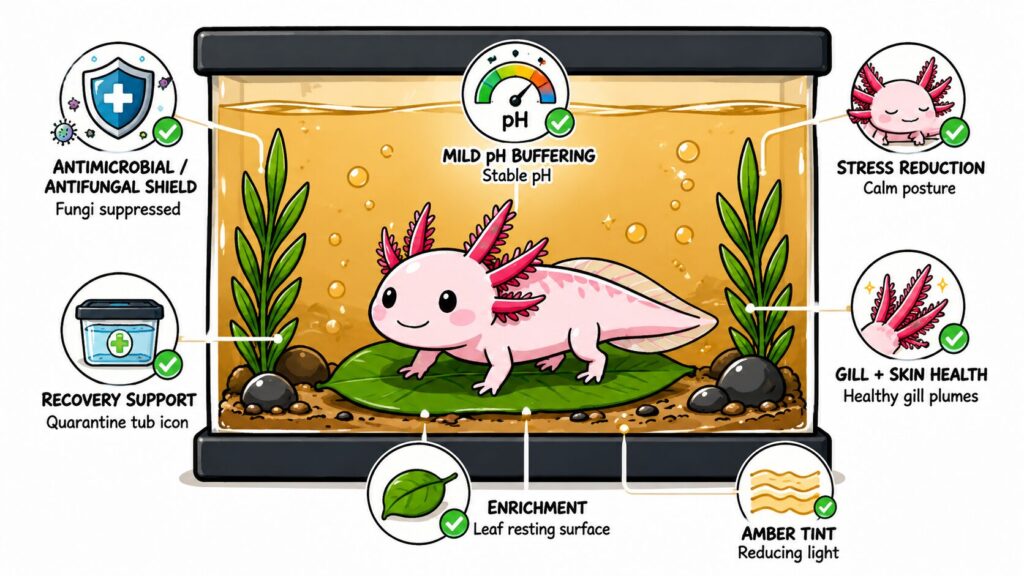
Tannins and humic acids provide antimicrobial and antifungal properties. Research published in Aquaculture has documented the antimicrobial activity of tannins in freshwater aquarium environments. The tannins released by catappa leaves inhibit the growth of certain bacteria and fungi on the water surface and on biological surfaces in the tank. For axolotls — who are vulnerable to fungal infections, particularly on their gill plumes — this creates a mildly hostile environment for fungal pathogens that is similar to the protective effect of aquarium salt but gentler and more sustained.
Mild pH buffering toward slightly acidic-neutral conditions. Indian almond leaves lower pH slightly as they release tannins. For most axolotl tanks targeting a pH of 7.0–7.8, this effect is mild and usually beneficial rather than problematic — the tannins provide a gentle buffering action that resists sudden pH swings. If you are already at the lower end of the axolotl’s preferred pH range, monitor your water test kit readings regularly when first using catappa leaves to ensure pH does not drop below 7.0.
Stress reduction through environmental familiarity. The amber-tinted “black water” environment created by catappa leaves is an instinctively calming environment for many aquatic animals that have evolved in leaf-litter habitats. Axolotls in amber-tinted water often display reduced pacing behaviour and spend more time resting comfortably in the open rather than hiding constantly. This is particularly notable in new setups where axolotls are still settling in. The visual reduction of harsh bright light penetration that the amber tint creates is also beneficial — axolotls are sensitive to bright light due to their lack of eyelids, and the gentle darkening of tannin-rich water mimics the naturally murky conditions of their preferred habitat. This pairs well with our guidance in the best axolotl tank light article on keeping lighting dim.
Skin and gill health support. The humic acids and phytochemicals released by Indian almond leaves have been documented in aquarium research to support the integrity of the mucosal layer — the protective biological film that covers fish and amphibian skin and gill surfaces. For axolotls, whose external gill plumes are exposed and vulnerable, this mucosal support contributes to better resistance against physical abrasion, early-stage infection, and environmental stress. According to research on amphibian skin immunity published in Molecular Immunology, the integrity of the mucosal layer is a primary first-line defence against pathogens in aquatic amphibians.
Supportive environment for recovery and quarantine. Many experienced axolotl keepers add Indian almond leaves to quarantine tub setups when an axolotl is recovering from illness, injury, or handling stress. The antimicrobial and mucosal support properties of the tannins create a gentle therapeutic environment that complements other treatments like methylene blue and aquarium salt without requiring any additional dosing or calculation.
Natural enrichment and physical habitat. As Indian almond leaves soften in the tank over 1–2 weeks, they settle on the substrate and provide a natural, textured surface that some axolotls rest on or investigate. In nature, axolotls live in an environment with abundant leaf litter and organic debris, and the presence of leaves in the tank creates a more naturalistic, enriched environment. Softened catappa leaves also develop a biofilm on their surface over time — a microorganism community that some axolotls may show interest in.
What Indian Almond Leaves Do Not Do
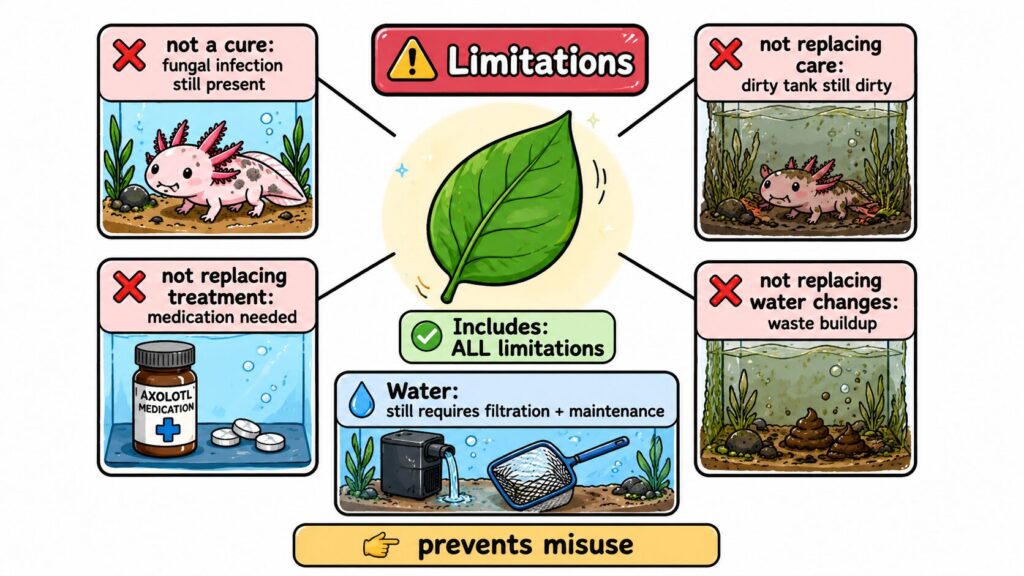
It is important to be clear about the limitations of catappa leaves, because they are sometimes overhyped in the aquarium hobby.
Indian almond leaves are not a treatment for serious fungal or bacterial infections — they provide supportive conditions but cannot replace targeted treatment for advanced illness. If your axolotl has significant fungal growth on its gills, white fluffy patches on its skin, or clear signs of bacterial infection, catappa leaves alone are not sufficient. They work best as a preventative and supportive measure rather than a primary treatment.
They do not replace water changes, good filtration, or stable water chemistry. A tank with catappa leaves and poor water quality is still a tank with poor water quality. The benefits of Indian almond leaves are additive to good husbandry, not a substitute for it. Our guides on how to clean an axolotl tank and how often to clean an axolotl tank remain fundamental.
They will also tint the water amber-brown, which is normal and harmless but can make it harder to observe your axolotl clearly from a distance. If you are actively monitoring your axolotl during illness, you may prefer to use leaves at a lower density or switch to a minimal-leaf setup during the observation period.
What to Look for in Axolotl Indian Almond Leaves
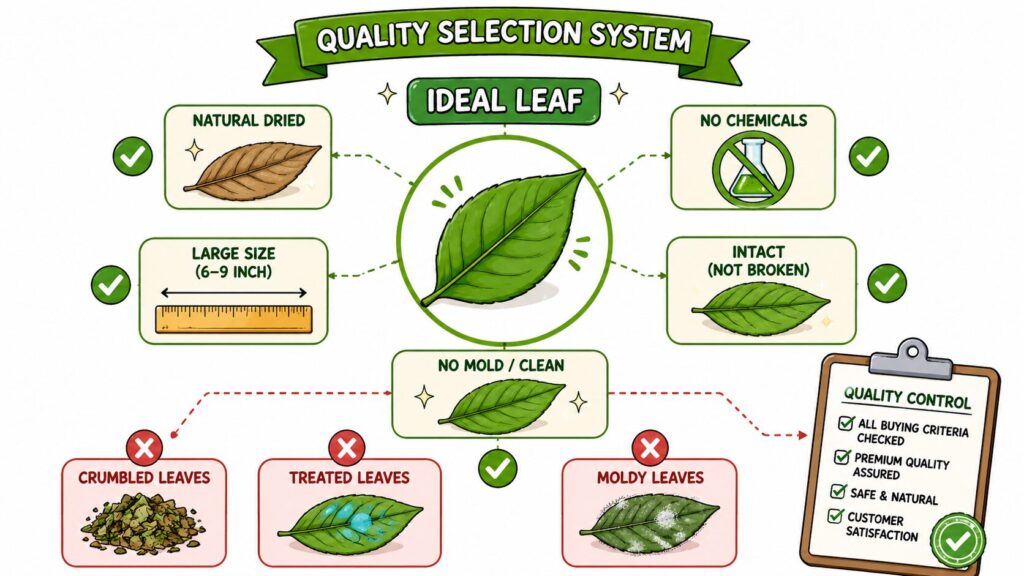
Naturally dried, not chemically treated. Look for products explicitly described as naturally sun-dried or air-dried with no pesticides, herbicides, or chemical treatments. Catappa leaves grown in non-organic conditions or treated with agricultural chemicals can introduce harmful substances into your axolotl’s water. All the products we recommend below are explicitly confirmed as untreated and safe for aquarium use.
Appropriate size. Indian almond leaves are available in sizes ranging from 2 inches to 10+ inches. For a 40-gallon axolotl tank, larger leaves (6–9 inches) provide more surface area per leaf and a longer tannin release period. Smaller leaves (2–3 inches) are better suited to quarantine tubs and smaller setups, or for keepers who prefer to add leaves more frequently in smaller quantities.
Consistent quality. The most common complaint about Indian almond leaves from lower-quality sources is that they arrive broken, crumbled, or inconsistently sized. Broken leaves still release tannins but cannot be used as physical shelters or placed aesthetically in the tank. Choose suppliers who provide whole, intact leaves.
No mold or unusual odour. Fresh dried catappa leaves should have a faint earthy, natural smell. Any musty or mouldy odour indicates improper drying or storage that may introduce contaminants. Always inspect leaves upon arrival.
Our Top Axolotl Indian Almond Leaves Picks
Best Overall for 40-Gallon Tanks: SunGrow 10 Pack Axolotl Indian Almond Leaves (8–9 Inch)
The SunGrow 10 Pack Axolotl Indian Almond Leaves (8–9 Inch) is our top overall pick for axolotl keepers with a standard 40-gallon setup. SunGrow explicitly labels this product for axolotl use — it is one of the few Indian almond leaf products on Amazon specifically marketed and tested for axolotls rather than repurposed from betta or shrimp products. The 8–9 inch size is large enough to provide meaningful tannin release over a 1–2 week period in a 40-gallon tank, and the large surface area creates an attractive, natural aesthetic in the tank. Each leaf is hand-picked and naturally dried with no chemical treatment, and the product page confirms they are raw and can be added directly to the tank without pre-boiling. SunGrow recommends 1–2 leaves per 10 gallons as a starting point — for a 40-gallon Aqueon breeder (our recommended tank in the best axolotl tank article), 4–5 leaves provides a good initial tannin level.
Best for Quarantine Tubs: SunGrow 50 Pack Axolotl Indian Almond Leaves (2 Inch)
The SunGrow 50 Pack Axolotl Indian Almond Leaves (2 Inch) is ideally sized for quarantine tubs — small containers (typically 5–15 gallons) where you house an axolotl during recovery, illness treatment, or observation. Two to three small leaves in a 5-gallon quarantine tub create a gentle tannin environment that supports healing without over-darkening the water significantly. The 50-pack provides an abundant supply that covers many treatment cycles at minimal cost. Small leaves are also useful in main tanks as accent pieces around hides and caves to create a more naturalistic floor aesthetic.
Best Multi-Size Value Pack: SunGrow Catappa Indian Almond Leaves (7–8 Inch, 10 Pack)
The SunGrow Catappa Indian Almond Leaves (7–8 Inch, 10 Pack) is a well-established SunGrow product that has been available for many years and has a strong track record among aquarium keepers. The 7–8 inch size falls between the small quarantine leaves and the very large 8–9 inch pack, making it a flexible choice for keepers who want a mid-size leaf suitable for both the main tank and a quarantine setup. These are naturally dried, untreated catappa leaves that can be added directly to the tank. At 10 leaves per pack, this format provides a several-month supply for a standard axolotl tank with regular replacement.
Best Large Format for Regular Users: SunGrow 10 Pcs Catappa Indian Almond Leaves for Shrimp Aquariums (4–7 Inch)
For keepers who want a larger range of leaf sizes to use strategically — smaller pieces around decor, larger pieces floating initially and then settling — the SunGrow 4–7 Inch Catappa Indian Almond Leaves (10 Pack) offers good variability at an accessible price. These leaves are suitable for both axolotls and shrimp, confirmed untreated, and the mid-size range is versatile enough for most standard tank setups.
Best Budget Bulk Option: Gxsdj Indian Almond Leaves (Catappa + Longan + Oak Leaf Mix)
For keepers on a budget who want a high-volume leaf supply across multiple leaf types, the Gxsdj Indian Almond Leaves Mix (Catappa, Longan & Oak Leaves) provides a combination pack that is explicitly listed as safe for axolotls. The mix of catappa, longan, and oak leaves provides varied tannin profiles from different natural sources. All three leaf types are 100% natural, sun-dried, and free of chemical treatments. The combined leaf variety creates a diverse and natural-looking tank floor environment that works especially well in planted axolotl tanks — see our guide on the best axolotl tank plants for plant species that complement a tannin-rich aquascape well.
How to Use Indian Almond Leaves in an Axolotl Tank
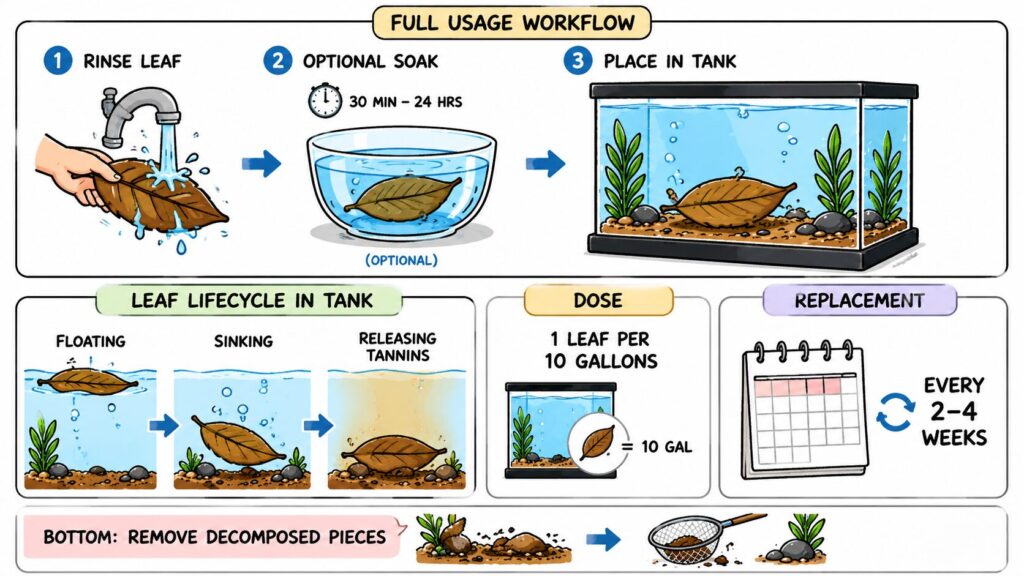
Rinse before use. Even naturally dried catappa leaves should be rinsed briefly under cool running water before being added to the tank to remove any dust or surface debris from packaging and handling.
Add directly or pre-soak. Most high-quality catappa leaves can be added directly to the tank. They will float initially and then gradually absorb water and sink over 1–3 days. If you want them to sink faster and begin releasing tannins more quickly, soak the leaves in a clean container of dechlorinated water for 12–24 hours before adding them to the tank. Some keepers briefly boil leaves to accelerate softening, but this is not necessary and removes some of the beneficial surface microorganisms that develop during proper drying.
Dose appropriately for your tank size. A starting dose of 1 large (7–9 inch) leaf per 10 gallons is a reasonable guideline. For a 40-gallon Aqueon breeder, 4 large leaves provides a noticeable but not excessive tannin level — the water will develop a gentle amber tint rather than a deep dark brown. Adjust up or down based on how much tinting you prefer and monitor your water test kit to ensure pH remains above 7.0.
Replace every 2–4 weeks. Indian almond leaves fully decompose over time — they will gradually soften, break down, and eventually disappear entirely. Replace leaves as they break down to maintain consistent tannin levels. In an axolotl tank, decomposing leaf matter contributes to the organic load, so remove fully broken-down leaf fragments during your weekly water changes using a turkey baster or tank siphon.
Use more generously in quarantine setups. During quarantine or recovery, you can use Indian almond leaves slightly more liberally — 1–2 leaves per 5 gallons of quarantine water — to maximise their supportive antimicrobial and mucosal benefit during the healing period. Replace with each daily 100% water change, adding fresh leaves to each fresh batch of quarantine water.
Pair with good water quality management. The benefits of Indian almond leaves are most effective when baseline water quality is already good. Ensure your filter is running well, temperature is in the correct range (see our guide on what temperature axolotls need), and water parameters are stable before adding catappa leaves as a supplementary health support.
Frequently Asked Questions
Are Indian almond leaves safe for axolotls? Yes. Indian almond leaves that are naturally dried and free of chemical treatments are safe for axolotls. They have been used by axolotl keepers for many years with documented benefits and no negative effects at appropriate doses.
Do Indian almond leaves change the water colour? Yes — they release tannins that tint the water amber to light brown, similar to weak tea. The intensity of the tint depends on the number and size of leaves used. This colouration is harmless and is considered beneficial by most experienced keepers.
Will Indian almond leaves lower my pH too much? At typical doses (1 large leaf per 10 gallons), the pH effect is mild — usually a reduction of 0.1–0.3 pH points in a normally buffered tank. If your tank has reasonable KH (carbonate hardness) as a pH buffer, catappa leaves will not crash your pH. Monitor with your water test kit when first introducing leaves.
Can I use Indian almond leaves in my main tank and quarantine tub simultaneously? Yes. Many keepers maintain leaves in their main display tank as a routine health supplement and add fresh leaves to their quarantine tub during illness treatment. The two uses are entirely compatible.
How many Indian almond leaves should I use in a 40-gallon axolotl tank? A starting point of 4–5 large (7–9 inch) leaves in a 40-gallon tank gives a gentle amber tint and meaningful tannin benefit without over-darkening the water. Adjust to taste.
Do Indian almond leaves need to be removed after a certain time? Yes — replace leaves as they fully decompose, typically every 2–4 weeks. Partially decomposed leaves that are still mostly intact can remain in the tank as they continue releasing tannins. Remove leaf fragments that have fully broken down to prevent them from contributing to the tank’s organic load.
The Subtle Addition That Makes a Real Difference
Indian almond leaves are one of those small investments that experienced axolotl keepers consistently swear by — something that does not transform a tank overnight but creates a measurably better environment over time. They are inexpensive, natural, and genuinely beneficial for gill health, skin resilience, and stress reduction. If you want keeper-tested recommendations across every product your axolotl relies on — from the tank and filtration to food, hides, and the full health supply kit — Best Axolotl Products is your complete guide to the best gear in every category of axolotl care.