

This axolotl care guide covers everything you need to know to keep these remarkable animals healthy, comfortable, and thriving in captivity. Axolotls (Ambystoma mexicanum) are unlike almost any other aquatic pet — they are permanently aquatic salamanders that never fully metamorphose, they can regenerate lost limbs, and they have been kept and studied in captivity for well over a century. But for all their toughness and scientific fame, they have specific, non-negotiable care requirements that new owners must understand before bringing one home. Get those right, and an axolotl can live a long, healthy life. Get them wrong, and problems arise quickly.
Before You Buy: Is Owning an Axolotl Legal Where You Live?
This is the first question every prospective owner needs to answer. Axolotls are legal to own in most of the United States, Canada, and the UK, but there are notable exceptions. In the US, California, Maine, New Jersey, and Virginia all restrict or prohibit axolotl ownership. In Canada, some provinces have restrictions as well. Before purchasing an axolotl, check your local laws. Our articles on why axolotls are illegal in some places and whether it is legal to own an axolotl break this down in detail.
Understanding What an Axolotl Actually Is
Axolotls are freshwater animals and obligate carnivores — they eat meat exclusively and have no interest in plant matter. You can read more about their dietary classification in our article on whether axolotls are carnivores, herbivores, or omnivores. They are native to the lake system of Xochimilco near Mexico City and are now critically endangered in the wild, primarily due to habitat destruction, pollution, and invasive species. The IUCN Red List currently classifies them as Critically Endangered, with wild populations estimated at fewer than 1,000 individuals. All captive axolotls are descended from animals that were brought to Europe for scientific research in the 1860s, and the captive gene pool has since developed a wide variety of color morphs. If you are curious about the different appearances axolotls can have, our axolotl morphs guide covers every morph in detail.
Choosing the Right Tank
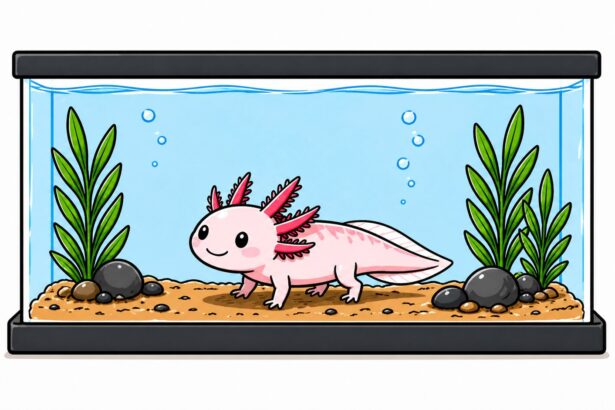
The tank is the foundation of good axolotl care, and getting it right from the start saves enormous trouble later. A single adult axolotl requires a minimum of 20 gallons of water, though 40 gallons is considerably better and gives more room for stable water parameters. If you plan to keep two axolotls, add at least 10 gallons per additional animal. Longer tanks are preferable to tall ones — axolotls are bottom dwellers and need floor space, not vertical depth.
A full axolotl tank kit can be a cost-effective way to get started if you are buying everything at once, or you can purchase components separately starting with a quality axolotl tank. A tank stand is worth investing in as well — a 40-gallon tank full of water is extremely heavy and should never sit on furniture not designed to support it.
A tank lid is essential. Axolotls are surprisingly capable of escaping open tanks, particularly if startled, and a loose lid or no lid at all is a serious risk.
Filtration: The Most Important Equipment in Your Tank
Good filtration is the single most critical piece of equipment in an axolotl tank. Axolotls produce a significant amount of ammonia-rich waste, and without adequate biological filtration, ammonia levels rise rapidly and cause gill damage, lethargy, and eventually death. The nitrogen cycle — in which beneficial bacteria convert toxic ammonia into less harmful compounds — is the invisible backbone of a healthy tank.
Your filter needs to be sized appropriately for your tank volume and must provide strong biological filtration. However, axolotls are sensitive to strong water currents, which stress them and can cause them to float or struggle to rest. Look for a filter that provides gentle flow or one that can be baffled to reduce output. A spray bar or sponge over the intake and output helps diffuse the current. Our guide to the best axolotl filter covers the most suitable options.
Never clean your filter media in tap water — the chlorine will kill your beneficial bacteria. Always rinse media in a bucket of used tank water. If you are setting up a new tank, cycling it before adding your axolotl is essential. Cycling bacteria supplements can help speed up this process, which otherwise takes four to six weeks.
Water Temperature: The Non-Negotiable
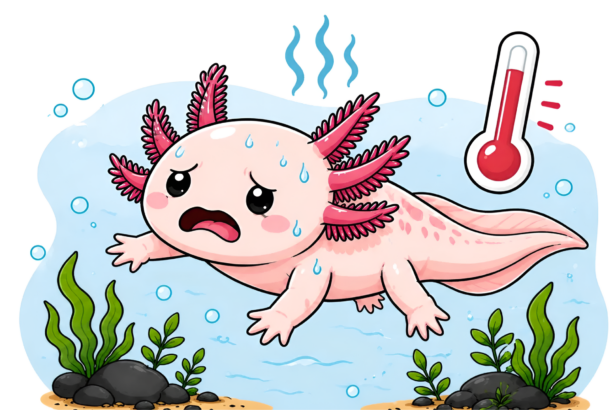
If there is one thing this axolotl care guide cannot stress enough, it is temperature. Axolotls are cold-water animals that must be kept between 60–68°F (16–20°C). Above 72°F, they become stressed, stop eating, and become vulnerable to illness. Above 75°F, they can die. This is not a range you can fudge.
For owners in warmer climates or during summer months, maintaining cold water requires active intervention. A water chiller is the most reliable solution for keeping temperatures consistently in range. A cooling fan can help in mild conditions. Always monitor the tank with a reliable tank thermometer — not the strip thermometers that come with many tanks, which are notoriously inaccurate, but a proper digital thermometer. Our full article on what temperature axolotls need explains the reasoning behind this range and what to do when temperatures rise.
Water Quality and Parameters
Beyond temperature, axolotls require stable, clean water with specific chemical parameters. According to the Ambystoma Genetic Stock Center at the University of Kentucky, which maintains one of the world’s most important axolotl research colonies, the optimal water parameters for axolotls are: ammonia at 0 ppm, nitrite at 0 ppm, nitrate below 20 ppm, pH between 7.0 and 8.0, and hardness between 7–14 dGH.
Test your water regularly with a quality water test kit. The API Freshwater Master Test Kit is one of the most trusted options in the hobby and tests for all the essential parameters in one kit.
Every time you add tap water to the tank — whether for a water change or to top off evaporation — treat it with a water conditioner to remove chlorine and chloramine. Both are toxic to axolotls and will harm gill tissue on contact.
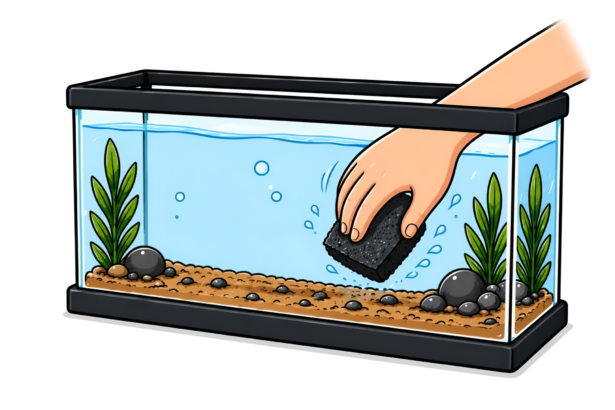
Partial water changes of 20–30% per week are the standard maintenance routine for an established tank. Our guide on how to clean an axolotl tank walks through the full process step by step, including how to vacuum the substrate and manage your filter during cleaning.
Substrate: What to Put on the Tank Floor
Substrate choice has a bigger impact on axolotl health than many new owners realize. Gravel is genuinely dangerous — axolotls often accidentally ingest it while lunging for food, causing potentially fatal intestinal blockages. The only safe gravel is gravel with pieces larger than the axolotl’s head, which it physically cannot swallow.
Fine sand is the recommended substrate for most keepers. It is safe if accidentally ingested, easy to clean with a siphon, and mimics the axolotl’s natural environment well enough that many axolotls appear noticeably calmer on sand than on bare glass. Our article on whether axolotls need substrate covers this in full, and you can find the best options in our guides to axolotl tank sand and axolotl tank tiles, which are a popular alternative for owners who want easy cleaning without the impaction risk.
Hides, Décor, and Plants
Axolotls need places to hide. In the wild, they shelter under rocks, logs, and vegetation, and captive axolotls display the same instinct. Without adequate hiding spots, axolotls become chronically stressed, which suppresses immune function and makes them more vulnerable to disease. Provide at least one hide per axolotl — axolotl caves and hides designed specifically for aquarium use are widely available and come in a range of sizes.
Tank décor beyond hides is welcome, but avoid anything with sharp edges that could catch delicate gill filaments, and avoid decorations with small holes the axolotl could get stuck in. Smooth, rounded pieces are always safer.
Plants — whether live or silk — provide additional cover, break up sightlines, and make the tank environment more stimulating. Axolotl-safe tank plants like java fern, anubias, and hornwort are all cold-tolerant and easy to maintain. Avoid plastic plants with stiff, sharp edges, and never use plants treated with pesticides.
Lighting should be soft and indirect. Axolotls have no eyelids and are sensitive to bright light, preferring dimmer conditions. A low-output tank light on a timer that mimics a natural day cycle works well.
Feeding Your Axolotl
Axolotls are carnivores and need a protein-rich diet. In the wild they eat worms, small crustaceans, insects, and small fish. In captivity, the staple foods that most experienced keepers rely on are:
Nightcrawlers (earthworms) are the single best staple food for adult axolotls. They are nutritionally complete, easy to find, and most axolotls take to them readily. Cut them into appropriately sized pieces for smaller animals. Our guide to the best axolotl nightcrawlers can help you source quality worms.
High-quality sinking pellets formulated for axolotls or carnivorous fish are a convenient and nutritionally solid option. Axolotl pellets should be free of filler ingredients and sink immediately, as axolotls feed from the bottom and will rarely chase floating food effectively.
Bloodworms — whether frozen or freeze-dried — make an excellent supplement or treat, though they should not be the sole diet as they lack the nutritional completeness of worms or pellets. Find the best options in our guide to axolotl bloodworms.
Feed adult axolotls every two to three days, offering only as much as they will eat in a few minutes. Remove uneaten food promptly using a turkey baster or feeding tongs to prevent ammonia spikes. Overfeeding is a common mistake — a well-fed axolotl should have a gently rounded belly, not a bloated one. For more on body condition, see our article on whether axolotls can get fat.
Juveniles need feeding more frequently — once daily or even twice daily for very young animals — as they grow rapidly in their first year. Our broader axolotl food guide covers all feeding options in detail.
Axolotl Behavior and What Is Normal
Understanding axolotl behavior helps you spot problems early and avoid unnecessary worry. Axolotls are most active at dawn and dusk, spending much of the day resting on the tank floor or tucked inside a hide. This is entirely normal — they are not sluggish because they are sick; they are simply nocturnal animals. Our article on whether axolotls sleep covers their rest patterns in detail.
Axolotls will occasionally float at the surface, which can indicate a swallowed air bubble, mild digestive upset, or stress from water quality issues. A brief bout of floating after eating is usually not a concern. Persistent floating combined with lethargy and refusal to eat is a warning sign worth investigating.
Gills that are forward-facing, full, and feathery indicate a relaxed, healthy axolotl. Gills that are consistently swept back flat against the body can suggest stress, poor water quality, or illness.
Housing Axolotls Together
Axolotls can be housed together, but it requires careful management. The most important rule is size matching — never house axolotls of significantly different sizes together, as the larger animal will bite the smaller one’s gills and limbs, treating them as food. This is not aggression but a feeding instinct, and it is covered in detail in our article on whether axolotls are cannibals.
For more detail on housing axolotls with other species — including which fish, if any, are relatively lower risk — see our guide on whether axolotls can have tank mates.
Health: What to Watch For
Axolotls are resilient animals, but they are sensitive to water quality issues and can develop infections when their environment is suboptimal. The most common health problems are almost always water quality related.
Ammonia burn is one of the most frequent issues new owners encounter. Damaged, curled, or pale gills, red streaking on the body, and lethargy are the classic signs. Our dedicated article on ammonia burn in axolotls covers identification and treatment.
Fungal infections appear as white, fluffy growths on the skin or gills and are typically a consequence of injury or poor water conditions. Indian almond leaves have mild antifungal properties and are widely used by experienced keepers as a preventative measure. Methylene blue is a commonly used treatment for fungal issues, and aquarium salt baths can help with mild infections.
Bacterial infections, bloating, and parasitic infestations all require more targeted treatment. The Association of Reptilian and Amphibian Veterinarians maintains a directory of vets experienced with amphibians, and any persistent health issue should be seen by a qualified aquatic vet rather than self-treated. Our article on whether axolotls carry diseases covers what illnesses axolotls are susceptible to and what to watch for.
A quarantine tub is an essential piece of equipment for any axolotl keeper — it allows you to isolate a sick animal for treatment without contaminating the main tank, and it gives you somewhere to house your axolotl safely while performing a deep tank clean.
Axolotl Lifespan and Long-Term Care
With proper care, axolotls typically live 10–15 years in captivity, and some individuals have been recorded living even longer. Their long lifespan is one of the reasons getting the fundamentals right matters so much — this is a long-term commitment, not a short-term pet. Our article on axolotl lifespan covers the factors that most influence how long axolotls live and how to give yours the best possible chance of reaching its full potential.
As axolotls age, their feeding frequency can be reduced slightly, and very old animals may show reduced activity levels. Continue testing water regularly, maintaining temperature, and providing a stimulating environment with hides and plants throughout their life.
Axolotl Breeding
If you are interested in breeding your axolotls, there is a great deal to learn before getting started. Axolotls reach sexual maturity at around 12–18 months, and how to determine the sex of an axolotl is an important skill to develop before attempting to pair animals. The mating process itself is fascinating — males deposit spermatophores that females pick up to fertilize their eggs, a process covered in our articles on whether axolotls mate and how axolotls mate.
Breeding axolotls produces large numbers of eggs and larvae that require their own dedicated care, including separation from adults who will eat them. Our full axolotl breeding guide is the best starting point for anyone considering this. Also be aware that breeding axolotls may have legal implications in your area, particularly regarding selling or transferring offspring.
Frequently Asked Questions
Are axolotls good pets for beginners? They can be, but they require more specific care than typical beginner fish. The cold-water temperature requirement in particular can be a barrier. If you are prepared to invest in a proper setup and monitor water quality regularly, axolotls are rewarding pets. If you want a low-maintenance first aquarium animal, they may not be the right fit.
Do axolotls recognize their owners? Axolotls are not social animals and do not form bonds in the way mammals do, but they do learn to associate their keeper’s presence with feeding time and often become more active when a familiar person approaches the tank.
Can axolotls live in a bowl or small tank? No. A bowl or tank under 20 gallons cannot maintain stable water quality for an axolotl. The smaller the water volume, the faster ammonia accumulates and the harder it is to keep temperatures stable. A proper sized tank with a filter is non-negotiable.
Do I need to use an air pump? An air pump is not always strictly necessary if your filter provides adequate surface agitation for gas exchange, but it is a useful addition, particularly in warmer weather when oxygen levels in water drop. It is also invaluable in a quarantine tub where a filter may not be running.
How do I choose a name for my axolotl? This is one of the more enjoyable parts of ownership. Our collection of axolotl names has ideas for every morph and personality type.
Final Thoughts: Your Axolotl Care Journey Starts Here
This axolotl care guide covers the foundations, but great ownership is an ongoing process of learning, observing, and adapting to your individual animal’s needs. The axolotl is a species with a genuinely uncertain future in the wild — our article on whether axolotls are endangered paints a sobering picture — which makes caring well for captive animals both a responsibility and a privilege.
Every good axolotl keeper is only as effective as the tools they work with. Whether you are just getting started or upgrading your setup, find everything you need in one place at the Herdurbia Best Axolotl Products hub — because your axolotl’s health is worth doing right.