
How do axolotls mate? It is one of the most fascinating questions in the freshwater hobby, and the answer involves a courtship and fertilisation process that is genuinely unusual — indirect internal fertilisation through a fascinating ritual involving spermatophores that the female collects from the tank floor. Axolotl mating is not accidental or passive. It is a multi-stage behavioural sequence with identifiable phases that, once you understand them, you can recognise, support, and manage confidently whether you are breeding intentionally or simply observing animals that have decided to reproduce on their own. This guide covers the entire process in detail — from the conditions that trigger mating, through the full courtship sequence, fertilisation mechanism, egg laying, incubation, and hatching. If you want broader context, also read our companion articles on whether axolotls mate and what axolotl breeding involves, and our full axolotl care guide for the complete care picture.
- Do Axolotls Mate Naturally in Captivity?
- Sexing Axolotls Before Breeding
- Environmental Triggers for Axolotl Mating
- The Courtship Sequence: How Axolotls Mate Step by Step
- Egg Laying
- Egg Incubation and Hatching
- Axolotl Larvae — The First Few Weeks After Hatching
- Do Axolotls Mate for Life?
- Considerations Before Attempting Axolotl Breeding
- Frequently Asked Questions
- The Wonder of Axolotl Reproduction
Do Axolotls Mate Naturally in Captivity?
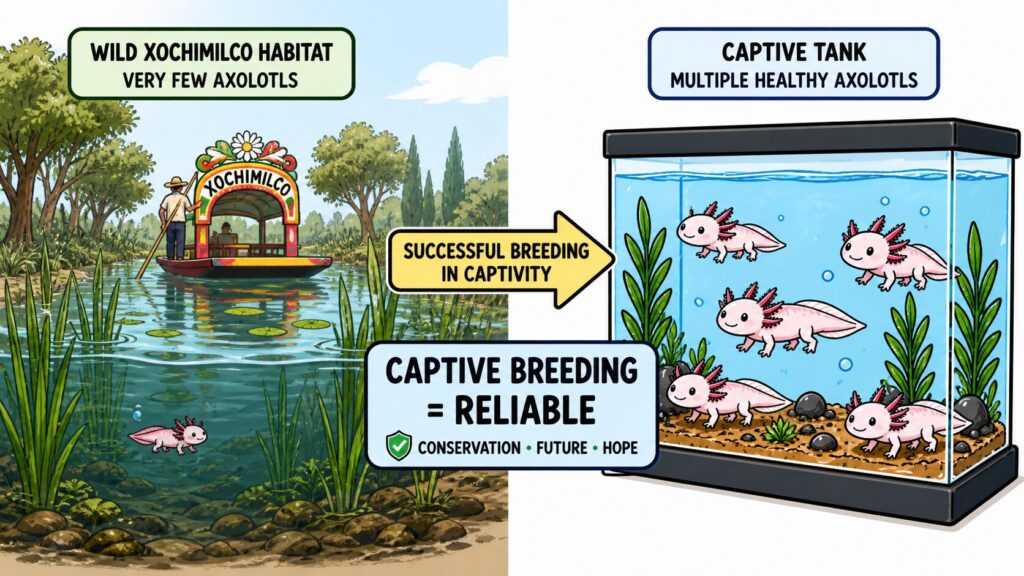
Yes — axolotls breed readily in captivity when conditions are appropriate. This is one of the reasons Ambystoma mexicanum has become such a valuable laboratory species for scientific research. According to the Ambystoma Genetic Stock Center at the University of Kentucky, which maintains the world’s largest research colony of axolotls, captive breeding under controlled conditions is highly reliable and predictable once the environmental triggers are understood.
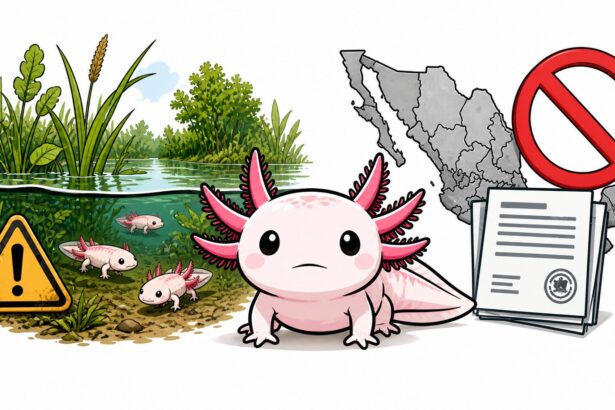
The wild axolotl population is critically endangered in its native Xochimilco lake system in Mexico City, where habitat destruction, water pollution, and invasive species have reduced the population to critically low numbers. This makes the robust captive breeding capacity of axolotls particularly significant — the captive population represents a genuinely important conservation resource, and understanding how axolotls mate in captivity is relevant to more than just the hobbyist.
Sexing Axolotls Before Breeding
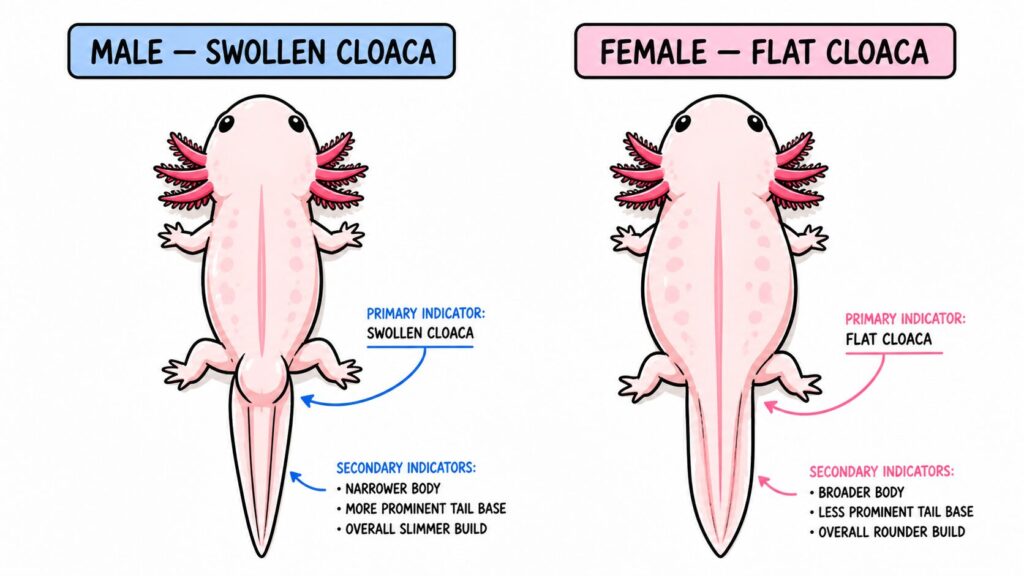
Before any discussion of how axolotls mate, the prerequisite is knowing which axolotls are male and which are female. Axolotls cannot be reliably sexed until they reach sexual maturity — typically around 12–18 months of age, when they are approximately 7–8 inches in length.
The primary and most reliable visual indicator of sex in adult axolotls is the cloaca — the combined urogenital and digestive opening at the base of the tail. In males, the cloaca forms a noticeably swollen, rounded bulge visible from above or from the side. In females, the cloaca is much flatter and less prominent. This difference is most visible when comparing a known male and female side by side, but becomes identifiable with experience in single animals. Our guide on how to determine the sex of an axolotl covers this in full detail with specific guidance on identifying the cloaca.
Body shape is a secondary indicator — females in breeding condition tend to be slightly broader-bodied when viewed from above, particularly when carrying eggs. However, this is less reliable as a standalone indicator and should not be the sole basis for sexing.
Environmental Triggers for Axolotl Mating
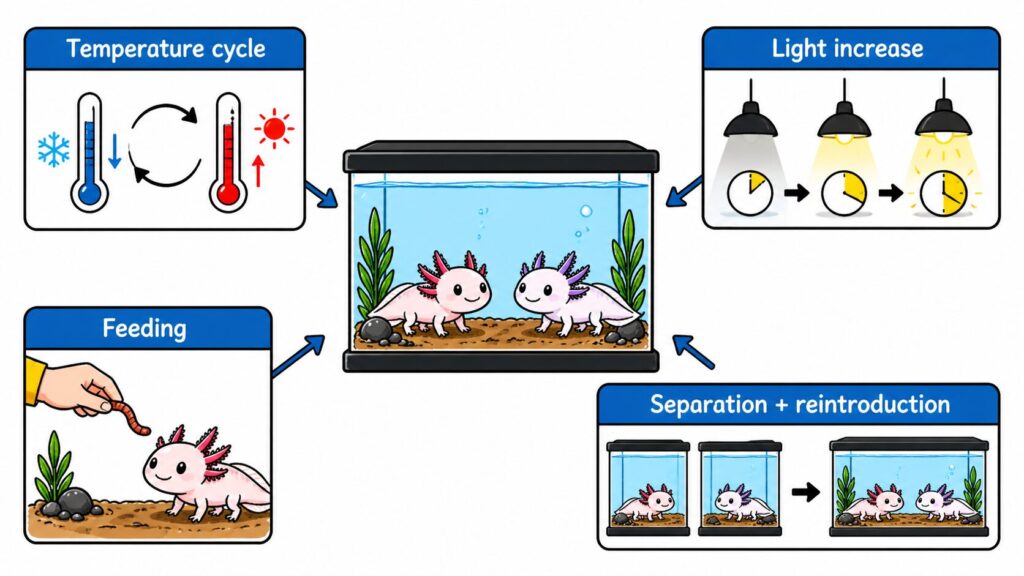
Axolotls in the wild are seasonal breeders, with mating activity triggered by environmental changes that signal the arrival of spring — specifically dropping temperatures followed by warming, increasing day length (photoperiod), and the physiological changes that accompany these seasonal shifts. Captive axolotl mating can be triggered by simulating these conditions.
Temperature change is the most powerful trigger. Wild axolotl mating in Xochimilco occurs in the late winter to early spring period, when water temperatures are at their coldest and beginning to rise. In captivity, one of the most reliable ways to stimulate mating behaviour is to allow the tank temperature to drop slightly over a period of 1–2 weeks (within the safe range — never below 59°F/15°C) and then allow it to gradually warm back toward the upper end of the safe range (around 68°F/20°C). This temperature cycling mimics the seasonal temperature shift that triggers breeding behaviour in the wild. Our guide on what temperature axolotls need provides the full temperature management context. A reliable water chiller and tank thermometer are essential for managed temperature cycling.
Increased photoperiod (day length). Gradually increasing the daily light duration — from approximately 10 hours per day to 12–14 hours — in conjunction with the temperature change mimics the lengthening days of spring and reinforces the seasonal breeding cue.
Enhanced feeding and conditioning. In the weeks before attempting to trigger mating, increasing feeding frequency and offering particularly nutritious food — fresh nightcrawlers are the preferred conditioning food — brings both male and female into peak physical condition. Well-conditioned animals produce better-quality eggs and sperm, resulting in higher fertilisation rates and healthier larvae.
Separating then reintroducing individuals. Many breeders separate the male and female into individual tanks for 4–8 weeks before introducing them together for breeding. The separation period ensures each animal is in peak individual condition and creates a novelty effect when they are reintroduced that appears to stimulate courtship more reliably than continuous cohabitation.
The Courtship Sequence: How Axolotls Mate Step by Step
The actual courtship and mating sequence in axolotls is an indirect fertilisation process — the male and female do not physically couple. Instead, the male deposits sperm packets (spermatophores) on the substrate, and the female subsequently picks them up with her cloaca to fertilise her eggs internally. The sequence proceeds through identifiable phases.
Phase 1: Initial Contact and Assessment (Hours to Days)
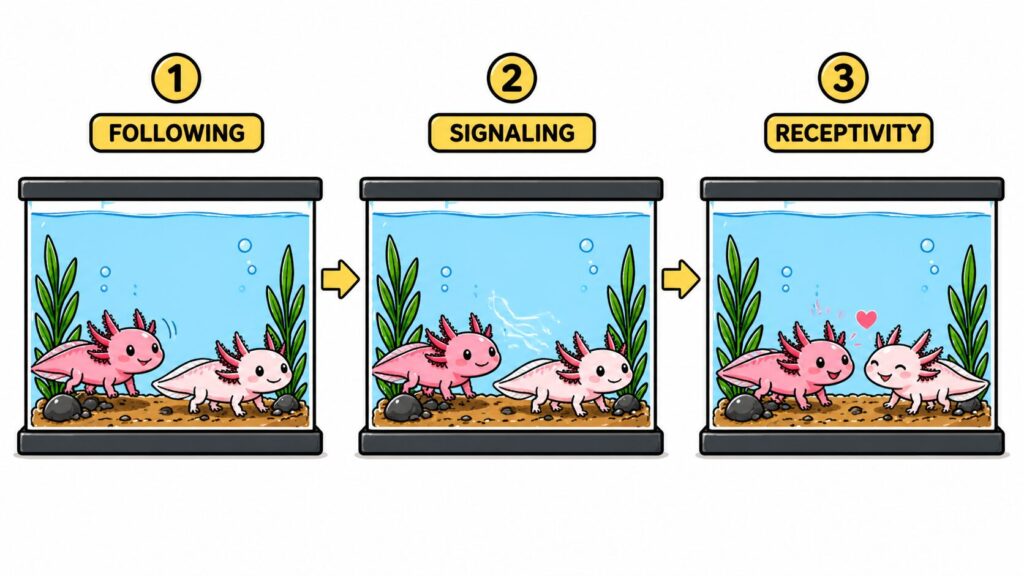
When a male and female axolotl are introduced to each other or when seasonal conditions stimulate breeding behaviour in a cohabiting pair, the initial phase involves increased movement, mutual investigation, and the beginning of male signalling behaviour.
The male will begin to follow the female around the tank — not aggressively but persistently, maintaining proximity and orientating toward her. He may circle her, position himself alongside her, and engage in a characteristic undulating movement of his tail. This tail-undulating behaviour appears to be both a visual and a chemical signalling behaviour — it disperses pheromones from the male’s cloaca through the water in the direction of the female, and the pheromones are believed to play a significant role in female receptivity. Research published in Hormones and Behavior has documented the role of chemical signalling in axolotl mating behaviour and confirmed that pheromonal cues from males influence female responsiveness.
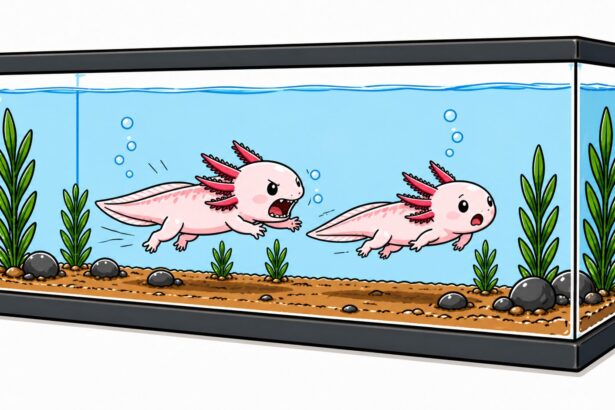
The female’s response to the male during this phase indicates her receptivity. A receptive female will slow her movement, allow the male to approach closely, and begin to follow him. A non-receptive female will move away from the male persistently — and if the male continues to pursue aggressively, this can cause stress-related biting behaviour. If one animal is clearly avoiding the other and the behaviour continues beyond a few hours, separate them and try again later.
Phase 2: The Spermatophore Walk (The Signature Axolotl Courtship Behaviour)
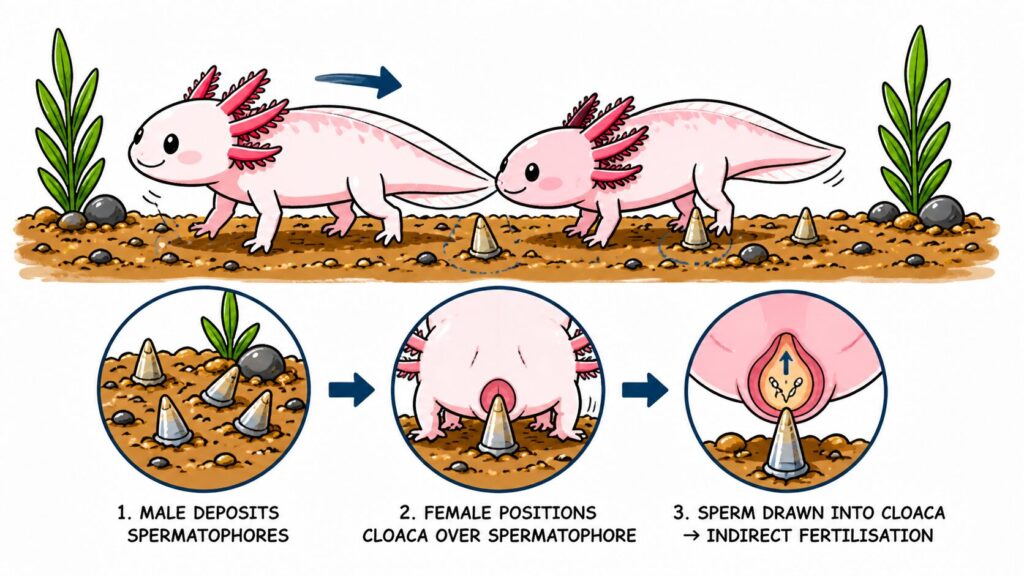
Once the female signals receptivity through her following behaviour, the most characteristic element of axolotl courtship begins: the spermatophore walk.
The male walks slowly across the substrate, and the female follows directly behind him, her snout often touching or near his tail. This tandem walking — male leading, female following nose-to-tail — is one of the most distinctive and recognisable behaviours in axolotl reproduction. The pair may walk like this for minutes to hours, sometimes circling the tank repeatedly.
During the walk, the male periodically stops and deposits a spermatophore — a small, transparent, gelatinous cone-shaped structure approximately 1–2cm tall — on the substrate. A spermatophore consists of a base of gelatinous material capped with a packet of sperm at the tip. A single male may deposit multiple spermatophores over the course of a mating session — typically anywhere from 5 to 25 or more.
After depositing a spermatophore, the male moves forward a short distance while continuing to undulate his tail, guiding the female directly over the deposited packet. If she is receptive, the female positions her cloaca directly over the spermatophore cap and picks up the sperm packet with her cloacal lips through a brief muscular action. The sperm then travels internally to fertilise eggs as they are produced. This indirect fertilisation mechanism — the male never directly contacts the female’s reproductive tract — is shared with several other salamander species but is genuinely unusual among vertebrates more broadly.
The male may deposit multiple spermatophores and the female may pick up multiple packets during a single mating session. Fertilisation rates tend to be higher when multiple spermatophores are successfully collected.
Phase 3: Post-Courtship Separation
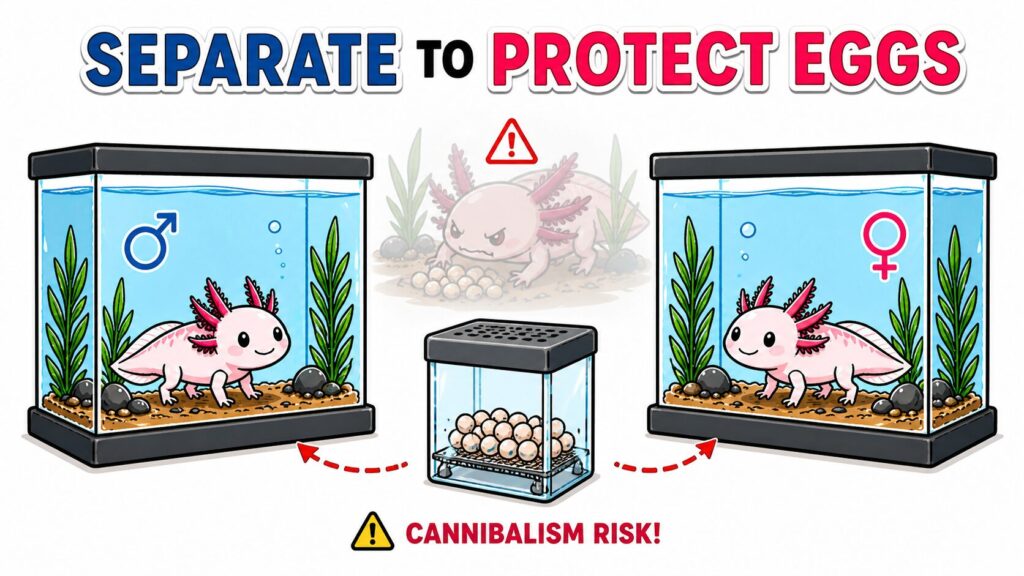
After the spermatophore walk is complete — which can be identified when the male stops depositing new spermatophores and the female shows reduced following behaviour — the male and female should be separated. If left together, the male may attempt to resume courtship before the female is ready to lay eggs, causing stress. More importantly, axolotls can be cannibalistic toward their own eggs and juveniles — a consideration our article on whether axolotls are cannibals discusses in detail. Separating the pair after mating protects the subsequent egg clutch from being eaten by either adult.
The female should be moved to a well-prepared tank or tub where she can deposit her eggs in privacy and where the eggs can be managed and incubated safely. This is where a well-equipped quarantine tub becomes particularly valuable in a breeding setup.
Egg Laying
A fertilised female axolotl typically begins laying eggs within 12–24 hours of successful mating, though some females may begin within hours and others may wait several days. The egg-laying process itself typically occurs over 24–48 hours, with the female depositing eggs individually or in small clusters throughout the tank — on plant leaves, on the tank walls, on substrate surfaces, and on any available surface she judges suitable.
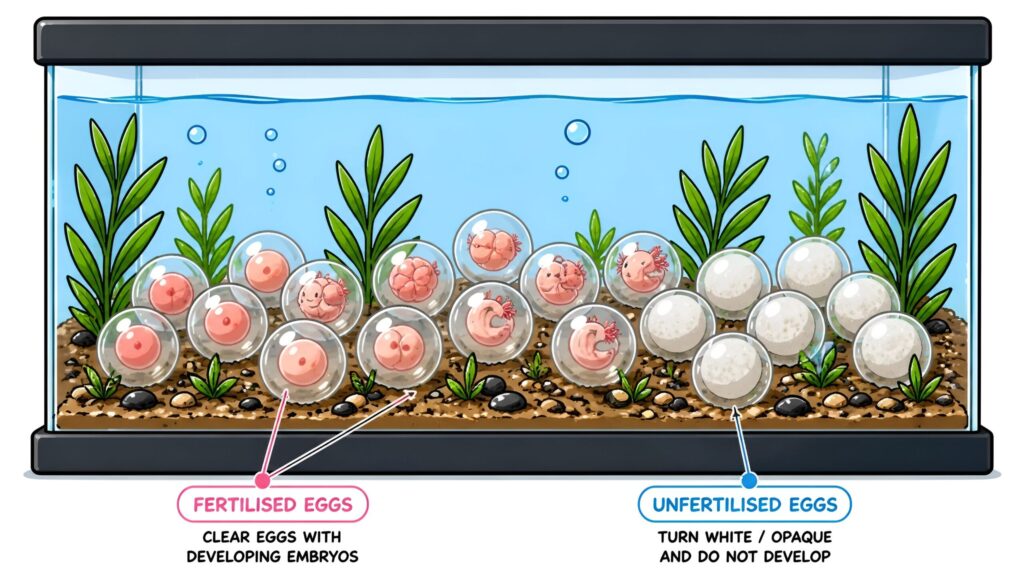
A single clutch typically contains 100–1,500 eggs, with 200–500 being a common range for a healthy, well-conditioned adult female. The eggs are individually transparent, each one a jelly-like sphere about 2–3mm in diameter surrounded by a gel coat. In the early hours after laying, the eggs appear as small clear spheres. A fertilised egg will begin to show signs of cell division (cleavage) within hours — the egg will develop a darker pigmented side (the animal pole) and a lighter side (the vegetal pole), and then begin to visibly divide into cells. An unfertilised egg typically remains uniformly pale and begins to deteriorate and turn white within 24–48 hours.
Methylene blue is widely used in axolotl egg incubation water at a very dilute concentration to prevent fungal infection — the most common cause of egg batch failure. Saprolegnia fungus typically colonises unfertilised eggs first and then spreads to healthy fertilised eggs if not managed. A gentle, very dilute methylene blue bath for the egg container significantly reduces this risk.
Egg Incubation and Hatching
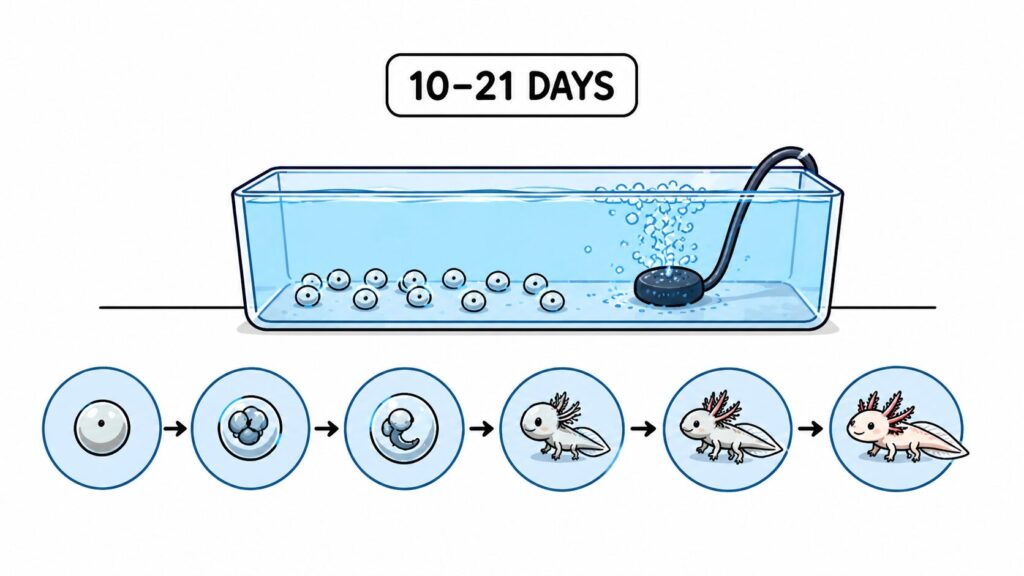
Axolotl eggs are incubated in a separate container from the adults — typically a shallow tub or small aquarium — with cool, dechlorinated water treated with a very dilute methylene blue solution. No filter should run in the incubation container — gentle aeration from an air pump and air stone is sufficient to oxygenate the water without disturbing the eggs.
Temperature during incubation is critical. Eggs incubate most reliably at 64–68°F (18–20°C) — the same range as adult axolotl keeping as detailed in our guide on what temperature axolotls need. Warmer temperatures accelerate development and increase the risk of developmental abnormalities; colder temperatures slow development and increase the risk of fungal infection.
At optimal temperatures, axolotl eggs hatch in approximately 10–21 days. Development can be observed with a magnifying glass or macro photography — the progression from a single cell through blastula, gastrula, neurula, and eventually to a recognisable larval axolotl is one of the most remarkable things to witness in the freshwater hobby. The Ambystoma Genetic Stock Center documents the full developmental staging of axolotl embryos in detail on their website, reflecting the species’ status as a model organism in developmental biology research.
Remove and dispose of unfertilised or fungal eggs promptly — leaving them in the incubation container allows the fungus to spread to healthy eggs. Replace incubation water with fresh, dechlorinated, temperature-matched water every 24–48 hours.
Axolotl Larvae — The First Few Weeks After Hatching
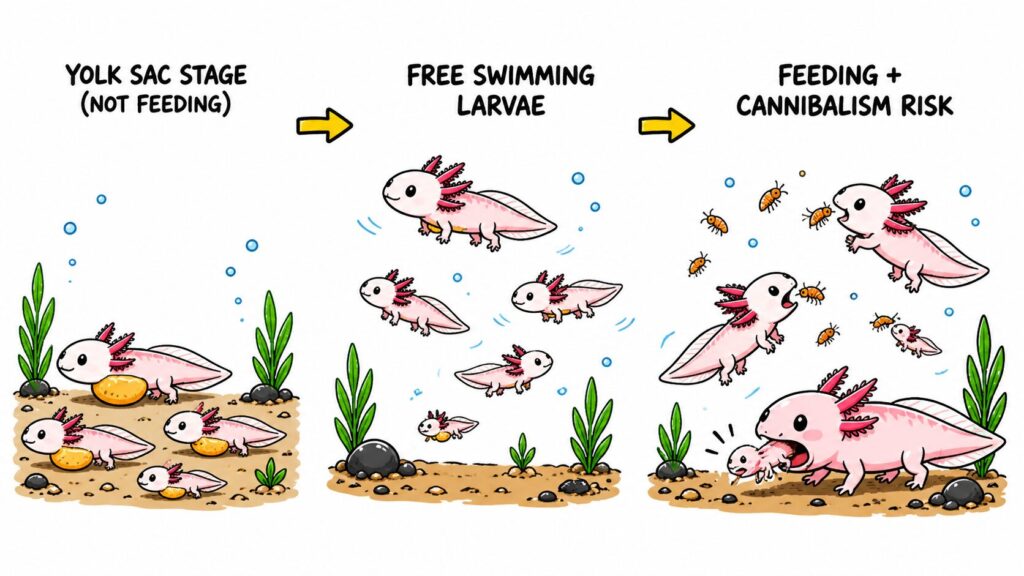
Newly hatched axolotl larvae are tiny — typically 10–12mm — and initially absorb the remainder of their yolk sac before they begin active feeding. This process takes approximately 2–5 days post-hatching, during which the larvae should not be fed.
Once the yolk sac is absorbed and the larvae become visibly active and swimming in search of food, feeding can begin with live microfauna — baby brine shrimp nauplii (Artemia sp.) are the most reliable first food. Larvae at this stage cannot yet take larger food items and require appropriately sized live prey to stimulate the feeding response. As they grow over the following weeks and months, their diet can be transitioned through progressively larger food items toward the adult diet of nightcrawlers, bloodworms, and pellets.
A crucial warning: axolotl larvae are highly cannibalistic with each other, particularly when size differences develop between individuals. Our article on whether axolotls are cannibals covers this in full. Larvae should be separated by size into same-size groups as soon as they begin to show significant size variation — typically within the first 2–4 weeks of hatching. Larvae housed with significantly larger siblings will be eaten.
Do Axolotls Mate for Life?
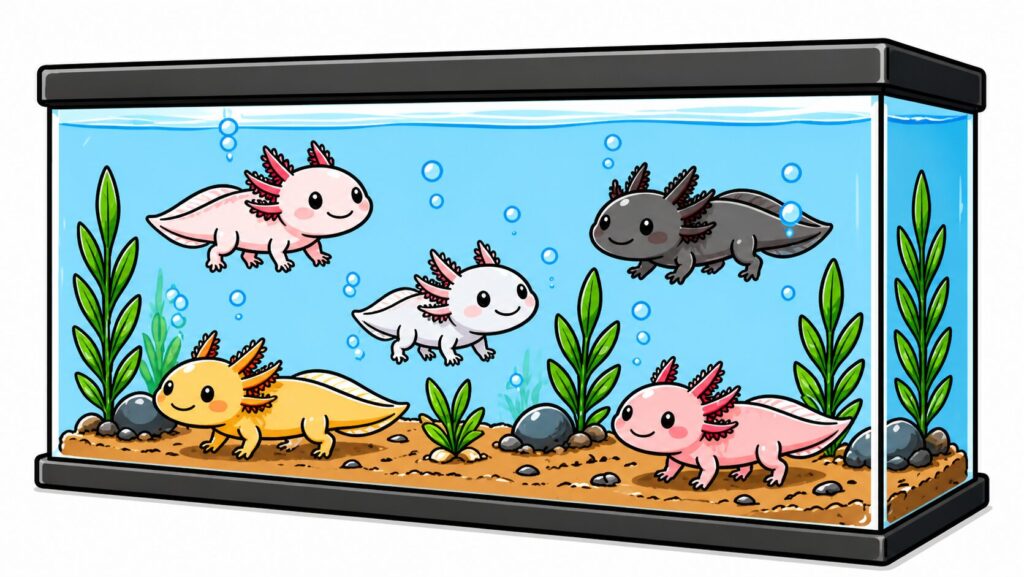
No — axolotls are not pair-bonding animals. They do not form lasting pair relationships, do not recognise or preferentially seek out previous mates, and do not show any attachment behaviour toward each other outside of active courtship. Our article on whether axolotls mate for life covers this question in more detail.
A male axolotl will attempt to court any receptive female, and a female will mate with any suitable male. In captivity, the same pair can be mated multiple times across different seasons, but this is a keeper’s choice rather than a reflection of any animal preference.
Considerations Before Attempting Axolotl Breeding
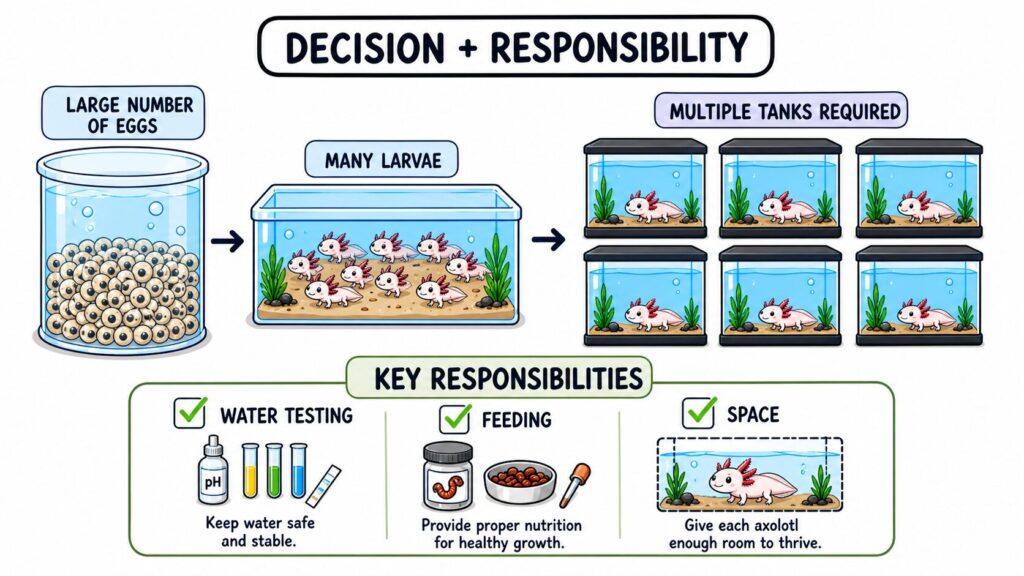
Axolotl breeding produces large clutches — potentially 500+ eggs — and while not all will successfully hatch, successful hatching can produce hundreds of larvae that each need individual housing, feeding, water quality management, and eventual rehoming. Before attempting breeding, have a realistic plan for what you will do with the resulting juveniles. Accredited rescue organisations, axolotl-specific hobbyist groups, and reputable breeders may be willing to take on juvenile axolotls, but demand varies and should be established before eggs are laid.
Also ensure your breeding animals are both in good health — check your water test kit readings, confirm temperature is within the optimal range with your thermometer, and verify both animals are eating well on a good diet before attempting conditioning. An axolotl in poor health should never be pushed into a breeding attempt.
Before housing male and female axolotls together for breeding, also review our guides on whether axolotls can have tank mates and whether axolotls are cannibalistic — including toward each other — to understand the risks and management strategies involved.
Frequently Asked Questions
At what age do axolotls start mating? Axolotls typically reach sexual maturity at around 12–18 months of age, when they are approximately 7–8 inches in length. Some individuals mature slightly earlier or later depending on their growth rate and care conditions.
How often do axolotls mate? In the wild, axolotl mating is seasonal — typically once per year in late winter/early spring. In captivity with managed conditions, a female can be bred 2–3 times per year, though most responsible breeders limit breeding to once per year to protect the female’s condition.
Can axolotls mate with other salamander species? No. Axolotls (Ambystoma mexicanum) can only reproduce with other axolotls. They cannot hybridise with other salamander species in any meaningful way.
How long does the mating process take? The spermatophore walk phase typically lasts 1–6 hours, though it can extend longer. The full courtship period from initial introduction to completed mating can last 12–48 hours.
What do axolotl spermatophores look like? Spermatophores are small, transparent, jelly-like cones approximately 1–2cm tall. They are deposited on the substrate and visible to the observant keeper. They may appear slightly white or milky at the tip where the sperm cap sits.
Can I tell if mating was successful immediately? Not immediately. Confirm by watching for the female to pick up spermatophores during the courtship walk. If she is clearly positioned over deposited spermatophores and showing appropriate cloacal contact behaviour, successful pickup is likely. Definitive confirmation comes when she begins laying eggs 12–48 hours after mating.
The Wonder of Axolotl Reproduction
Watching axolotls mate — the methodical spermatophore walk, the female following with quiet precision, the extraordinary progression from fertilised egg to hatching larva — is one of the most remarkable experiences in the freshwater hobby. It also connects you directly to the conservation story of a critically endangered species that has survived in captivity at a time when its wild counterpart has nearly disappeared. Whether you breed intentionally or simply observe, understanding how axolotls mate makes you a more knowledgeable, more capable keeper. For everything you need to care for your axolotls through every stage of their lives — from the right tank and filtration to food, health supplies, and enrichment — Best Axolotl Products is your complete keeper-tested resource for the best gear in every category.