
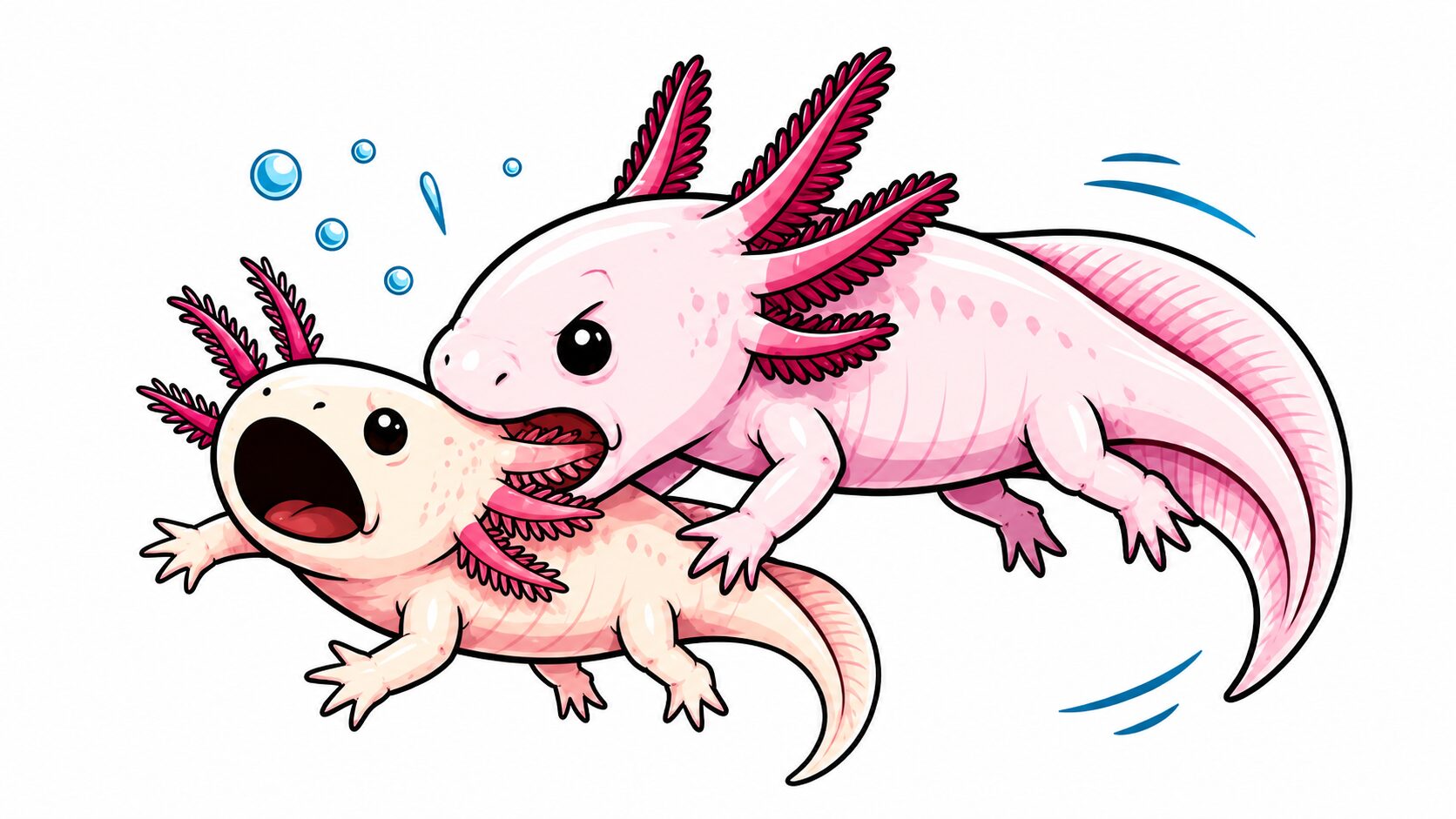
Are axolotls cannibals? It’s one of the first questions new owners ask — and the answer is a sobering yes. Axolotls are capable of cannibalistic behavior, and under the wrong tank conditions, they will bite, injure, and even consume other axolotls without hesitation. Understanding why this happens and how to prevent it is one of the most critical parts of responsible axolotl ownership.
Are Axolotls Cannibals by Nature?
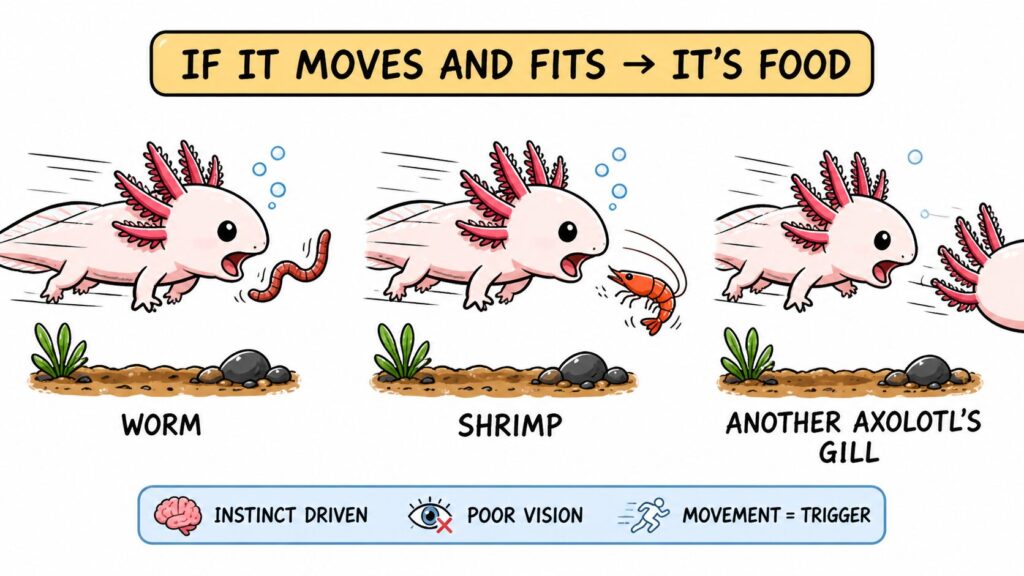
Axolotls (Ambystoma mexicanum) are carnivores — they eat meat exclusively and have a simple but highly effective hunting instinct: if something moves near their mouth and it fits, they try to eat it. That includes the gills, toes, and tails of other axolotls in the same tank.
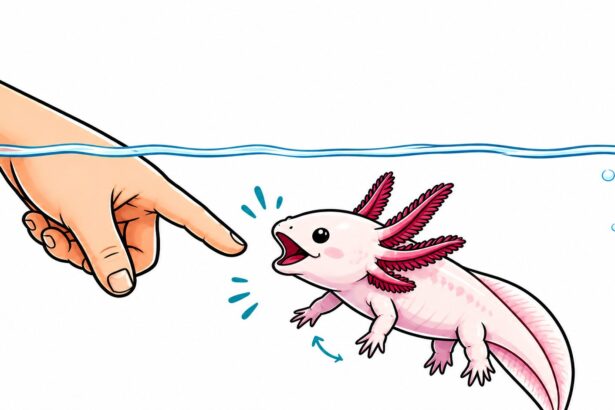
This isn’t aggression in the social sense. Axolotls have poor eyesight and rely heavily on movement and scent to detect food. When a tank mate drifts past, the axolotl’s brain registers it the same way it registers a worm or a shrimp — as a potential meal. Cannibalism in axolotls is therefore not malicious; it is purely instinctual and opportunistic.
Research from the IUCN Amphibian Specialist Group notes that Ambystoma mexicanum is critically endangered in the wild, partly because of how competitive and territorial they can be even in their native Lake Xochimilco habitat. You can read more about their conservation status in our article on whether axolotls are endangered.
When Are Axolotls Most Likely to Cannibalize Each Other?
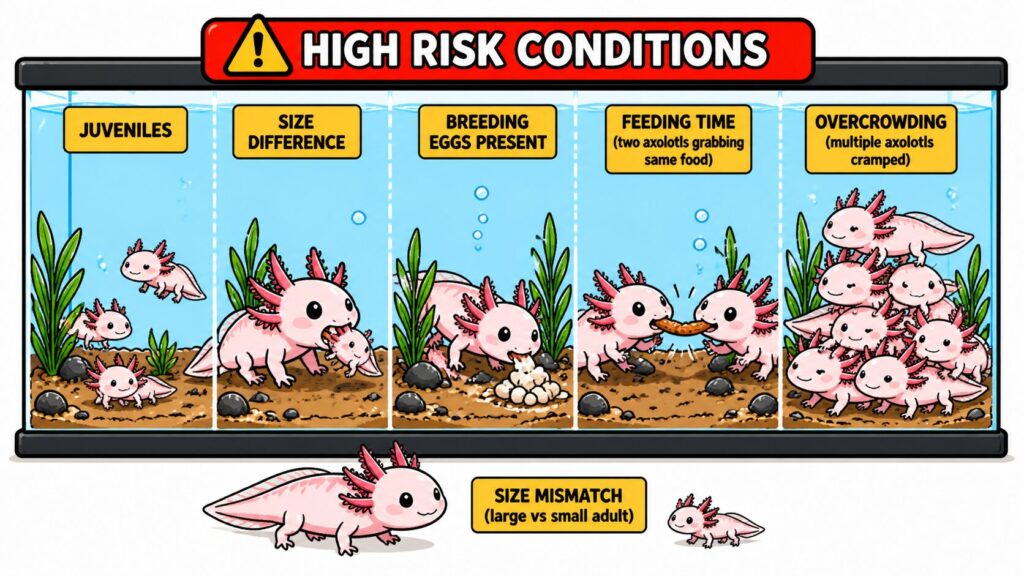
Cannibalism in axolotls tends to peak under specific circumstances. Knowing these situations can help you act before injuries occur.
1. During the Juvenile Stage
Juvenile axolotls — those under roughly 4 to 5 inches in length — are by far the most cannibalistic. At this stage, their size differences can be dramatic even among siblings of the same hatch. A slightly larger juvenile will readily nip at and consume smaller ones. Studies on axolotl development published through institutions like the University of Kentucky’s axolotl colony research have documented this behavior extensively in captive populations.
If you are housing juveniles together, size sorting is essential. Any axolotl that is noticeably larger than its tank mates should be separated immediately.
2. During or After Breeding
Axolotl mating involves the male depositing spermatophores and the female picking them up, after which she lays hundreds of eggs. Once eggs are laid, both parents will eat them if left in the same tank. The same is true of newly hatched larvae — they are tiny, they move, and they will be eaten by adults or even slightly older siblings.
If you are involved in axolotl breeding, removing eggs and larvae immediately after hatching is non-negotiable.
3. During Feeding Time
Adult axolotls can also exhibit cannibalistic behavior at feeding time, especially in tanks where multiple axolotls compete for the same food source. If one axolotl grabs a piece of food and another bites at the same spot, it’s easy for a gill or limb to be caught in the crossfire. Always feed axolotls separately, or use feeding tongs to target-feed each animal individually.
4. In Overcrowded or Undersized Tanks
Space matters enormously. An axolotl that feels cramped is a stressed axolotl, and stressed axolotls are more reactive and aggressive. The widely accepted minimum for a single axolotl is a 20-gallon tank, with an additional 10 gallons per additional animal. Check out the best axolotl tanks if you need to upgrade your setup.
5. When Tank Mates Are Mismatched in Size
Even among adults, size mismatches lead to problems. An axolotl can and will bite any animal — including another axolotl — that is small enough to be perceived as prey. A good rule of thumb: never house two axolotls together if one is more than twice the length of the other.
Can Adult Axolotls Live Together Without Cannibalism?
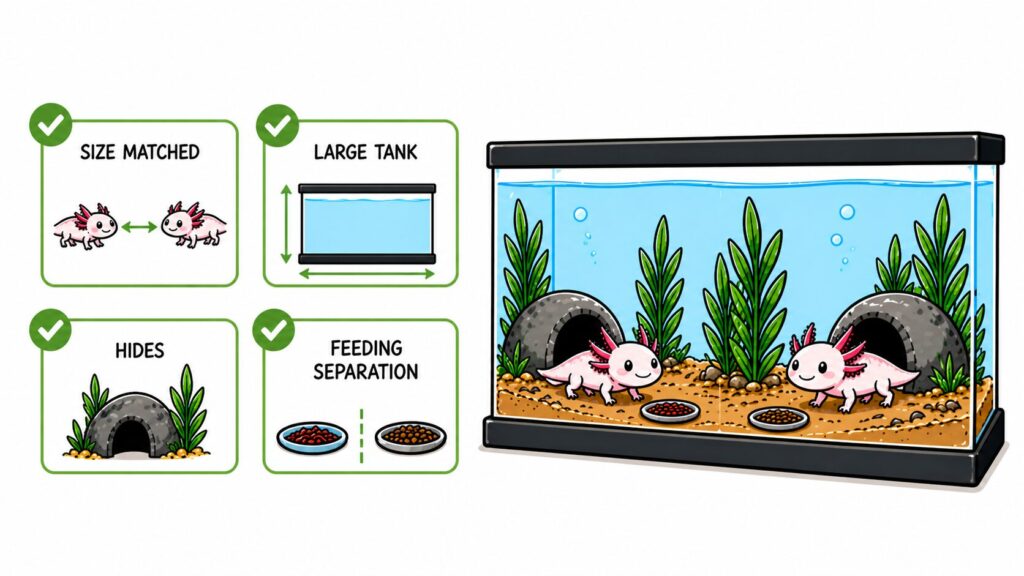
Yes — but it requires careful management. Many axolotl keepers successfully house two or more adults together with zero injuries, provided they follow a few key principles. Before deciding to cohabit axolotls, read our detailed guide on whether axolotls can have tank mates.
Here is what you need to get right:
Matching size: All tank mates should be within an inch or two of each other in total body length.
Adequate space: More space means less competition and less stress. If you are housing two adults, a 40-gallon breeder tank is a safer choice than the bare minimum 20-gallon.
Proper hiding spots: Axolotls that can retreat and feel hidden are less stressed and less reactive. Axolotl hides and caves give each animal a territory of its own.
Consistent feeding: Hunger is a major trigger for cannibalistic behavior. Feed your axolotls on a regular schedule and ensure each one is getting enough food. Our guide to the best axolotl food can help you choose the right diet.
Image suggestion: A tank setup showing two adult axolotls with hides and plants. Alt text: “axolotl tank mates — preventing cannibalism with proper setup”
What Happens If an Axolotl Bites Another?
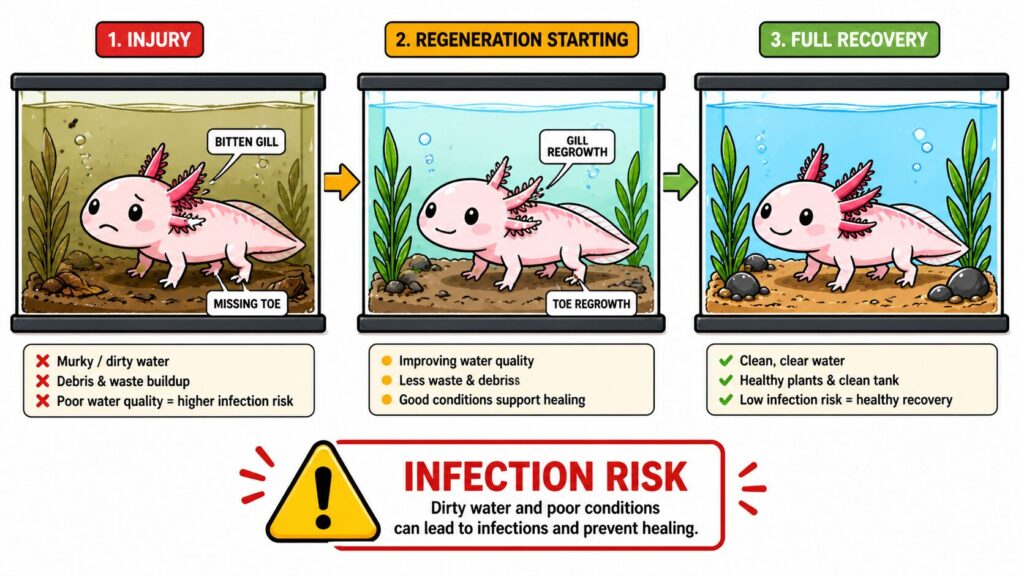
One of the most remarkable things about axolotls is their legendary regenerative ability. According to research published in Nature and cited by the National Institutes of Health, axolotls can regenerate lost limbs, gills, parts of their heart, and even portions of their brain. This means that a bitten gill or nipped toe, while alarming, is often not a permanent injury.
That said, regeneration is not guaranteed, especially in axolotls that are poorly nourished, stressed, or kept in suboptimal water conditions. A bite also creates an open wound that is vulnerable to infection. Poor water quality dramatically increases this risk, so maintaining a clean tank is critical if an injury occurs. Learn more about keeping your tank in top shape with our guides on how to clean an axolotl tank and how often to clean an axolotl tank.
If you notice bite wounds on your axolotl, separate the injured animal immediately and treat the water with axolotl-safe aquarium salt or methylene blue to reduce the risk of bacterial infection.
Do Axolotls Show Any Warning Signs Before Biting?
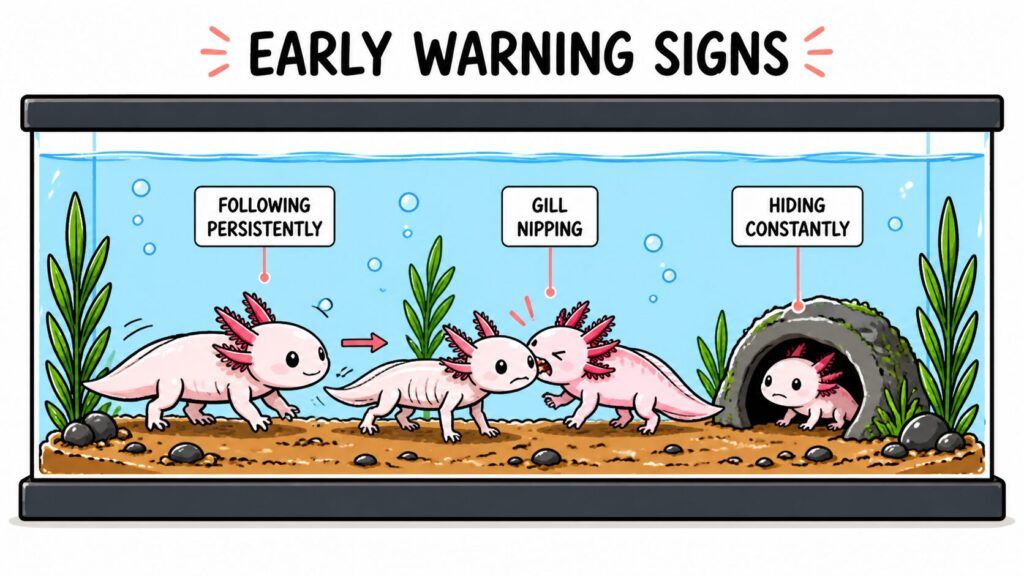
Axolotls are not expressive animals — they don’t growl, flare, or display obvious pre-aggression signals the way some reptiles do. However, there are behavioral cues you can watch for:
- Persistent following: If one axolotl is constantly trailing another, it may be treating it as a prey item rather than a companion.
- Nipping at gills: Feathery external gills are irresistible targets. Any nipping, even “playful-looking” nipping, should be taken seriously.
- One axolotl hiding constantly: If one animal is always wedged behind décor and the other is roaming freely, the hiding one is likely being stressed or bullied.
- Weight loss in one animal: If one axolotl is consistently out-competed for food, it will lose weight rapidly. A healthy, well-fed axolotl is less likely to go after tank mates. You can read more about axolotl weight and feeding in our article on whether axolotls can get fat.
How to Prevent Cannibalism in Axolotls
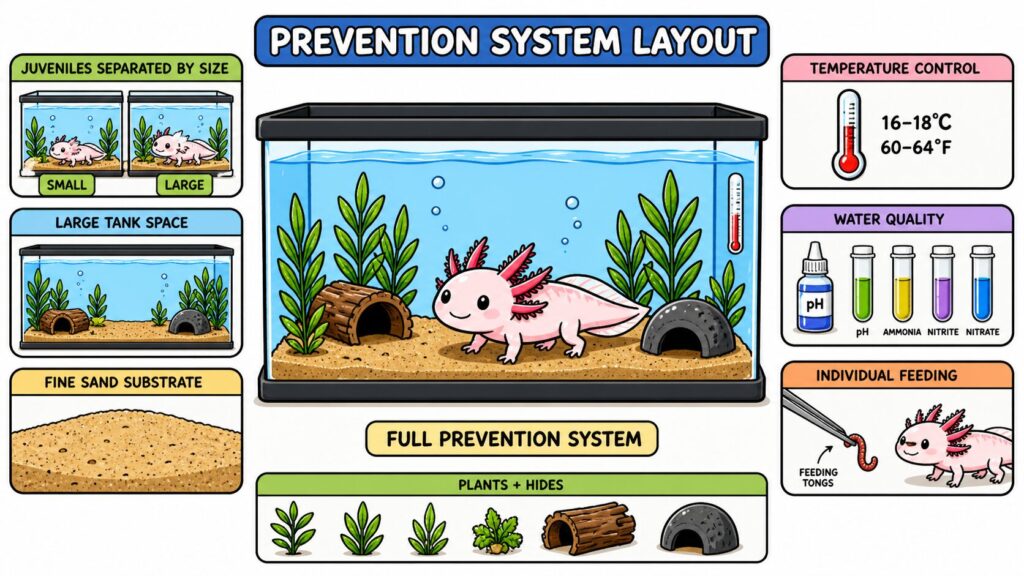
Prevention is far easier than treating an injury after the fact. Follow these steps to reduce cannibalistic behavior to a minimum.
Separate juveniles by size. Sort young axolotls frequently — at least every two weeks — and separate any that are significantly larger. This is tedious but absolutely necessary.
Use a large enough tank. More swimming room reduces territorial stress. If you need help choosing the right setup, our axolotl care guide covers tank sizing in detail.
Choose the right substrate. Bare-bottom tanks can stress axolotls, and a stressed animal is more reactive. Fine sand mimics their natural environment and keeps them calmer. See our guide on axolotl substrate and the best axolotl tank sand for product recommendations.
Maintain water temperature. Axolotls are cold-water animals that thrive between 60–68°F (16–20°C). Higher temperatures cause stress and lethargy, which increases reactive biting. See our full breakdown of what temperature axolotls need, and consider a water chiller if your home runs warm.
Keep water quality pristine. Ammonia spikes are a leading cause of stress and unusual behavior in axolotls. Invest in a reliable water test kit and check levels regularly. If you are dealing with ammonia issues, our detailed guide on ammonia burn in axolotls is essential reading.
Feed on a schedule. Hunger is the simplest trigger for cannibalism. Axolotl nightcrawlers, bloodworms, and axolotl pellets are all excellent food options. Feed each axolotl individually if possible.
Add hides and plants. Visual barriers break up sightlines and give each axolotl a retreat. Axolotl tank plants and tank décor create a more complex environment that reduces stress for all inhabitants.
Can Axolotl Cannibalism Affect Their Health Long-Term?
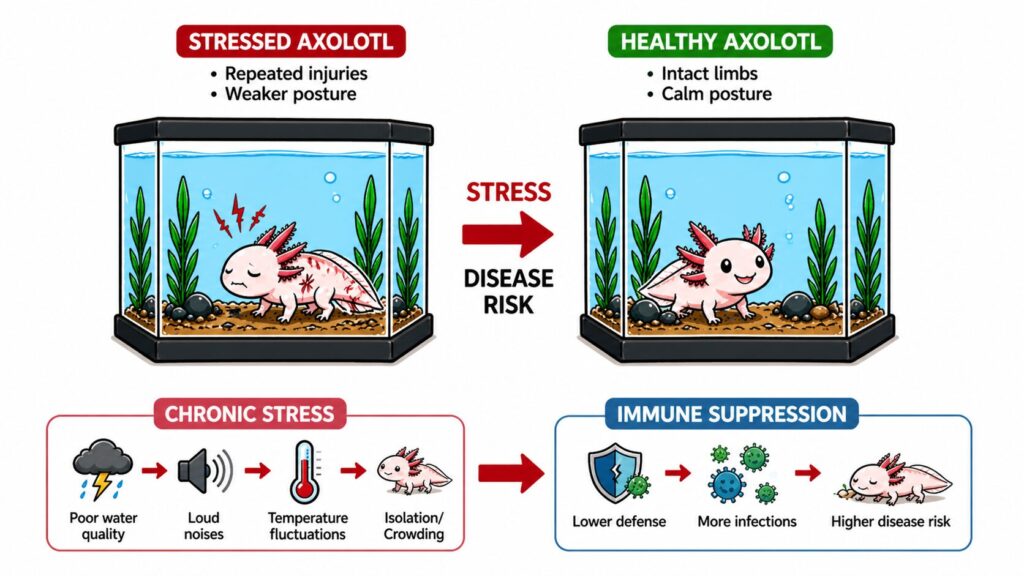
Yes, in multiple ways. An axolotl that repeatedly bites its tank mates is unlikely to suffer health consequences itself — but the animal on the receiving end faces real risks even with regeneration factored in. Repeated biting causes chronic stress, which suppresses immune function and slows regeneration. A constantly stressed axolotl is also more vulnerable to diseases. You can read about the diseases axolotls are susceptible to in our article on whether axolotls carry diseases.
The long-term solution, if cannibalism persists despite your best efforts, is simply to house the axolotls in separate tanks. There is no shame in this — it is often the kindest option for all animals involved.
Axolotl Cannibalism in the Wild
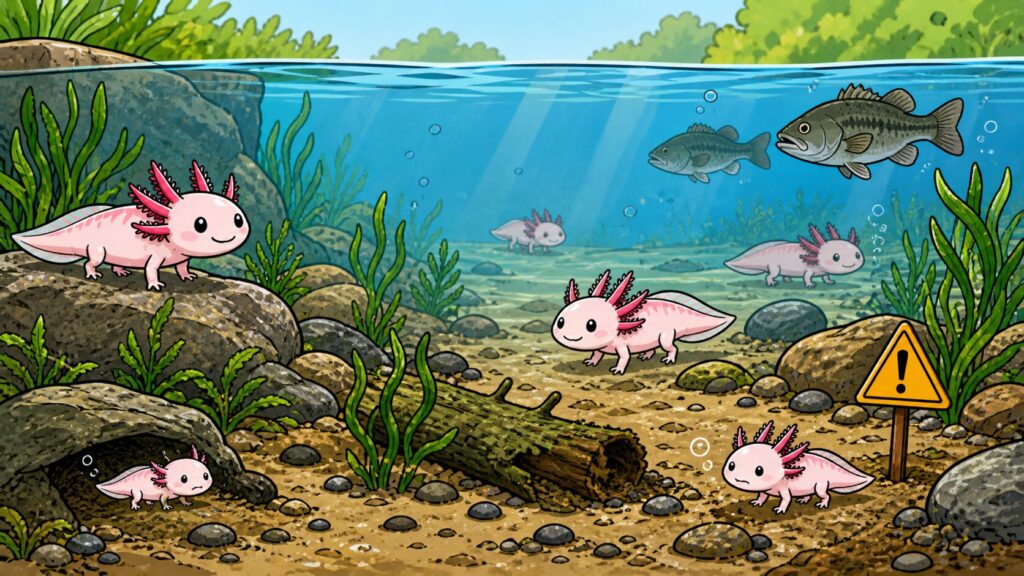
In their native habitat — the canals and wetlands of Lake Xochimilco in Mexico — wild axolotls are spread across a much larger territory than any home aquarium can replicate. Natural dispersion means that encounters between individuals are far less frequent, and cannibalism, while it still occurs among larvae and juveniles, is significantly less of a problem than in captivity.
Sadly, the wild axolotl population is under severe pressure from habitat loss, pollution, and the introduction of invasive species like tilapia and carp. The IUCN Red List currently classifies the axolotl as Critically Endangered, and wild populations are estimated at fewer than 1,000 individuals. This is part of why owning an axolotl comes with legal considerations in some regions — you can learn more about that in our articles on why axolotls are illegal in some places and whether it is legal to own an axolotl.
Frequently Asked Questions
Do axolotls eat their own eggs? Yes. Axolotls will readily eat their own eggs if left in the same tank after laying. Always remove eggs to a separate container as soon as possible after axolotl mating occurs.
Will axolotls eat fish in their tank? Yes. Any fish small enough to fit in an axolotl’s mouth is at serious risk of being eaten. This is one of the main reasons most fish make poor axolotl tank mates.
Can a bitten gill grow back? In most cases, yes — axolotls can regenerate gill filaments remarkably well, as documented in research from Tulane University’s axolotl research program. However, recovery depends on good water quality, nutrition, and the absence of further stress.
How do I know if my axolotl has been bitten? Look for ragged or shortened gill stalks, missing toes or tail tips, and any visible wounds or redness on the body. Separate injured animals immediately and treat with appropriate water additives.
Do axolotls get lonely? Axolotls are solitary animals — they do not seek out companionship and are generally content to live alone. They do not experience the social needs that some other pets do. In fact, housing them alone is often the safer choice. For more on axolotl behavior and activity patterns, see our article on whether axolotls sleep.
Final Thoughts: Are Axolotls Cannibals?
The answer is yes — axolotls are cannibals, but they are manageable ones. This behavior is rooted in instinct, not aggression, and with the right tank setup, proper feeding, and careful size-matching, most keepers can house axolotls together without incident. The key is vigilance: check on your axolotls regularly, respond quickly to any signs of bullying or injury, and never hesitate to separate animals that are causing harm to one another.
Your Axolotl Deserves The Very Best
If you want to understand your axolotl’s full lifespan and what to expect at each stage, our axolotl lifespan guide is a great next read. And if you’re curious about the full range of axolotl appearances, from wild type to leucistic to melanoid, check out our overview of all axolotl morphs.
Your axolotl deserves the very best — and that starts with the right equipment. Whether you’re setting up a new tank, improving water quality, or stocking up on the perfect food, everything you need is waiting for you at the Best Axolotl Products hub. Think of it as your one-stop axolotl supply room, curated by people who actually care about these incredible animals.