
Origin And History
The Portuguese Sheepdog, known in its native Portugal as the Cão da Serra de Aires — the Dog of the Serra de Aires — also called the Serra de Aires Mountain Dog and nicknamed affectionately the Cão Macaca or Monkey Dog for the primate-like expression produced by the long hair framing its face into what observers consistently describe as a simian mask, a nickname that captures the breed’s most immediately and the most personally memorable individual aesthetic quality with the specific directness that Portuguese rural naming traditions consistently favor, is a medium-sized, long-coated, shaggy, athletically compact herding breed native to the Serra de Aires mountain range in the Alentejo region of southern Portugal, an all-purpose shepherd, drover, and guardian dog that herded cattle, sheep, goats, horses, and pigs across the harsh and demanding terrain of the Alentejo plains and Serra de Aires mountains throughout the 20th century before mechanized farming and urban expansion brought it to the very edge of extinction in the 1970s, and a breed whose history is simultaneously one of the most recently documented in terms of formal breed recognition — the first breed standard dating only to 1930 — and potentially one of the oldest in terms of the working dog tradition from which it emerged, with the most debated founding question being not whether the breed is ancient but precisely which combination of ancient European herding breeds the Conde de Castro Guimarães and local Portuguese shepherds used to create or crystallize the modern type in the early 20th century.
The breed’s founding ancestry is the most specifically and the most honestly debated of any Portuguese breed in this series. The most widely cited founding theory traces the Cão da Serra de Aires to Briards imported into Portugal in the early 20th century by the Conde de Castro Guimarães from Cascais — a Portuguese aristocrat who crossed French Briards with local Portuguese mountain dogs and possibly the Pyrenean Sheepdog. The resulting shaggy, long-coated herding type proved so specifically suited to the terrain and herding requirements of the Serra de Aires that it was adopted by the poor shepherds of southern Portugal with the thoroughness that working utility always produces in agricultural communities.
Competing theories trace the breed to a family of related Iberian and southwestern European herding dogs — the Pyrenean Sheepdog and Catalan Sheepdog specifically — whose visual resemblance to the Cão da Serra de Aires is immediate and striking, and whose working traditions in the Pyrenees and Catalonia share the specific requirements for a compact, long-coated, intelligent all-purpose herder that the Serra de Aires landscape would have selected for. The dog is recognizable as one of the old-fashioned types of European sheepdogs, believed to be closely related to the Pyrenean and Catalan Sheepdogs. What is specifically certain is that the terrain and climate of the Serra de Aires — harsh, barren, and demanding — imposed the most specifically rigorous working selection on whatever founding stock was used, producing a constitutionally hardy, athletically capable breed that only individuals of genuine working excellence survived.
For most of the 20th century, the Cão da Serra de Aires was the companion of poor shepherds in southern Portugal, herding and guarding flocks across the Alentejo plains. These breeders focused exclusively on traits affecting working ability — intelligence, trainability, climate resistance, athleticism — without any attention to aesthetic standardization, producing an excellent herding dog ideally suited to its environmental conditions and the nickname Monkey Dog earned entirely from working observers rather than from breed clubs.
The first breed standard was written by António Cabral and Filipe Morgado Romeiros, drawing from specimens in the Serra de Aires region, and was accepted by the Clube Português de Canicultura (CPC), Portugal’s national kennel club, in 1932. The FCI first accepted the breed in 1954 and definitively recognized it on November 16, 1954, classifying it in Group 1 (Sheepdogs and Cattle Dogs), Section 1 (Sheepdogs). Although Portugal did not suffer the dramatic wartime population declines experienced by many European herding breeds, the breed nevertheless went into severe decline from the 1960s onward as mechanized farming reduced the need for traditional herders and urban expansion around Lisbon converted the breed’s traditional working landscape. By the late 1970s, the Cão da Serra de Aires was very rare, and many believed it was on the verge of extinction.
The recovery began in the late 1980s when breeders determined to preserve the breed rebuilt the population by emphasizing its value as a companion dog — a shift in marketing that worked. The breed went from being the dog of poor shepherds to a popular companion among middle-class Portuguese dog owners, and today its appeal as a companion ensures its survival. The FCI current standard was published November 4, 2008. The UKC granted full recognition on July 1, 2006, placing the breed in the Herding Dog Group. The AKC has the breed listed in its Foundation Stock Service. The UK Kennel Club has not yet recognized the breed.
Breed Overview
| Trait | Details |
|---|---|
| Origin | Serra de Aires mountain range, Alentejo region, southern Portugal |
| Portuguese Name | Cão da Serra de Aires (Dog of the Serra de Aires) |
| Also Known As | Serra de Aires Mountain Dog; Portuguese Shepherd Dog; Cão Pastor Português |
| Nickname | Cão Macaca / Monkey Dog (for the simian expression of the long-haired face) |
| FCI First Recognition | November 16, 1954 |
| FCI Current Standard | Published November 4, 2008 (Group 1, Section 1, Sheepdogs) |
| UKC Recognition | July 1, 2006 (Herding Dog Group) |
| KC (UK) | Not recognized |
| AKC Status | Foundation Stock Service |
| Portuguese Kennel Club | First recognized 1932 (standard by António Cabral and Filipe Morgado Romeiros) |
| Parent Organization | Clube Português do Cão da Serra de Aires |
| Founding Theory | Briards imported by Conde de Castro Guimarães × local Portuguese mountain dogs; also Pyrenean and Catalan Sheepdog influence |
| Near-Extinction | 1970s — mechanized farming, urbanization around Lisbon; population critically low |
| Recovery | Late 1980s — repositioned as companion dog; population rebuilt |
| Livestock Herded | Sheep; cattle; goats; horses; pigs (all five) |
| Height | Males 45–55 cm (18–22 inches) / Females 42–52 cm (17–20 inches) |
| Weight | Males 17–27 kg (37–60 pounds) / Females 12–18 kg (26–40 pounds) |
| Lifespan | 12–14 years |
| Coat | Long, straight or slightly wavy; no undercoat; goat-like texture |
| Colors | Yellow; brown; grey; fawn; wolf-grey; black |
| Color Restrictions | No white patches except small chest mark |
| Coat Features | Beard, moustache, eyebrows; hair must never cover eyes |
| Ears | Triangular, hanging; cropping previously practiced; now banned in most European countries |
| Nose | Prominent; usually black but may be self-colored |
| Working Style | All-purpose herder and drover; particularly adept at returning strays |
| FCI Description | “Exceptionally intelligent and very lively” |
| Movement | Light, suspended trot; energetic gallop when work requires |
The Monkey Dog Name
Before discussing care, the Cão da Serra de Aires’s most personally memorable individual characteristic deserves acknowledgment, because the nickname Monkey Dog is not a breed club affectation but a spontaneous descriptive that working shepherds in the Serra de Aires independently coined from direct experience, and because understanding why helps anyone encountering the breed for the first time understand what they are looking at.
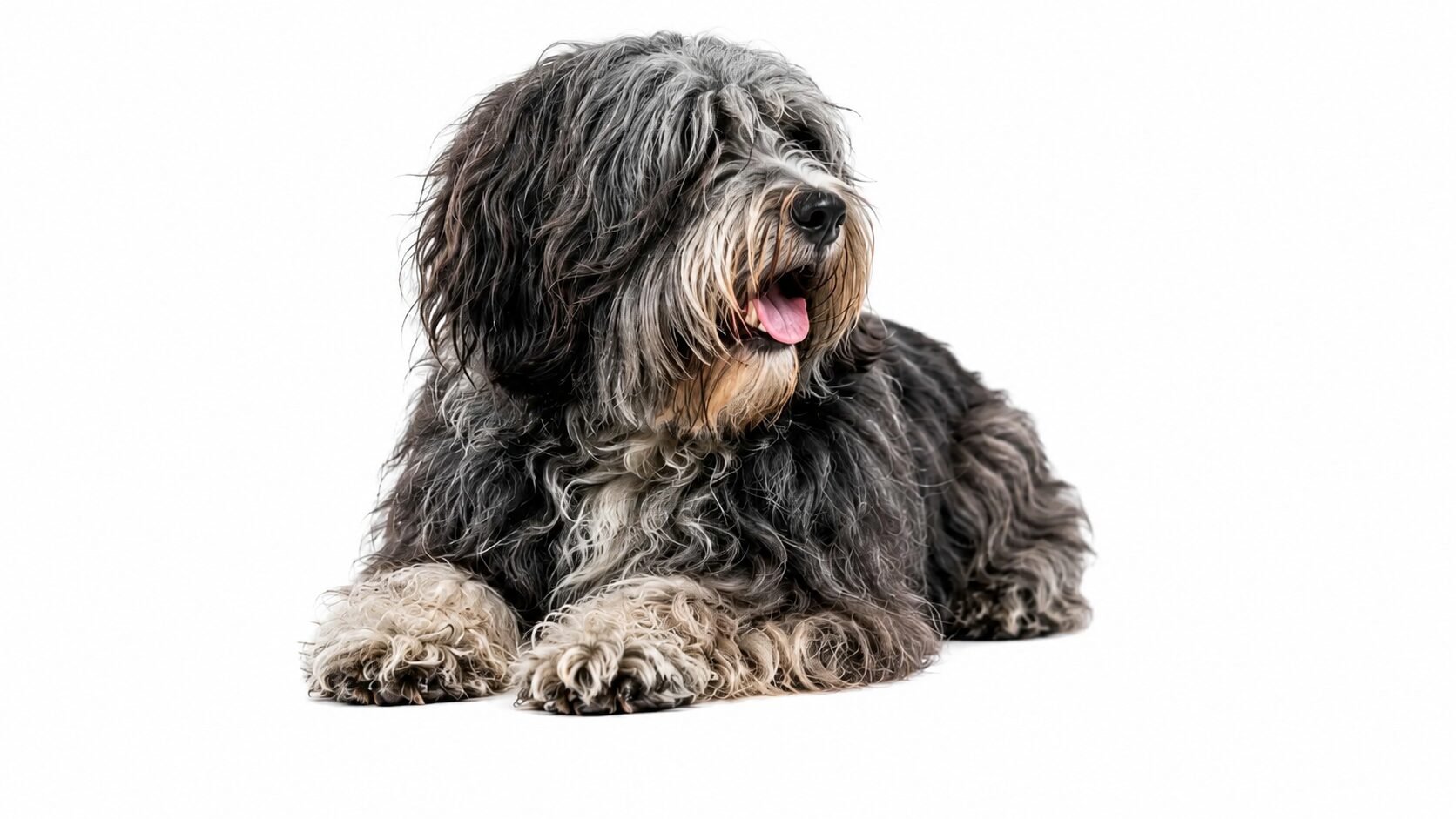
The long hair that completely frames the face — forming a full beard, a prominent moustache, and heavy eyebrows — while the large, dark, round, expressive eyes look out from within this hair framing with the specific quality of alert curiosity and intelligent engagement that observers consistently describe as primate-like, produces an expression that is among the most immediately and the most personally captivating of any herding breed in this series. The hair must never cover the eyes, preserving the direct eye contact that is this breed’s most specific and most personally engaging individual quality. Working shepherds in southern Portugal who saw this expression daily — the Monkey Dog looking up from the flock management task, reading the shepherd’s intention before the command was given — found the primate comparison irresistible, and it has persisted as the breed’s most affectionately used informal name ever since.
Appearance And Size
The Portuguese Sheepdog is a medium-sized, rustic-looking, rectangularly built herding dog that presents with the shaggy long coat, the monkey-face expression, and the specifically nimble, light movement that reflects a breed built for agile, sustained herding work across the demanding terrain of the Serra de Aires and Alentejo.
Males stand 45 to 55 centimeters and weigh 17 to 27 kilograms; females are slightly smaller. The long, straight or slightly wavy coat has been specifically described as goat-like in texture — coarser and more rustic than the silky coats of some European herding breeds, the specific texture reflecting the working context in which aesthetic coat refinement was never a selection criterion. The coat has no undercoat, which is the most specifically important single grooming and health management fact: without an undercoat, the Cão da Serra de Aires is more sensitive to cold and wet conditions than double-coated herding breeds, and the coat is more prone to felting through to the skin when matting develops in neglected individuals.
Colors include yellow, brown, grey, fawn, wolf-grey, and black — a range that reflects the diverse founding population rather than any single aesthetic selection for coat color.
Housing And Living Requirements
The Portuguese Sheepdog is adaptable to rural, suburban, or even urban environments, provided it receives ample exercise and social interaction — a genuinely broader housing adaptability than many herding breeds, reflecting the breed’s successful transition from working shepherd companion to urban companion dog that saved it from extinction in the 1970s.
The most critically important housing welfare consideration is daily vigorous exercise and consistent human companionship. The breed dislikes being left alone for extended periods and may develop separation anxiety or destructive behaviors without adequate companionship and mental activity. A securely fenced yard is important given the herding drive, and the breed’s athletic jumping capability means fencing must be specifically robust.
A comfortable dog bed in a social area of the home suits the breed’s deeply people-bonded domestic character. An orthopedic dog bed provides appropriate joint support. The breed’s lack of undercoat means specific attention to warmth in cold, wet climates.
Exercise Requirements
The Portuguese Sheepdog is an active and athletic breed that needs at least 60 to 90 minutes of daily exercise. It enjoys long walks, play sessions, herding games, and agility work, and requires mental stimulation as equally important as physical exercise. Without adequate exercise, the breed can become restless, vocal, or overly alert indoors — the behavioral expression of a breed with working herding capacity and insufficient outlet for it.
Dog agility specifically suits the breed’s athleticism and the working intelligence that makes it particularly capable in timed course work. Herding trials provide the most authentically appropriate organized working outlet, engaging the livestock management heritage in competitive format. Scent work and tracking activities engage the exceptional environmental awareness in purposeful organized sport.
Puzzle toys and enrichment activities are genuinely and specifically important for a breed the FCI specifically describes as exceptionally intelligent and very lively — under-stimulated individuals apply their considerable intelligence to household problem-solving in ways that owners consistently find creative and specifically inconvenient. A dog agility equipment set at home provides structured daily engagement. A GPS tracker is a practical safety investment for outdoor exercise given the herding drive’s tendency to take the breed after any moving animals.
Grooming Requirements
The Portuguese Sheepdog’s long, single-layer coat requires consistent regular maintenance to prevent the felting and matting that develops when brushing is inconsistent, with particular attention required in the areas most vulnerable to tangle formation — behind the ears, on the legs, and under the belly.
Brushing two to three times weekly with a pin brush and metal comb prevents tangles and maintains coat health throughout the body. The beard and moustache require specific regular cleaning given their tendency to accumulate food, moisture, and field debris. The coat’s lack of undercoat reduces some of the seasonal shedding challenge of double-coated breeds but creates the specific felting risk when the single layer mats — once felted, the Cão da Serra de Aires coat is very difficult to restore.
The ears require weekly inspection and cleaning — despite the ears now being left natural following the banning of ear cropping in most European countries, regular cleaning prevents infections. Dental care should be established as a consistent routine from puppyhood. Nails should be trimmed regularly.
Diet And Nutrition
The Portuguese Sheepdog is a medium-sized, highly active working breed with daily caloric needs calibrated to its actual size and genuine working output. A high-quality medium breed formula with a named protein source as the first ingredient provides the nutritional foundation.
Most adults do well on two measured meals per day. Maintaining lean, athletic body condition appropriate to a working herding breed supports both field endurance and long-term health. Training treats are highly effective motivators given the breed’s food engagement and genuine desire to work cooperatively with its handler.
Compatibility
The Portuguese Sheepdog is one of the most devoted and clever of the sheepdogs, described by experienced handlers as a dog that loves its master above everything on earth. This hyperbolic characterization has the specific ring of truth that only authentic working dog devotion produces — the breed’s total commitment to its established human family is among the most specifically and the most personally complete of any herding breed in this series.
With its own established family, the breed is completely devoted and specifically attentive. Very loyal and bonding with its own people — the Cão da Serra de Aires makes one of the most specifically complete individual bonding commitments of any herding breed. With children, the breed is usually patient — males can be somewhat possessive of their territory, requiring specific management in households with very young children. With strangers, the breed is reserved and makes a good watchdog, barking to alert to unfamiliar approaches.
With other dogs, the breed generally mixes well though some males may attempt to dominate other males. With livestock, the herding and guarding instinct is constitutionally genuine. A dog crate is a useful management tool during puppyhood.
Behavior And Temperament
The FCI describes the ideal Portuguese Sheepdog as exceptionally intelligent and very lively — the most specific and most authoritative individual temperament assessment of any herding breed directly incorporated into the breed’s formal FCI standard, and a characterization that any Cão da Serra de Aires owner will confirm within the first week of ownership.
The breed’s specific talent for returning strays is among the most celebrated individual working capabilities. These dogs are particularly adept at bringing back strays — a working quality that reflects the breed’s ability to anticipate individual animal behavior within the flock, identify which individual is deviating from the group, and return it before the deviation becomes a crisis. This flock-reading intelligence is the breed’s most specifically impressive individual cognitive achievement in the working context.
The watchfulness is genuine and specifically documented. These dogs remain ever watchful, particularly at night, to detect potential threats — a quality that reflects the integrated herding-and-guarding function that the Alentejo shepherds required, and that makes the breed as effective a property guard as a livestock herder.
Training And Handling
The Portuguese Sheepdog demands extremely consistent and well-balanced training — the most honestly framed individual training requirement of any herding breed in this series. It has a lively, above-average intelligence and learns quickly and easily, but can be dominant and will be stubborn if it senses its owners are not as strong-minded as itself. Therefore, they have always been a challenge for shepherds to train. Once trained, this dog is more reliable than any owner could possibly wish.
Positive reinforcement methods are the most effective approach, with the specific caveat that the breed is sensitive and emotionally aware of its owner’s tone and mood — harsh corrections produce shutdown or resistance rather than the compliance they seek. Training treats are highly effective motivators in varied, genuinely challenging sessions. The breed excels in herding, agility, obedience, and even dog dancing when trained with consistent, patient leadership.
Health And Lifespan
The Portuguese Sheepdog is generally a robust and healthy breed with a lifespan of 12 to 14 years, reflecting the constitutional soundness of a breed maintained through working selection and the genetic diversity of a rural landrace population that survived the 1970s near-extinction through the specific hardiness of the most constitutionally resilient individuals.
Hip and Elbow Dysplasia Hip and elbow dysplasia are the most consistently possible orthopedic concerns. OFA hip and elbow evaluation of breeding animals is recommended. Maintaining lean body condition and managing high-impact exercise during the growth phase are the most practically meaningful protective measures.
Eye Conditions Eye conditions are possible given the long hair around the eyes — while the breed standard specifically requires that hair never cover the eyes, regular trimming of hair near the eye contact zone is important for preventing corneal irritation. Annual CAER ophthalmological examination from the dog’s first year provides clinical monitoring.
Cold and Wet Sensitivity The breed’s lack of undercoat makes it more sensitive to cold, wet conditions than double-coated herding breeds. Appropriate clothing in genuinely cold weather and attention to warmth after water exposure are specific welfare management practices.
General Robustness Routine preventive care including regular vet checks, OFA evaluation for breeding animals, CAER ophthalmological examination, consistent dental hygiene, up-to-date vaccinations, tick prevention appropriate for active outdoor breeds in the Alentejo’s Mediterranean climate, and parasite prevention provides the foundation for a healthy Portuguese Sheepdog.
Price And Availability
The Portuguese Sheepdog remains concentrated in Portugal, though increasing numbers have been exported to other European countries where the breed has found appreciation as a companion. Outside Portugal and mainland Europe, the breed is extremely rare. Finding a Cão da Serra de Aires requires direct engagement with the Clube Português do Cão da Serra de Aires and European breeders.
Conclusion
The Portuguese Sheepdog originated in the Serra de Aires mountain range of the Alentejo region of southern Portugal, most likely from Briards imported by the Conde de Castro Guimarães from Cascais and crossed with local Portuguese mountain dogs and possibly the Pyrenean Sheepdog and Catalan Sheepdog, herded cattle, sheep, goats, horses, and pigs across the harsh Serra de Aires and Alentejo terrain for Portuguese shepherds throughout the 20th century, earned the nickname Cão Macaca or Monkey Dog from working shepherds who found the primate-like expression produced by the long facial hair irresistibly apt, had the first breed standard written by António Cabral and Filipe Morgado Romeiros and accepted by the Clube Português de Canicultura in 1932, received FCI first recognition on November 16, 1954 and a current standard on November 4, 2008, came to within critical population distance of extinction in the 1970s as mechanized farming and Lisbon urban expansion destroyed the traditional working landscape, was saved by breeders who repositioned it as a companion dog for middle-class Portuguese households, has the FCI describe the ideal individual as exceptionally intelligent and very lively, has a single-layer goat-textured coat without an undercoat making it more cold-sensitive than double-coated herding breeds, received UKC Herding Group recognition on July 1, 2006, is in the AKC Foundation Stock Service, and stands today as the most specifically Monkey-Dog-nicknamed, the most specifically Briard-and-Pyrenean-Serra-de-Aires-terrain-shaped, the most specifically Conde-de-Castro-Guimarães-nobility-imported-foundation, the most specifically 1970s-near-extinction-then-companion-dog-repositioning-saved, the most specifically loves-its-master-above-everything-on-earth, the most specifically particularly-adept-at-bringing-back-strays, and the most specifically FCI-describes-as-exceptionally-intelligent-and-very-lively of all the Iberian herding breed partnerships available. Get properly set up before bringing one home. Our Best Dog Products page has everything you need for long-goat-textured-coated, beard-moustache-eyebrowed, monkey-faced, single-layer-no-undercoat, whole-heartedly devoted Portuguese herding dogs that carry the full heritage of the Serra de Aires mountain terrain, the Conde de Castro Guimarães’s Briard foundation, the poor shepherds’ generations of working-only selection, the 1932 breed standard, the 1954 FCI recognition, the 1970s near-extinction, the 1980s companion-dog-repositioning recovery, the 2006 UKC recognition, and the specific exceptionally-intelligent-and-very-lively, loves-master-above-everything, returning-strays-with-flock-reading-intelligence Monkey Dog spirit that the harsh terrain of the Alentejo produced and that the middle-class Portuguese households that saved it have been grateful for ever since.