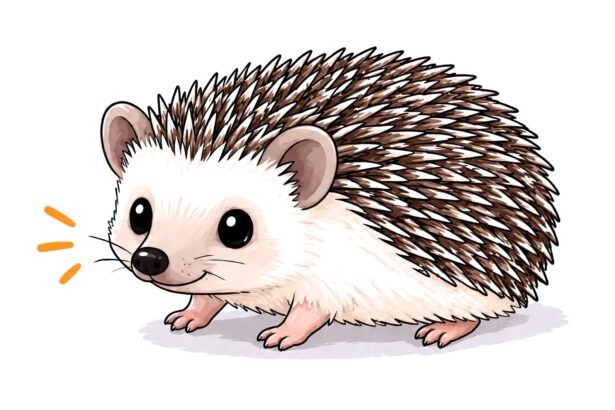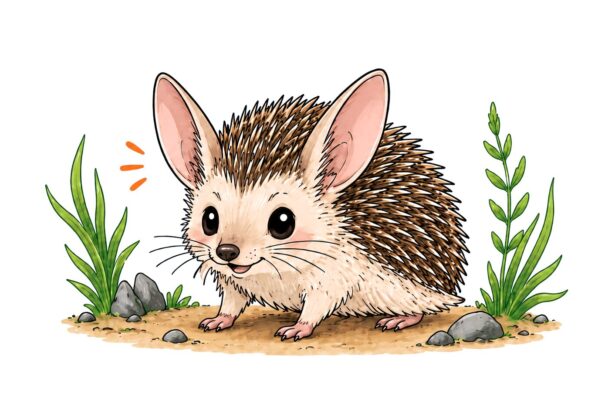

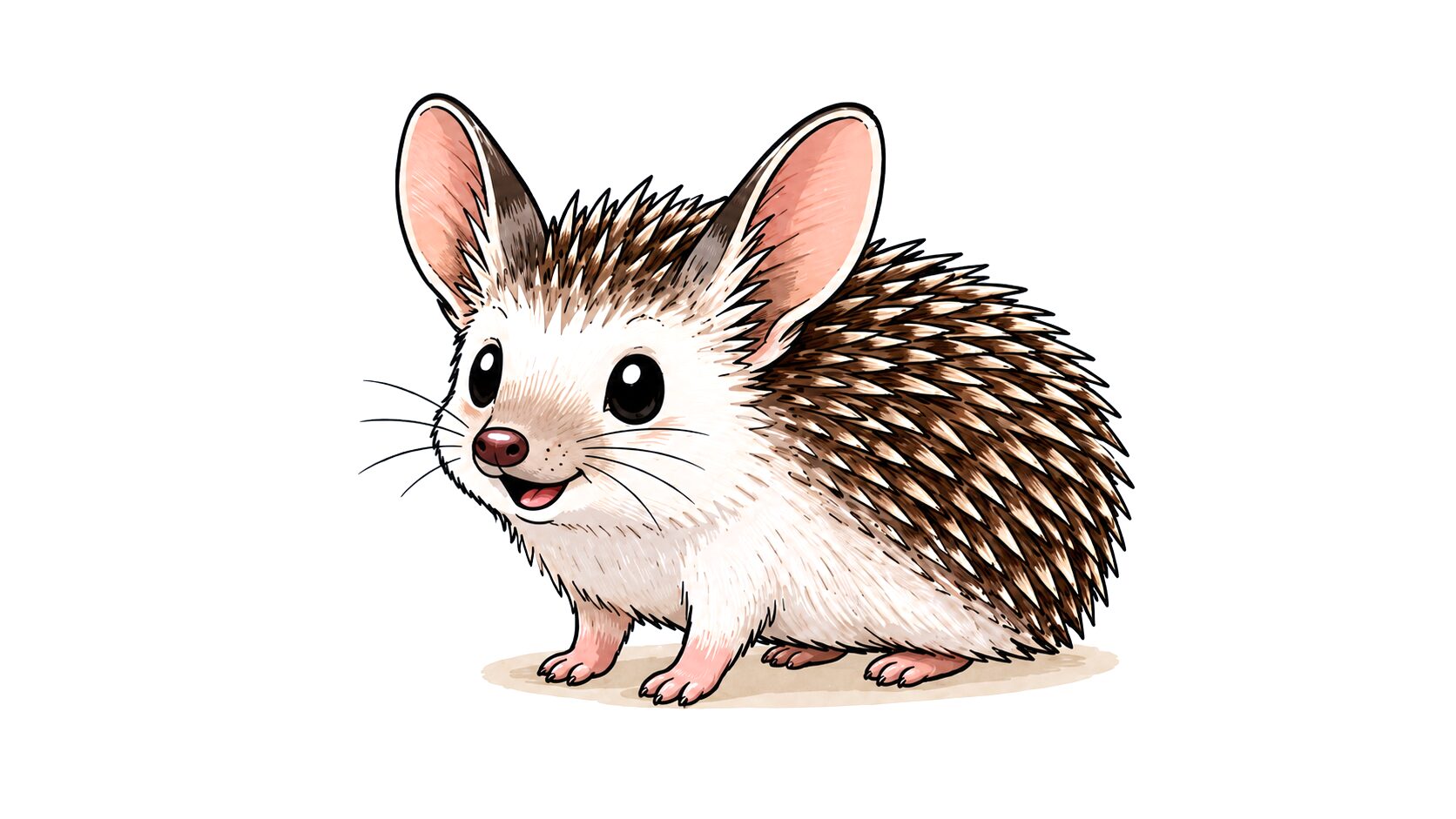
The African pygmy hedgehog gets almost all the attention in the exotic pet world. Slightly further down the list of known species sits the long-eared hedgehog (Hemiechinus auritus). And further still — barely mentioned in most hedgehog guides, absent from most pet shops, and genuinely rare even among specialist keepers — is the Indian long-eared hedgehog. If you’ve come across the name and want to know what this species actually is, where it comes from, and what keeping one honestly involves, this guide covers it in full. The short version: it’s a fascinating animal with a limited wild range, a largely undocumented captive history, and care requirements that demand significantly more from an owner than most hedgehog species do.
Origin and Natural Habitat
The Indian long-eared hedgehog (Hemiechinus collaris) is native to northern India and Pakistan, with its range possibly extending slightly into Nepal, according to The Hedgehog Program’s species profile. It is primarily a species of dry and semi-arid environments — scrublands, desert margins, and arid plains — where it forages nocturnally for insects and small invertebrates across its territory.
Unlike the closely related long-eared hedgehog (H. auritus), whose range stretches across Central Asia, the Middle East, and parts of North Africa, the Indian long-eared hedgehog occupies a much more geographically concentrated range. According to Wikipedia’s species entry, H. collaris is currently listed as Least Concern on the IUCN Red List, meaning its population is considered broadly stable. However, as World Deer’s species profile notes, localised threats including habitat loss from agricultural expansion, overgrazing, and urban development do present ongoing pressure at the regional level.
In the wild, the Indian long-eared hedgehog is a burrower — constructing its own shelters in loose soil, often under shrubs or rocky outcrops, in the same general fashion as its close relative. It is solitary, nocturnal, and highly adapted to surviving in conditions with limited food and water availability. Understanding this origin is essential context for anyone considering its care: this is an animal shaped by scarcity, heat, and wide-open terrain — not an apartment. Our guide on where do hedgehogs live in the wild provides useful broader context on how wild hedgehog ecology shapes captive care needs.
Scientific Classification
| Classification | Detail |
|---|---|
| Kingdom | Animalia |
| Phylum | Chordata |
| Class | Mammalia |
| Order | Eulipotyphla |
| Family | Erinaceidae |
| Genus | Hemiechinus |
| Species | Hemiechinus collaris |
The species was first formally described by John Edward Gray in 1830. It is one of only two species in the genus Hemiechinus, the other being the long-eared hedgehog (H. auritus), according to Wikipedia’s Hemiechinus genus entry. The U.S. Fish & Wildlife Service also maintains a species record for H. collaris, reflecting its recognition in international wildlife databases.
Indian Long-Eared Hedgehog Species Overview
| Characteristic | Detail |
|---|---|
| Common Name | Indian Long-Eared Hedgehog |
| Scientific Name | Hemiechinus collaris |
| Origin | Northern India, Pakistan |
| Natural Habitat | Arid scrublands, desert margins, semi-arid plains |
| Temperament | Cautious, stress-prone, retains strong wild instincts |
| Minimum Cage Size | 24 x 24 x 24 inches (60 x 60 x 60 cm) |
| Diet | Primarily insectivorous |
| Lifespan | 4–7 years in captivity (estimated) |
| Experience Required | Advanced — not recommended for beginners |
Indian Long-Eared Hedgehog Appearance and Size
The Indian long-eared hedgehog is a small species, measuring approximately 17 cm (around 6.7 inches) in body length and weighing between 200 and 500 grams, according to Mammal Age’s species profile and Wikipedia. This makes it smaller on average than its H. auritus relative, which can reach up to 27 cm.
The defining physical characteristic is the ears — proportionally very large, as the name suggests, and serving the same dual function as in the long-eared hedgehog: heat radiation in hot desert conditions, and acute hearing for detecting prey and predators. Hedgehogs Love’s care guide notes that the ears are almost the same length as the hedgehog’s head — a striking proportion that makes the animal immediately recognisable alongside other species.
Colouration is typically brown or grey on the back with a white or cream-coloured belly. The quills are banded, with darker bases and lighter tips, and serve as the primary defence mechanism — the same keratin-based spines found across all hedgehog species, able to be raised when the animal feels threatened. Unlike porcupines, hedgehogs cannot project their quills; the spines are a passive deterrent rather than an active weapon. For more on what hedgehog quills are made of and how they function, our hedgehog quills guide covers the full picture.
One notable behavioural distinction: the Indian long-eared hedgehog, like H. auritus, is documented as being more likely to flee or stand its ground defensively than to roll into a ball — though it is capable of the classic hedgehog curl when sufficiently threatened.
Housing
The Indian long-eared hedgehog’s care requirements in captivity are not dramatically different from those of the long-eared hedgehog (H. auritus) in terms of physical setup, but the animal’s significantly stronger wild instincts and stress sensitivity mean that the quality of the environment matters even more. As The Hedgehog Program explicitly states, captive individuals require warm, dry enclosures with deep bedding suitable for burrowing and environmental enrichment that mimics natural behaviour. Inadequate space or insufficient complexity in the enclosure will cause stress in a species that retains strong wild instincts.
A minimum floor area of 24 x 24 inches (60 x 60 cm) is the starting point, but larger is always better for an animal this active and this naturally wide-ranging. The floor must be solid — open wire mesh creates injury risk and cannot be burrowed in. A solid-sided enclosure with a secure, ventilated lid is essential; this species is fast and agile, and any gap is a potential escape route.
Avoid placing the enclosure in high-traffic areas, near speakers or televisions, or anywhere subject to sudden loud noise. The Indian long-eared hedgehog is more easily startled than domesticated hedgehog species, and chronic noise stress compounds into significant welfare problems over time. A quiet, consistent environment makes the difference between an animal that gradually habituates to captivity and one that remains perpetually stressed. Our guide on how to clean a hedgehog cage covers the routine maintenance that keeps any hedgehog enclosure in good condition.
Cage Decorations and Items
Enrichment is not optional for the Indian long-eared hedgehog — it is a welfare necessity. An animal shaped by nightly multi-kilometre foraging across complex terrain will not thrive in a bare enclosure with a food bowl and nothing else. The enclosure should include:
An exercise wheel. The most critical single item. Choose a solid-surface wheel with a diameter of at least 10–12 inches and no open rungs or gaps that could trap feet or legs. This species needs to run, and without a wheel, that energy has nowhere to go. Our best hedgehog wheel guide covers the options worth considering.
Hides and burrowing substrate. Multiple hiding spots — tunnels, wooden boxes, fabric pouches — give this stress-prone species the covered retreats it needs to feel secure. Deep substrate (at least 3–4 inches) that allows digging and partial burrowing is particularly valuable, as burrowing is one of this species’ most fundamental natural behaviours.
Foraging enrichment. Hiding insects in the substrate, using feeding puzzles, and varying the location of food items between sessions all engage the hunting instincts that define this animal in the wild. A hedgehog that has to work for its food is a more mentally engaged hedgehog. Our best hedgehog toys guide has options applicable to this species.
Tunnels. Tunnel systems — whether purpose-built or improvised from PVC pipe — satisfy the burrowing drive and provide natural-feeling navigation opportunities. Our best hedgehog tunnel recommendations give a practical starting point.
Bedding
The bedding choice matters significantly for both comfort and health. The Indian long-eared hedgehog is a burrowing species, and the substrate needs to be deep enough — a minimum of 3 to 4 inches — to allow digging behaviour. Paper-based bedding, aspen shavings, and organic topsoil mixed with coconut fibre are all appropriate options that allow burrowing without respiratory risk.
Cedar and pine shavings must be avoided entirely. The aromatic oils in both materials are well-documented irritants to hedgehog respiratory systems and skin, and the Indian long-eared hedgehog — already prone to stress — does not need the additional physiological burden of chronic low-level irritation from its bedding. Unscented materials exclusively, replaced on a regular schedule, are the correct approach. Our best hedgehog bedding guide compares the practical options available.
Heating and Temperature
Temperature management is critical for this species and non-negotiable in any climate where ambient temperatures fall significantly at night or in winter. The appropriate enclosure temperature range for the Indian long-eared hedgehog is 72–80°F (22–27°C), consistent with the arid warm environments this species evolved in.
Below approximately 65°F (18°C), hedgehogs will attempt to enter torpor. As covered in the long-eared hedgehog guide and throughout our broader content on do hedgehogs hibernate, this is a genuine danger for captive animals. Pet hedgehogs are not physiologically prepared for hibernation in the way wild animals are — they have not built the necessary fat reserves, and entering torpor unprepared can be fatal. A thermostat-controlled heat source that maintains enclosure temperature regardless of ambient room conditions is the correct solution.
A ceramic heat emitter or radiant heat panel controlled by a thermostat provides reliable temperature management without the light disruption of a visible bulb — important for a species that relies on consistent light/dark cycles to regulate its activity. Our guides on the best hedgehog heat lamp and best hedgehog thermostat cover the equipment worth investing in. A hygrometer to monitor humidity is also worthwhile — the target range is 40–60%, reflecting the relatively dry environments this species inhabits naturally.
Diet and Nutrition
The Indian long-eared hedgehog is primarily insectivorous. Its wild diet consists mainly of beetles, grasshoppers, ants, termites, caterpillars, and other invertebrates encountered during its nightly foraging, with occasional small vertebrates and plant material consumed opportunistically. As World Deer notes, this species plays a meaningful role in controlling insect populations in its native agricultural regions — evidence of both its appetite and its effectiveness as a predator.
In captivity, the dietary foundation should be varied, high-quality insect feeders: crickets, mealworms, and dubia roaches are all appropriate and well-tolerated. The Hedgehog Program’s captivity notes specifically emphasise that captive Indian long-eared hedgehogs require a diet rich in live insects — not simply dried or processed alternatives. Live prey also provides the foraging stimulation that this species needs and that a bowl of dried food cannot replicate.
A quality pea-free cat kibble can provide a balanced nutritional baseline alongside the insect protein. Small amounts of cooked lean meat, the occasional piece of plain cooked egg, and carefully chosen vegetables can supplement the diet. The standard exclusions apply: no garlic, onion, grapes, citrus, dairy, salty or processed foods. Fresh water should always be available. Our guide on what hedgehogs eat covers the dietary foundations in detail, and our best hedgehog food recommendations apply equally here.
Obesity is a real risk if diet is not managed alongside sufficient exercise. An Indian long-eared hedgehog without adequate wheel time and a properly controlled diet can accumulate weight quickly — with the same downstream health consequences seen in any hedgehog species. Our hedgehog weight guide explains what a healthy weight looks like and how to monitor it.
Compatibility
The Indian long-eared hedgehog is solitary by nature. Wild individuals maintain independent territories and interact only during mating season. Multiple adults kept together will compete and stress each other — each animal needs its own enclosure, its own wheel, its own hiding space, and its own feeding area.
With humans, the picture is more nuanced than with domesticated hedgehog species. The Hedgehog Program is direct on this point: captive Indian long-eared hedgehogs are prone to stress and require minimal handling, particularly in early captivity. This is not an animal that will transition smoothly from a new home to comfortable lap-sitting in a matter of weeks. Patience is measured in months, and some individuals may never fully habituate to regular handling regardless of how gentle and consistent the approach.
That said, with appropriate care, gradual exposure, and realistic expectations, the Indian long-eared hedgehog can become a genuinely engaging animal to observe and interact with on its own terms — curious, active, and clearly intelligent in the way it navigates its environment. The relationship just looks different from what most hedgehog owners expect.
Behaviour and Temperament
The Indian long-eared hedgehog is nocturnal, insectivorous, and solitary — a profile that is consistent with hedgehogs broadly, but expressed with notably stronger wild instincts than domesticated species. As The Hedgehog Program notes, this species is non-domesticated, meaning it retains the full complement of wild behaviours: acute alertness to environmental changes, a strong flight response, and a lower threshold for stress than the African pygmy hedgehog.
Its mating behaviour is notably complex for a small mammal. According to Wikipedia, male Indian long-eared hedgehogs engage in an unusual courtship ritual involving “dancing” around females for several days before mating — a level of social behaviour complexity unusual for a species described as predominantly solitary.
In terms of defensive responses, the Indian long-eared hedgehog may roll into a ball when threatened, but like H. auritus is also inclined to flee or adopt a more active defensive posture rather than relying on the passive curl that many hedgehog species default to. This means a startled or stressed animal can be quicker and less predictable to handle than an African pygmy hedgehog. Our guide on do hedgehogs bite covers handling a defensive hedgehog safely and without reinforcing the stress response.
Nocturnal activity patterns apply in full — this species sleeps through the day and is most active from dusk onward. Routine disturbance during daytime rest raises stress levels and works against any taming progress. Our guide on are hedgehogs nocturnal has useful context on working with rather than against a hedgehog’s natural activity cycle.
Handling
Handling the Indian long-eared hedgehog requires more patience and a gentler approach than most hedgehog species. The Hedgehog Program’s captivity notes specifically flag stress susceptibility and the need for minimal handling — particularly in the early weeks after arrival. An animal that arrived from the wild or from a minimally socialised captive lineage will need time simply to adjust to the sights, sounds, and smells of a new environment before handling can meaningfully begin.
When you do start handling, keep sessions short, start with scent familiarisation before any physical contact, and never pursue or restrain an animal that is actively trying to move away. Support the body fully from below, avoid sudden movements, and end the session before the animal shows signs of stress rather than persisting until it reacts. A hedgehog that ends a handling session in a neutral or positive state will be easier to handle next time. One that ends in defensive huffing or flight will take longer to resettle.
Gloves may be necessary in early stages with a particularly defensive animal — not because the quills are dangerous in the same way as a porcupine’s, but because a hand that flinches from a poke is significantly harder to build trust with than one that stays calm and steady. Over time, bare-hand handling with a properly socialised individual becomes more feasible, but this species is unlikely to become as handler-friendly as an African pygmy hedgehog even with the best care.
Health and Lifespan
Lifespan data for the Indian long-eared hedgehog in captivity is limited given how rarely the species has been kept. The general estimate from available sources is 4 to 7 years in captivity, consistent with the broader hedgehog family. Exotic Pet Hub suggests that with proper care, some individuals may reach 8 to 10 years — though this should be treated as an upper end rather than an expectation.
The key health risks for captive Indian long-eared hedgehogs mirror those of closely related species: torpor from insufficient heating, obesity from poor diet and inadequate exercise, dental disease from soft food and lack of appropriate abrasion, and parasitic infections. The tick-borne disease risk noted in Wikipedia’s species entry — the species has been documented as a carrier of tick-borne diseases — reinforces the importance of sourcing only from reputable captive breeding programmes with verified health histories. Never acquire a wild-caught individual; the parasite load and disease risk is not worth taking on, and wild capture is illegal in most jurisdictions.
Stress-related illness is a particular concern with this species. Chronic stress suppresses the immune system, disrupts feeding behaviour, and accelerates the onset of secondary health problems. Keeping the enclosure environment calm, consistent, and well-enriched is not just a welfare consideration — it directly affects how long and how well your animal lives. Regular exotic vet checks are strongly recommended; our guide on hedgehog mites covers the parasite monitoring that should form part of any routine health assessment.
Price
The Indian long-eared hedgehog is, in straightforward terms, almost impossible to source through conventional channels in most parts of the world. Unlike the long-eared hedgehog (H. auritus), which has a small but established captive breeding community in the United States — including USDA-licensed breeders like Carolina Quillery and Dragonstone Ranch — H. collaris has not entered the international pet trade to any significant extent, according to The Hedgehog Program.
Because there are no established widespread breeding programmes for this species, a reliable market price is not possible to quote. If you encounter an individual being sold, verify its origin meticulously — the legal status of owning this species varies by region, wild-caught animals should never be purchased, and the absence of captive breeding infrastructure means any animal on the market requires careful provenance checking. In India and Pakistan, the species is sometimes kept informally, often without appropriate care, according to The Hedgehog Program’s notes on captivity.
If you’re drawn to the long-eared hedgehog family as a group and want a species that is legally available, ethically sourced, and supported by an established captive care community, the long-eared hedgehog (H. auritus) is the more accessible starting point. Our how much do hedgehogs cost guide covers the full financial picture of hedgehog ownership across species.
Conclusion
The Indian long-eared hedgehog is a genuinely fascinating species — small, distinctive, and shaped by one of the more demanding environments any small mammal inhabits. But it is not a beginner’s pet, and in most of the world, it is not a readily available pet at all. The honest assessment is that this species is best understood primarily as a wild animal that is only rarely in captivity, with care requirements demanding significant expertise and an environment calibrated to a stress-prone animal with strong wild instincts.
If you are seriously pursuing a long-eared hedgehog species as a pet, the closely related H. auritus has an established captive community, USDA-licensed breeders, and a more documented care history — making it the more responsible starting point for most owners. For everything you need to build a proper hedgehog setup from scratch, our best hedgehog products page covers enclosures, heat equipment, bedding, wheels, and all the care essentials your hedgehog needs from day one.