
Walk into any pet shop that sells exotic animals, search any hedgehog breeder’s website, or ask anyone who owns a hedgehog — the African pygmy hedgehog is the one they’re almost certainly talking about. It is by far the most common hedgehog species kept as a pet worldwide, the one that has shaped most of what the general public knows about hedgehog ownership, and the one around which the entire captive hedgehog care community has been built. That familiarity is useful, but it also means a lot of care information gets passed around that is incomplete or outdated. This guide covers the African pygmy hedgehog from the ground up — where it comes from, what it is, and exactly what responsible ownership involves.
Origin and Natural Habitat
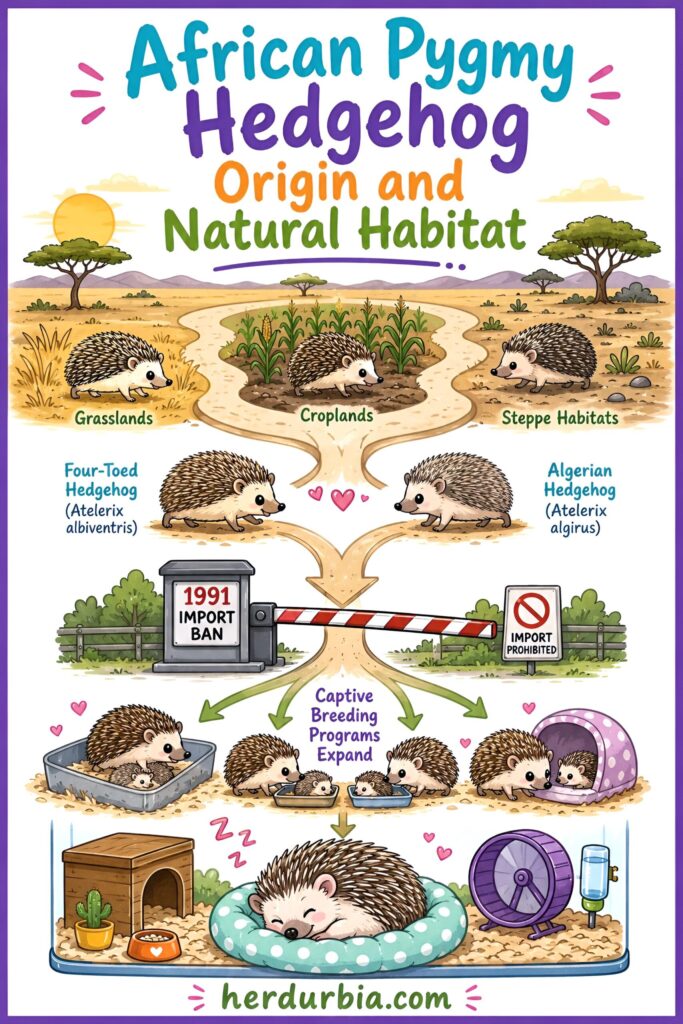
The African pygmy hedgehog has a more complicated origin story than most pet guides acknowledge. The animal most people know as the African pygmy hedgehog is technically a captive hybrid, not a single wild species. According to LafeberVet’s extensively referenced species information sheet, the pet African pygmy hedgehog is almost certainly descended from crosses between two wild African species: the four-toed hedgehog (Atelerix albiventris), native to the savannahs and croplands of central and eastern Africa, and the Algerian or North African hedgehog (Atelerix algirus). This hybridisation occurred in captivity during the early development of the pet trade, and Crittery’s species overview makes the point directly: the African pygmy hedgehog as a pet animal never existed as a species in the wild.
The wild A. albiventris ranges broadly across sub-Saharan Africa — from Senegal in the west to Somalia in the east, and south through Central Africa — in savannah, steppe, and cropland habitats, avoiding dense forest. It is listed as Least Concern on the IUCN Red List with a stable wild population, according to Wikipedia’s four-toed hedgehog entry. In the wild, these animals are nocturnal insectivores that roam several miles nightly in search of food, sheltering in burrows or dense vegetation during the day.
In 1991, it became illegal to import hedgehogs from Africa into the United States due to the risk of transmitting foot-and-mouth disease to cattle, according to LafeberVet. Every African pygmy hedgehog in the US today is captive-bred — a domestication process now spanning more than three decades, which partly explains why the pet African pygmy hedgehog is considerably more tolerant of handling and human contact than wild-origin species like the long-eared hedgehog. For a broader look at what wild hedgehog life looks like across species, our guide on where do hedgehogs live in the wild is worth reading.
Scientific Classification
| Classification | Detail |
|---|---|
| Kingdom | Animalia |
| Phylum | Chordata |
| Class | Mammalia |
| Order | Eulipotyphla |
| Family | Erinaceidae |
| Genus | Atelerix |
| Species | Atelerix albiventris (primary wild ancestor) |
| Binomial Name | Atelerix albiventris (Wagner, 1841) |
Note: the captive pet animal is a hybrid and technically falls outside strict species classification. Most scientific literature refers to it under A. albiventris for practical purposes.
African Pygmy Hedgehog Species Overview
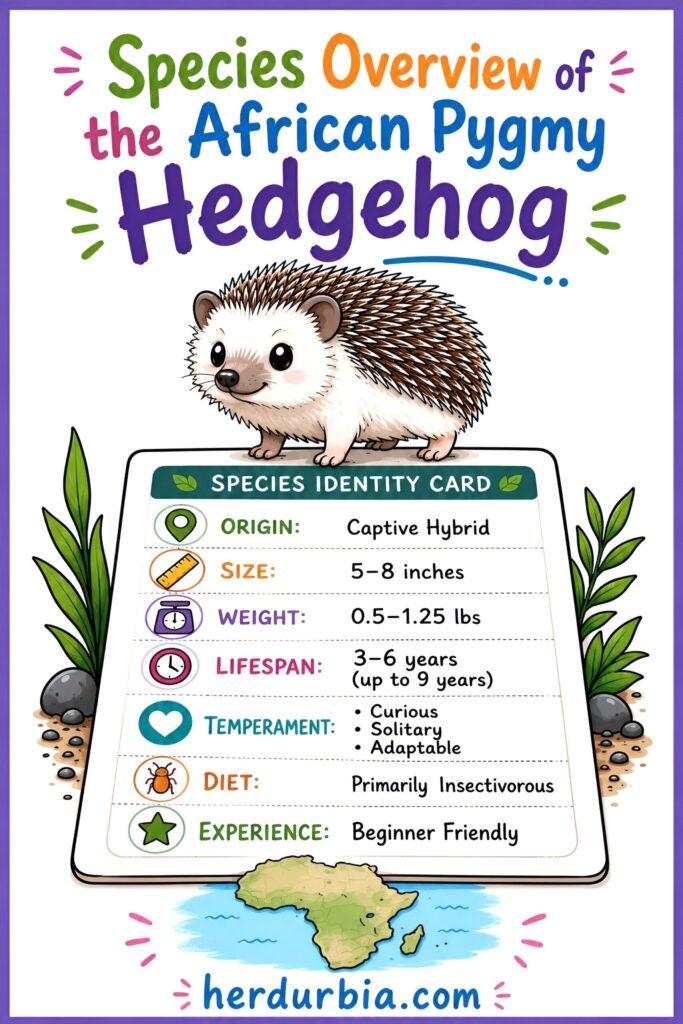
| Characteristic | Detail |
|---|---|
| Common Name | African Pygmy Hedgehog |
| Other Names | White-bellied hedgehog, four-toed hedgehog, central African hedgehog |
| Origin | Captive hybrid; wild ancestors from central and eastern Africa |
| Natural Habitat | Savannah, steppe, cropland (wild ancestors) |
| Temperament | Curious, solitary, adaptable; moderately tolerant of handling when socialised |
| Minimum Cage Size | 24 x 24 inches floor space minimum |
| Diet | Primarily insectivorous, omnivorous in practice |
| Lifespan | 3–6 years in captivity; up to 9 years with excellent care |
| Experience Required | Beginner-friendly with proper preparation |
African Pygmy Hedgehog Appearance and Size
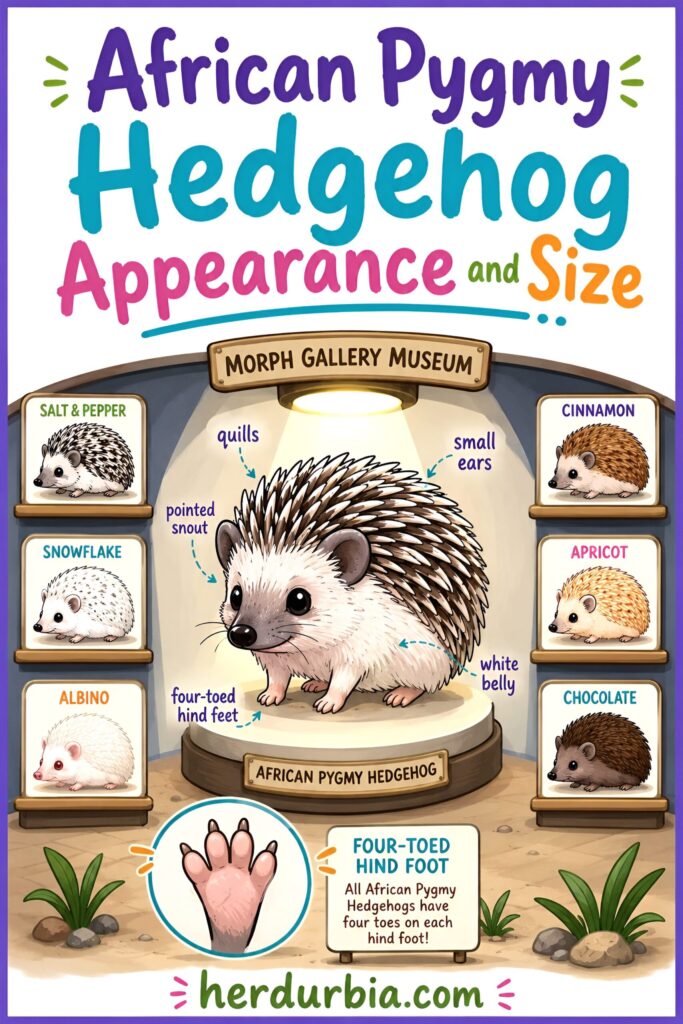
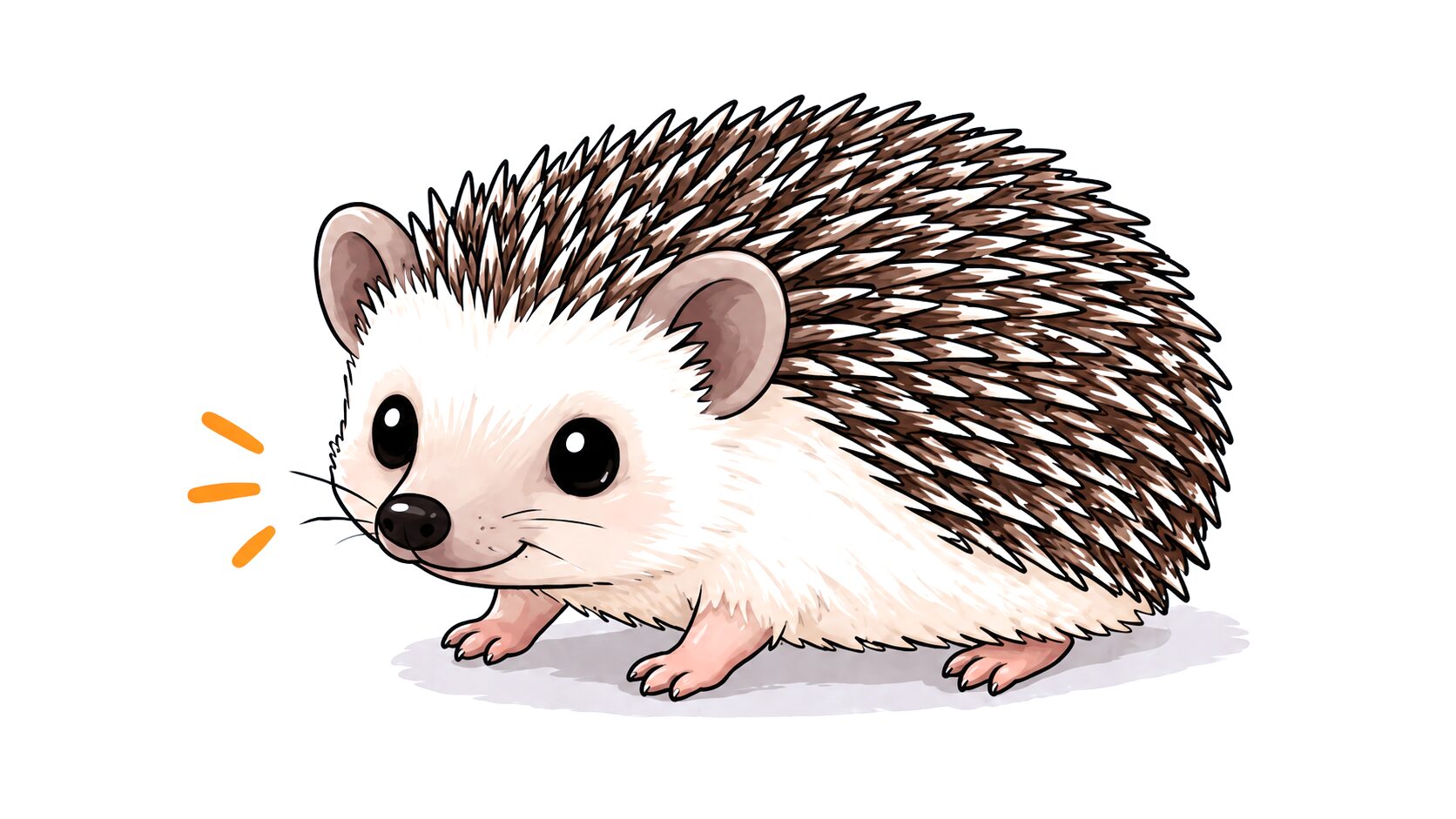
The African pygmy hedgehog is a small, compact animal — typically 5 to 8 inches (13 to 20 cm) in body length and weighing between 0.5 and 1.25 pounds (roughly 225 to 575 grams), according to LafeberVet. Females are generally slightly larger than males. The profile is the familiar rounded shape that most people picture: a domed back covered in quills, short sturdy legs, a pointed snout, and small round eyes set in a face with a white or cream-coloured belly — the “albiventris” (white-bellied) of the species name.
The quills cover the back and are the animal’s primary defence mechanism. They are modified hairs made of keratin — the same protein that makes up human nails — and are not barbed or venomous. A hedgehog cannot project its quills; they are raised by contracting the muscle beneath the skin when the animal feels threatened. Our guide on hedgehog quills covers the structure and function in more detail.
The African pygmy hedgehog is notable for the remarkable variety of colour morphs that have developed in the captive population. According to Hedgehog World’s colour guide, there are close to 100 documented colour variations. The most common include salt and pepper (dark banded quills with a white belly), snowflake (white and dark mixed quills), albino (white quills, pink eyes, no pigmentation), cinnamon, apricot, and chocolate. Colour does not affect temperament or health in any meaningful way, but rare colours do command higher prices from breeders.
The species name “four-toed” refers to the hind feet, which have four toes rather than the five found on most hedgehog species — a reliable anatomical identification feature. If you’re curious about the full range of hedgehog breeds and colour varieties, our hedgehog breeds guide covers them in detail.
Housing
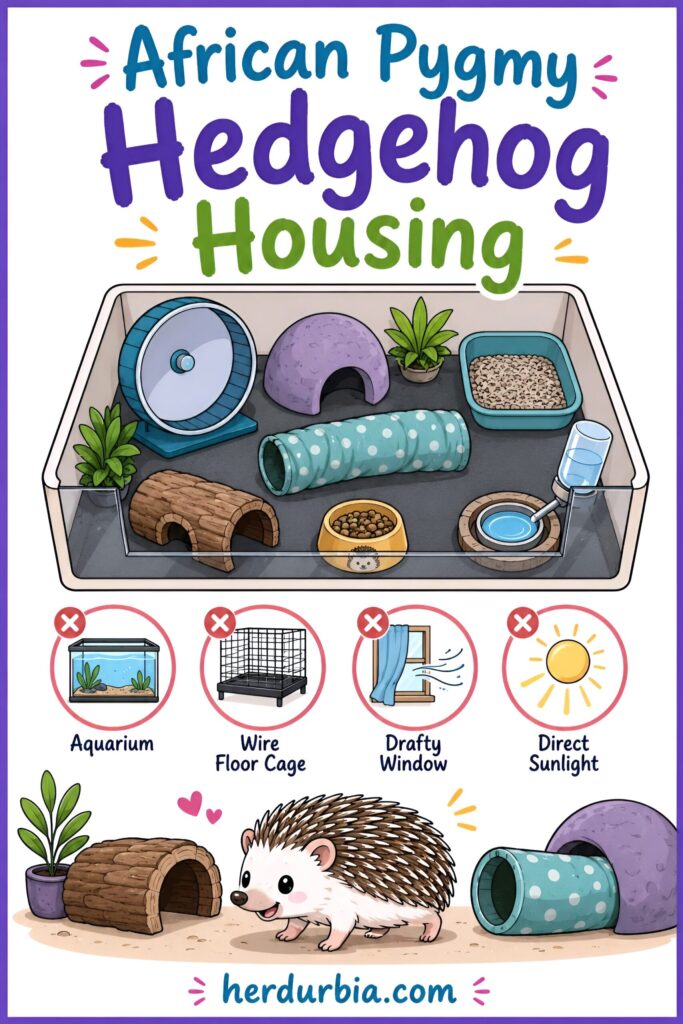
The African pygmy hedgehog’s housing requirements are well-documented and relatively straightforward compared to more demanding exotic species. The minimum recommended floor space is 24 x 24 inches, though larger is always better for an animal that runs several miles nightly in the wild. The enclosure must have a solid floor — wire mesh creates a foot and leg injury risk and is not suitable — and a secure lid or top to prevent escape.
Popular enclosure choices include large plastic storage bins with ventilated lids, C&C (cube and coroplast) cage builds, and commercially made critter cages with solid pan floors. Glass aquariums should be avoided due to poor ventilation and ammonia buildup from waste. Whatever you choose, position it away from direct sunlight, drafts, and sources of sudden loud noise — the African pygmy hedgehog startles easily, and chronic environmental stress contributes to defensive behaviour and health problems.
Keep the enclosure in a room you spend time in regularly. Hedgehogs that hear and smell their owners regularly from a young age are generally easier to socialise and handle. Our best hedgehog cage guide walks through the specific options worth considering, and our best hedgehog cage setup guide covers how to configure the interior once you have the enclosure.
Cage Decorations and Items
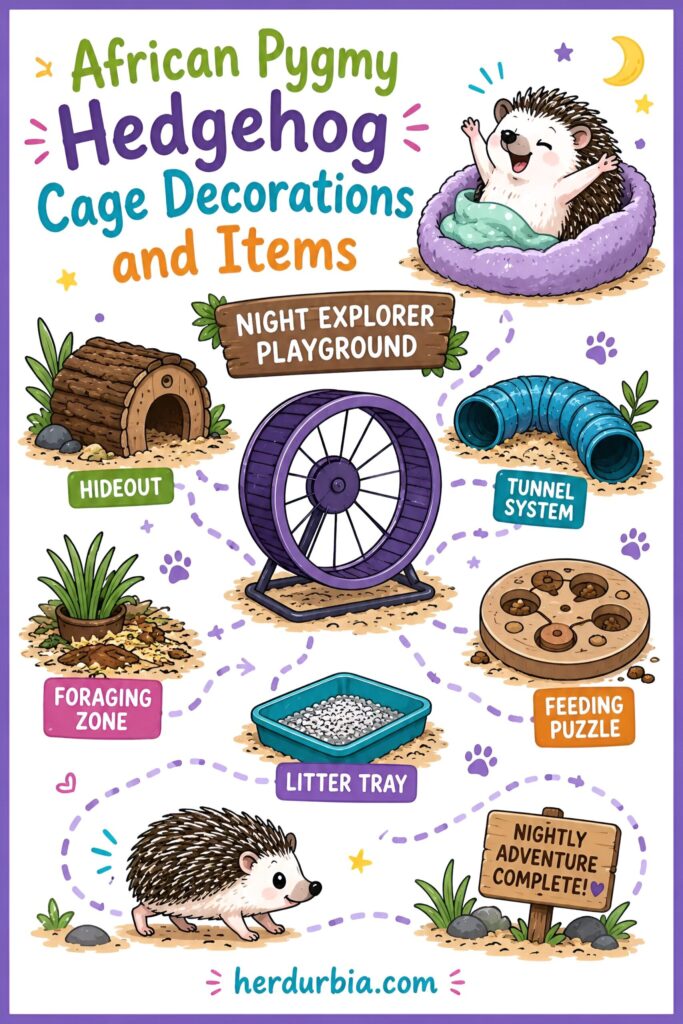
The African pygmy hedgehog’s enclosure should be functional first and decorative second. The core items that every setup needs:
An exercise wheel. Non-negotiable. African pygmy hedgehogs are prolific runners — some cover several kilometres in a single night on their wheel — and without one, that energy has nowhere to go, contributing to obesity and behavioural frustration. The wheel must have a solid running surface with no rungs or gaps. Minimum diameter is 10 to 11 inches; anything smaller forces an unnatural curved running posture that can cause back problems. Our best hedgehog wheel guide covers the options with solid surfaces and appropriate sizing.
A hide or sleeping shelter. African pygmy hedgehogs need a dark, enclosed space where they feel secure enough to sleep properly during the day. A wooden hide, an igloo, or a fabric sleeping pouch all work well. The hide should be large enough for the hedgehog to turn around comfortably inside. Our best hedgehog hideout recommendations cover the options.
Tunnels and enrichment items. Tunnels satisfy the hedgehog’s natural burrowing instinct and provide environmental complexity. Foraging enrichment — hiding insects in bedding, scatter-feeding, using feeding puzzles — engages the hunting behaviour that is central to this species’ biology. Our best hedgehog toys guide has practical options.
A litter box (optional but worthwhile). African pygmy hedgehogs are among the more litter-trainable hedgehog species, and a litter corner significantly reduces cleaning frequency. Our guide on how to litter train a hedgehog walks through the process step by step.
Bedding

Bedding for the African pygmy hedgehog needs to be absorbent, unscented, and safe for respiratory health. The most widely used options are:
Paper-based bedding (such as Carefresh or similar) — highly absorbent, dust-low, and available widely. A good all-round choice for most owners.
Fleece cage liners — washable and reusable, soft underfoot, and easy to monitor for soiling. Popular among owners who prefer sustainable options. Requires more frequent washing than paper bedding.
Aspen shavings — a natural option that allows some digging behaviour. Must be unscented and sourced from a reliable supplier.
Cedar and pine shavings are categorically unsuitable. The aromatic phenol compounds in both materials are documented respiratory irritants in small mammals and have been linked to liver damage with prolonged exposure. No hedgehog should ever be housed on cedar or pine. Our best hedgehog bedding guide covers the practical comparison in detail. Maintain a depth of 2 to 3 inches to allow some digging and foraging behaviour.
Heating and Temperature
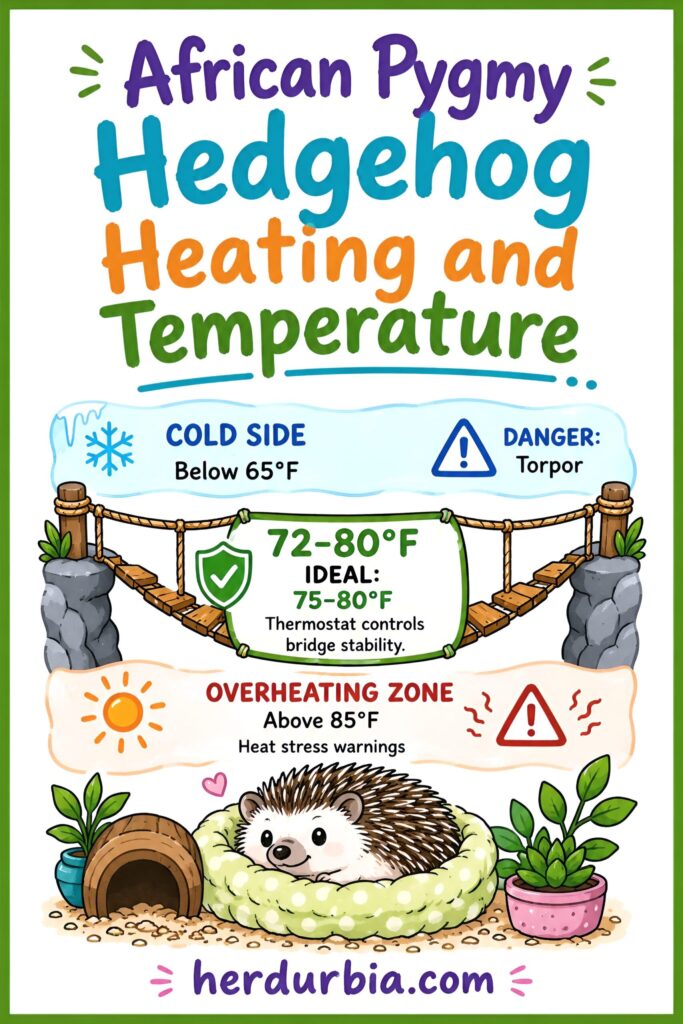
Temperature management is one of the most important aspects of African pygmy hedgehog care and one of the most common points of failure. The appropriate enclosure temperature range is 72–80°F (22–27°C), with 75–80°F being the ideal range, according to LafeberVet’s husbandry guide.
Below 65°F (18°C), African pygmy hedgehogs will attempt to enter torpor — the dangerous hibernation-like state that pet hedgehogs are not equipped to survive safely. As explained in detail in our do hedgehogs hibernate guide, captive-bred hedgehogs have not prepared metabolically for hibernation, and a hedgehog in torpor is a medical emergency requiring immediate warming and veterinary attention. Above 85°F (29°C), they risk heat stress.
The practical solution is a thermostat-controlled heat source — a ceramic heat emitter or radiant heat panel — that maintains a consistent temperature regardless of ambient room conditions. Space heaters are not reliable for this purpose; they cycle on and off and create temperature fluctuations. A dedicated thermostat eliminates guesswork. Our guides on the best hedgehog heat lamp, best hedgehog heating pad, and best hedgehog thermostat cover the equipment that experienced owners rely on. A thermometer positioned at cage level (not room level) lets you verify what the hedgehog is actually experiencing — our best hedgehog thermometer guide has reliable options.
Diet and Nutrition
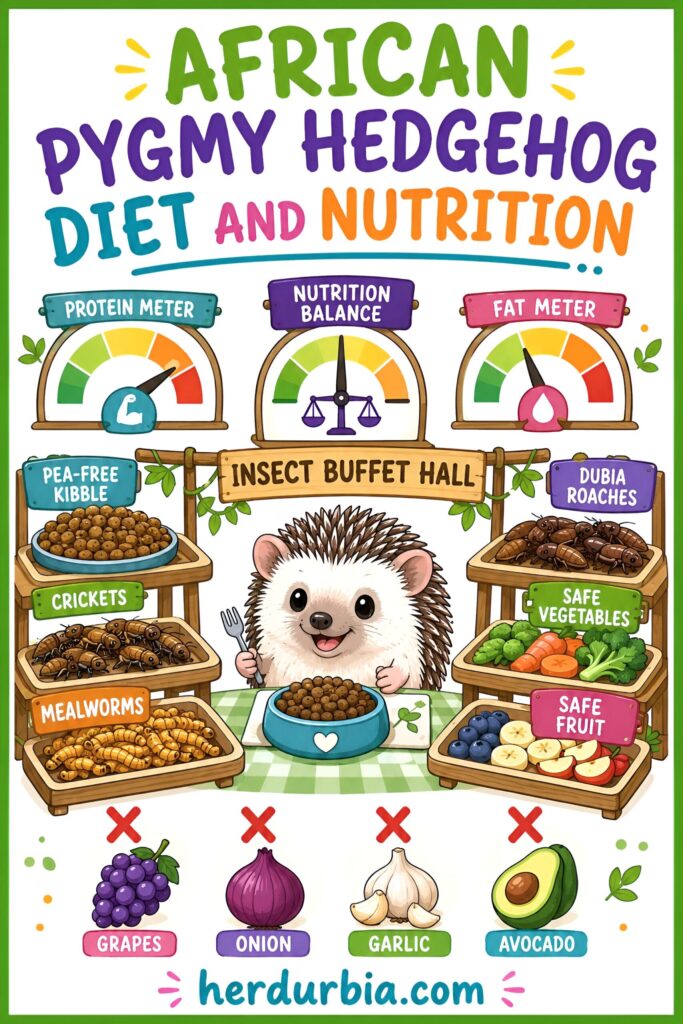
The African pygmy hedgehog is primarily insectivorous — its wild diet consists mainly of invertebrates, with smaller amounts of plant matter and occasional small vertebrates consumed opportunistically. According to Animal Diversity Web’s A. albiventris species profile, it feeds primarily on spiders, insects, earthworms, slugs, and snails, moving continuously through its territory each night.
In captivity, the dietary foundation for most owners is a high-quality, pea-free dry cat kibble that provides around 30–50% protein and 10–20% fat on a dry matter basis, per LafeberVet’s dietary guidelines. A pea-free formulation matters because peas are high in phosphorus, which creates the calcium-to-phosphorus imbalance issues we’ve covered extensively across our diet articles. A mix of two or three quality cat food varieties provides a broader nutritional spread than relying on a single product.
Insect supplementation is important and should not be skipped. Crickets, mealworms, and dubia roaches are all appropriate — gut-loaded before feeding for maximum nutritional value. Waxworms are high in fat and should be offered only as an occasional treat. Our individual diet guides — including can hedgehogs eat crickets and can hedgehogs eat dubia roaches — cover the specifics in detail.
Small amounts of safe vegetables and occasional fruit can supplement the diet. The full picture of what is and isn’t appropriate is covered in our what hedgehogs eat guide. The firm exclusions: no garlic, onion, grapes, raisins, avocado, dairy, or anything salty, sugary, or processed. Fresh water should always be available — a sipper bottle or heavy ceramic bowl both work well.
Obesity is the single most preventable health problem in pet African pygmy hedgehogs. A hedgehog fed too many fatty treats with insufficient wheel time will gain weight quickly, with consequences including fatty liver disease, cardiovascular disease, and significantly shortened lifespan. Our hedgehog weight guide explains how to assess and monitor your hedgehog’s condition.
Compatibility

African pygmy hedgehogs are solitary animals. In the wild, individuals maintain distance from one another — males typically keep at least 60 feet between themselves, according to Animal Diversity Web — and there is no social bonding between adults outside of mating. Two adult hedgehogs housed together will typically stress each other, compete for resources, and may fight. Each animal needs its own enclosure, its own wheel, its own hide, and its own feeding area.
With people, the story is different — and more positive. African pygmy hedgehogs are the most handleable of the hedgehog species commonly kept as pets, with the longest captive history and the most socialised bloodlines. A well-bred baby hedgehog from a reputable breeder, handled gently and consistently from an early age, will typically become comfortable with its owner within a few weeks and can develop into a genuinely engaging companion — curious about its environment, willing to explore freely during handling, and responsive to familiar voices and scents. This is the species for someone who wants a hedgehog they can actually interact with.
Behaviour and Temperament

The African pygmy hedgehog is nocturnal, solitary, and primarily driven by scent and hearing rather than vision — their eyesight is poor, but their nose and ears are excellent. As Animal Diversity Web notes, they are constantly moving at night, covering significant distances in search of food, and this drive persists entirely in captivity.
The classic defensive response — rolling into a tight ball with quills raised — is the behaviour most associated with the species. A hedgehog that is nervous, startled, or uncomfortable will curl, often accompanied by a huffing sound produced by flexing the orbicularis muscle. This is a normal stress response, not aggression. With patient, consistent handling, most well-socialised African pygmy hedgehogs will uncurl within a few minutes of being picked up and transition into relaxed exploration. Understanding the sounds your hedgehog makes and what they mean is part of learning to read the animal well — our hedgehog sounds guide covers the full range.
Self-anointing — the behaviour where hedgehogs foam at the mouth and apply saliva to their quills when encountering a novel scent — is commonly observed in this species and is entirely normal. Our hedgehog self-anointing guide explains what it is, why it happens, and what to do when you see it.
Handling
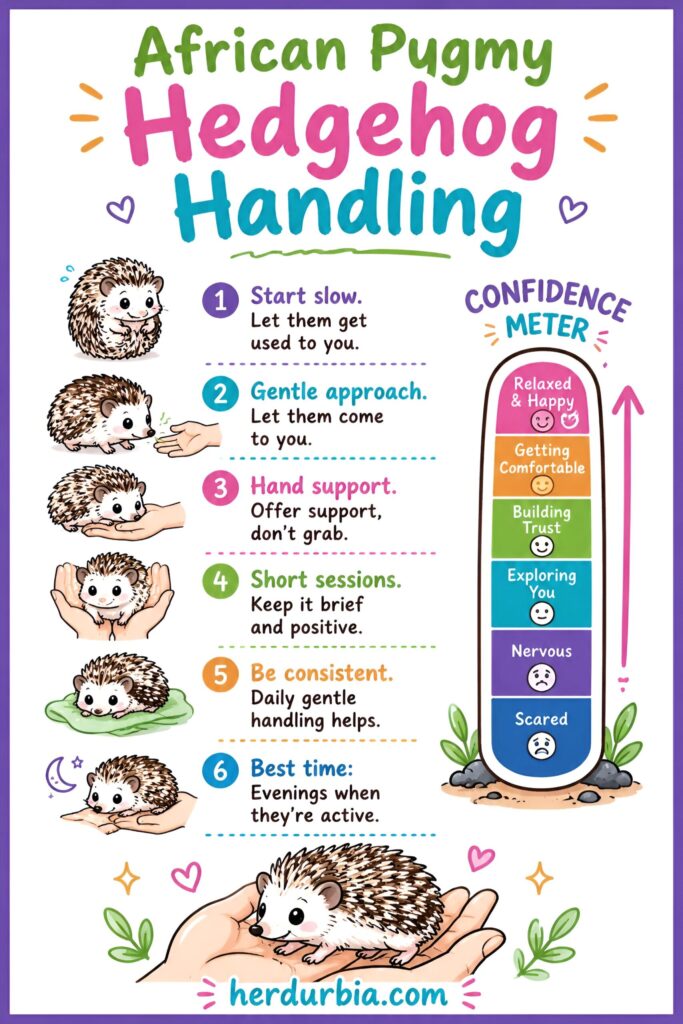
The African pygmy hedgehog is the most owner-friendly hedgehog species in captivity, but “owner-friendly” is relative — these are still exotic animals, and a hedgehog that is poorly socialised, inconsistently handled, or arriving from a substandard breeder will be defensive and difficult to work with regardless of the species’ general reputation.
The fundamentals of good handling apply: let the hedgehog come to you rather than grabbing, support the body fully from below, keep early sessions short and positive, and work with the hedgehog’s natural activity window — which is the evening, after it has naturally woken, rather than during daytime rest. Waking a hedgehog repeatedly during daylight hours to handle it raises stress levels over time and makes socialisation harder rather than easier. Our article on do hedgehogs bite covers what defensive behaviour actually looks like and how to avoid reinforcing it.
Quilling — the process by which baby hedgehogs shed their juvenile quills and grow adult ones — typically occurs between 6 and 12 weeks and again around 4 to 6 months of age. During quilling, the skin is sensitive and hedgehogs are often more defensive than usual. Being aware of the quilling cycle helps owners interpret temporarily increased defensiveness correctly rather than assuming the hedgehog’s temperament has changed permanently. Our hedgehog quills guide covers the quilling process in detail.
Health and Lifespan

The African pygmy hedgehog in captivity typically lives between 3 and 6 years, with well-cared-for individuals occasionally reaching 8 to 9 years, according to Utica Zoo’s species profile. The main health concerns specific to this species are:
Wobbly Hedgehog Syndrome (WHS) is the health issue most closely associated with the African pygmy hedgehog and the one every owner should understand before acquiring one. According to peer-reviewed research published in the Journal of Exotic Pet Medicine, approximately 10% of captive African pygmy hedgehogs in North America are affected — a significant proportion. WHS is a progressive, degenerative neurological disease caused by demyelination of the central nervous system. As VCA Animal Hospitals explains, it typically begins with a characteristic “wobble” when the hedgehog tries to stand still, progresses to hind leg weakness and ataxia, and eventually results in full paralysis — usually within 9 to 15 months of onset, according to the Merck Veterinary Manual. There is currently no cure. The cause is believed to be genetic, linked to the limited bloodlines of the captive population. Buying from a breeder who screens for WHS family history is the most meaningful preventive step an owner can take.
Neoplasia (cancer) is extremely common in this species. Retrospective studies cited in ScienceDirect’s species overview show cancer prevalence ranging from 29% to 52% of African pygmy hedgehogs examined post-mortem, with a median age at diagnosis of 3.5 years. The most frequently reported tumour types include mammary gland tumours, oral squamous cell carcinoma, and uterine tumours in females. Annual exotic vet checks from age 2 onward are strongly recommended for early detection.
Obesity and related conditions — fatty liver disease, cardiovascular disease — are the most preventable health risks and stem directly from inadequate diet management and insufficient exercise.
External parasites — mites and fleas — are common in hedgehogs and should be checked for regularly. Our hedgehog mites guide covers the signs, treatment, and prevention in detail.
Regular care from an exotic animal veterinarian — not a general small animal vet — is important for this species. Many health problems in hedgehogs are caught early through physical examination and routine bloodwork, and an exotic vet familiar with the species will know what to look for.
Price

The African pygmy hedgehog is the most accessible hedgehog species in the pet market and the most affordably priced. From a reputable USDA-licensed breeder in the United States, expect to pay between $150 and $400, with the majority of healthy babies from established breeders falling in the $200–$350 range. Hedgehogs by Vickie, a USDA-licensed breeder operating since 1994, lists prices between $250 and $350 depending on colour. Dragonstone Ranch — the same Texas-based facility that breeds long-eared hedgehogs — also breeds pedigreed African pygmy hedgehogs at comparable prices.
Colour affects price meaningfully. Common colour morphs like salt and pepper or standard brown-and-white tend to be at the lower end; rarer morphs like true albino, chocolate, and unusual patterned varieties command premiums. Females are sometimes priced slightly higher than males due to the greater demand driven by lower male-to-female ratios in some breeding programmes.
Pet shop hedgehogs are generally cheaper but come with less known history, no lineage documentation, and a higher risk of WHS-related genetic problems from poorly managed bloodlines. Rescue organisations are another option, with adoption fees typically between $50 and $150 — a genuinely worthwhile avenue if you’re open to an adult animal with an unknown past. Our comprehensive how much do hedgehogs cost guide breaks down the full first-year cost including enclosure, heat equipment, food, and veterinary care.
Conclusion
The African pygmy hedgehog earns its position as the world’s most popular pet hedgehog. It is adaptable, moderately handleable, available from reputable breeders at accessible prices, and — when well cared for — a genuinely rewarding animal to live with. But it is also a species with serious health risks that every prospective owner should understand before they commit: Wobbly Hedgehog Syndrome affects around one in ten captive animals, cancer rates in this species are strikingly high, and the care requirements around temperature and diet are non-negotiable. The African pygmy hedgehog is a great pet for the prepared owner and a difficult one for the unprepared.
Getting the setup right before the hedgehog arrives is the single most important thing you can do. Our best hedgehog products page covers every piece of equipment your African pygmy hedgehog needs — from the cage and heat lamp to the wheel, bedding, food, and everything in between.